2026 Farm to Crag Bishop
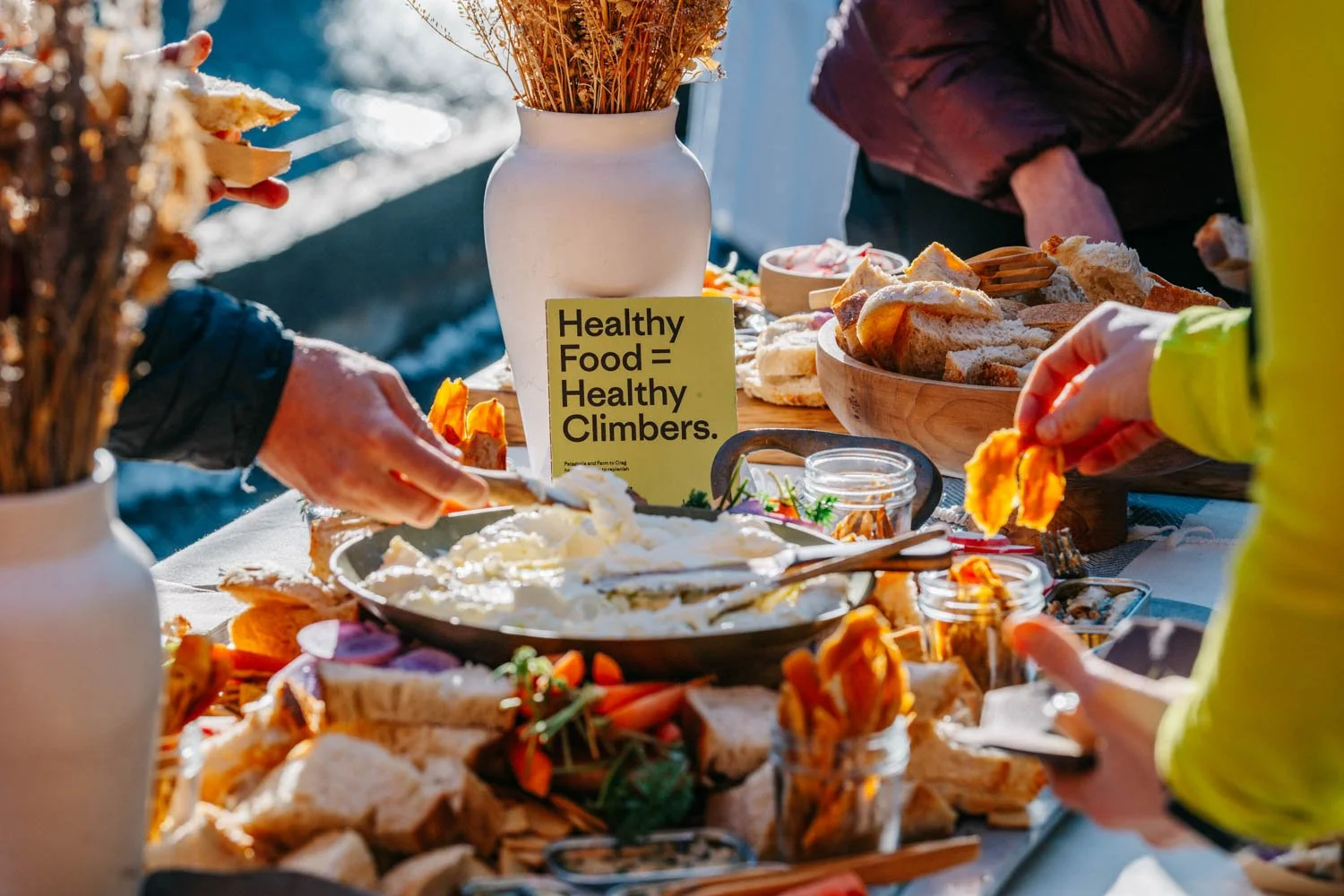
Fundraising Dinner to Support Blue Heron Farm
Good food. Good people. Real impact.
Raising funds for critical water infrastructure at the farm.
Join us in building the systems that keep good food growing in the valley.
Photo Credit: Ken Etzel @ken_etzel
This last weekend’s Farm to Crag Bishop Farm to Table dinner reminded us of something that feels especially true in farming. Community does not depend on perfect plans. It depends on people willing to adapt, care for one another, and keep showing up when conditions shift.
We were meant to gather out at the farm. Then the snow came, and kept coming, until the fields were quiet and knee-deep and it was clear that we would need to pivot. We packed up the vision, moved the dinner down to the Tri-County Fairgrounds, and trusted that the heart of the evening would follow us.
It did.
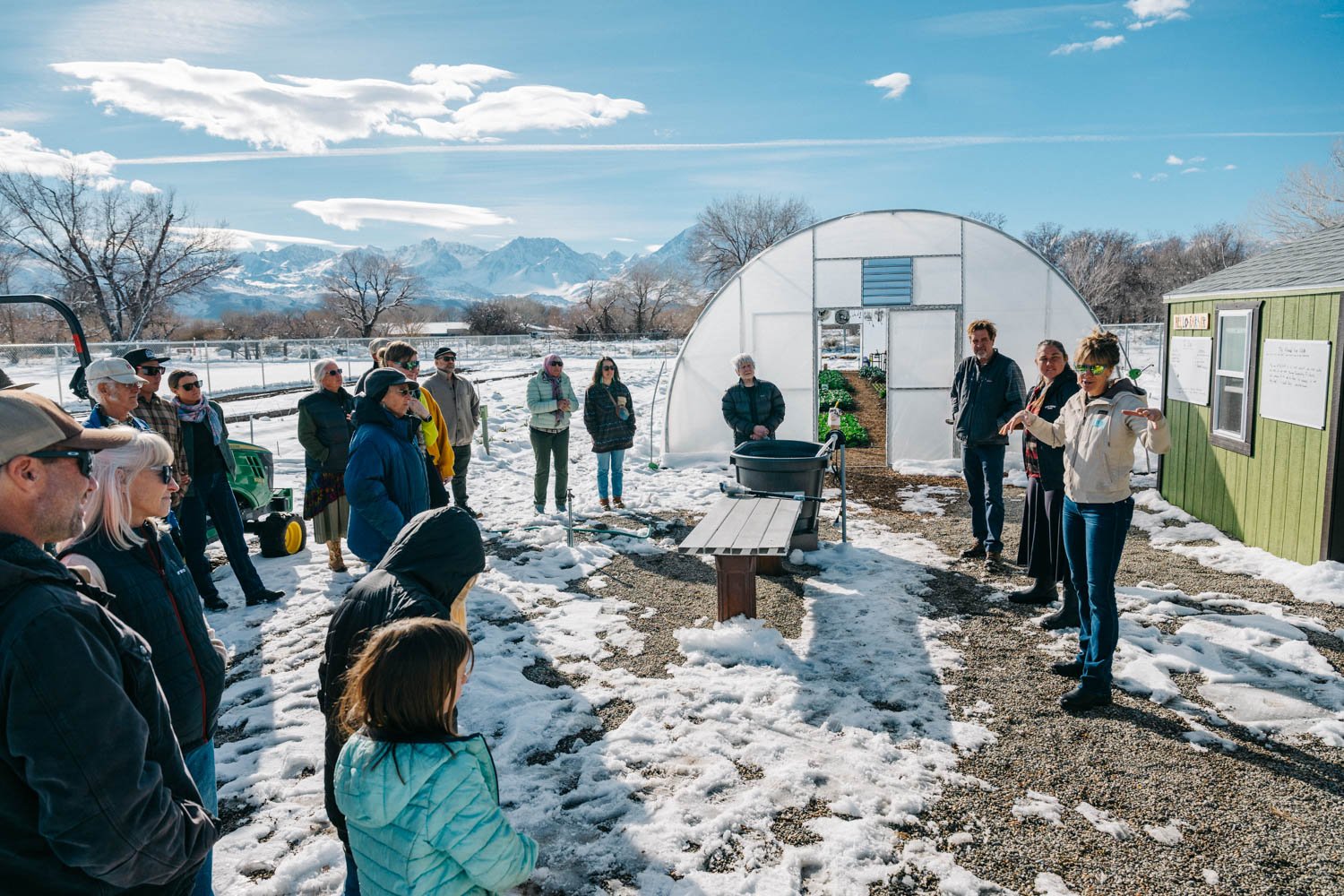
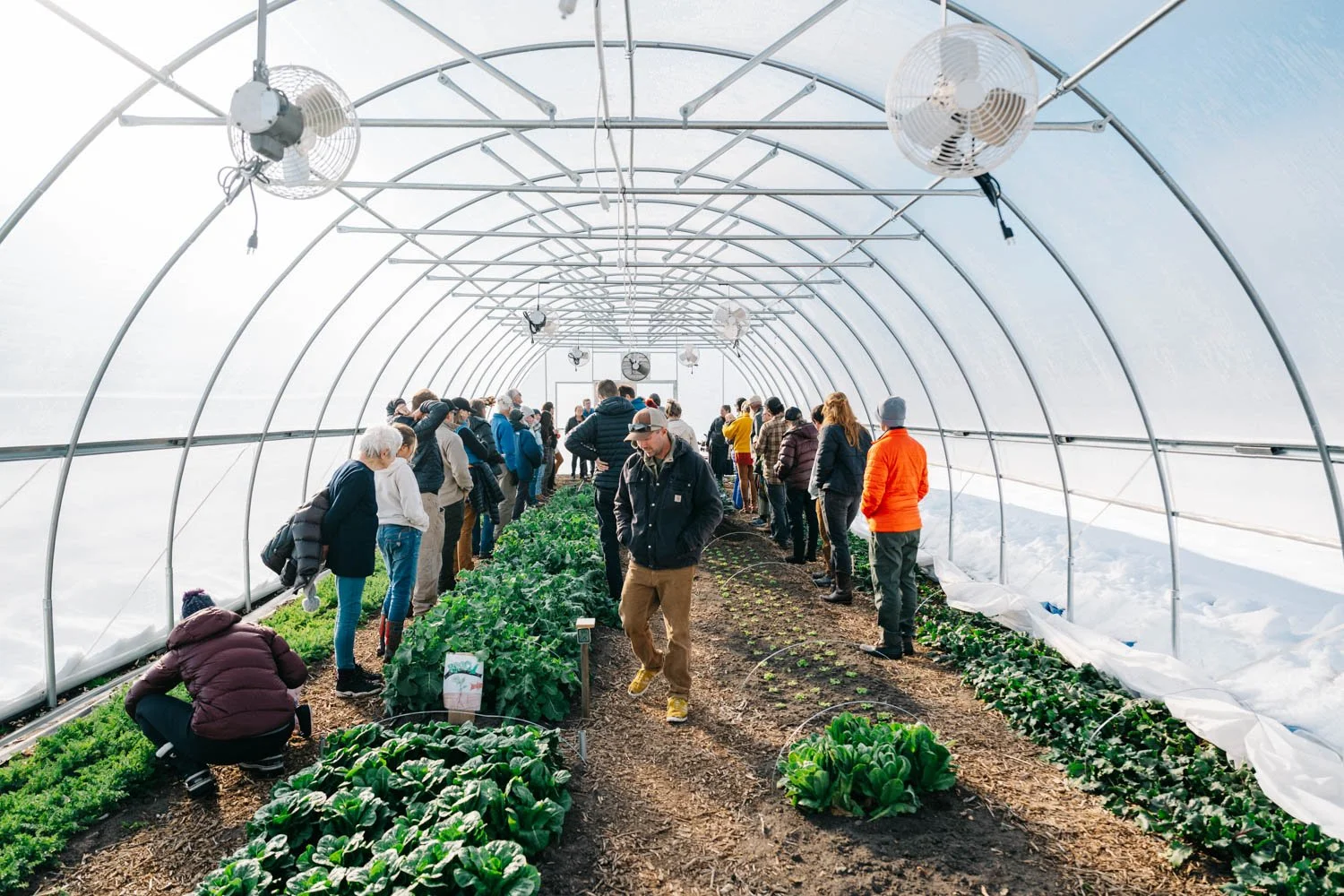
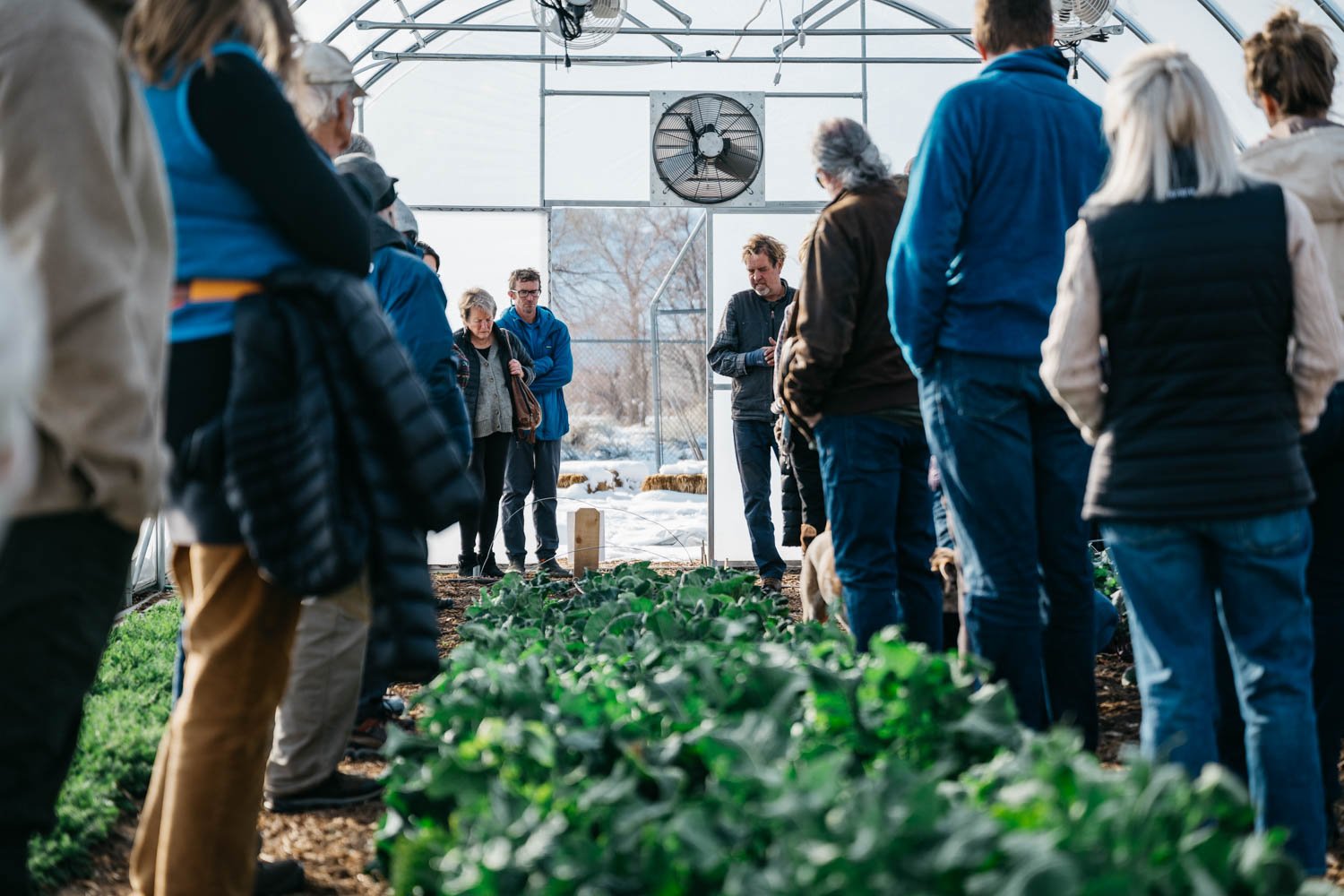
We began the afternoon at Inyo Farm@School, tucked into Bishop Elementary, where farmer and educator Bruce Willey walked us through one of the most hopeful projects happening in our valley right now. In the middle of winter, fresh greens were thriving in the greenhouse. This project is part of the Bishop Unified School District, serving Bishop Elementary and Home Street Middle School, and is creating a hands-on learning space where kids grow food, learn agricultural skills, and build an understanding of sustainable food systems. An agroforest is taking shape with fruit trees, grapes, and berries, all rooted in the larger goal of nourishing school meals and reconnecting young people to where food actually comes from. This is how food systems are rebuilt, slowly, intentionally, starting with kids and soil.
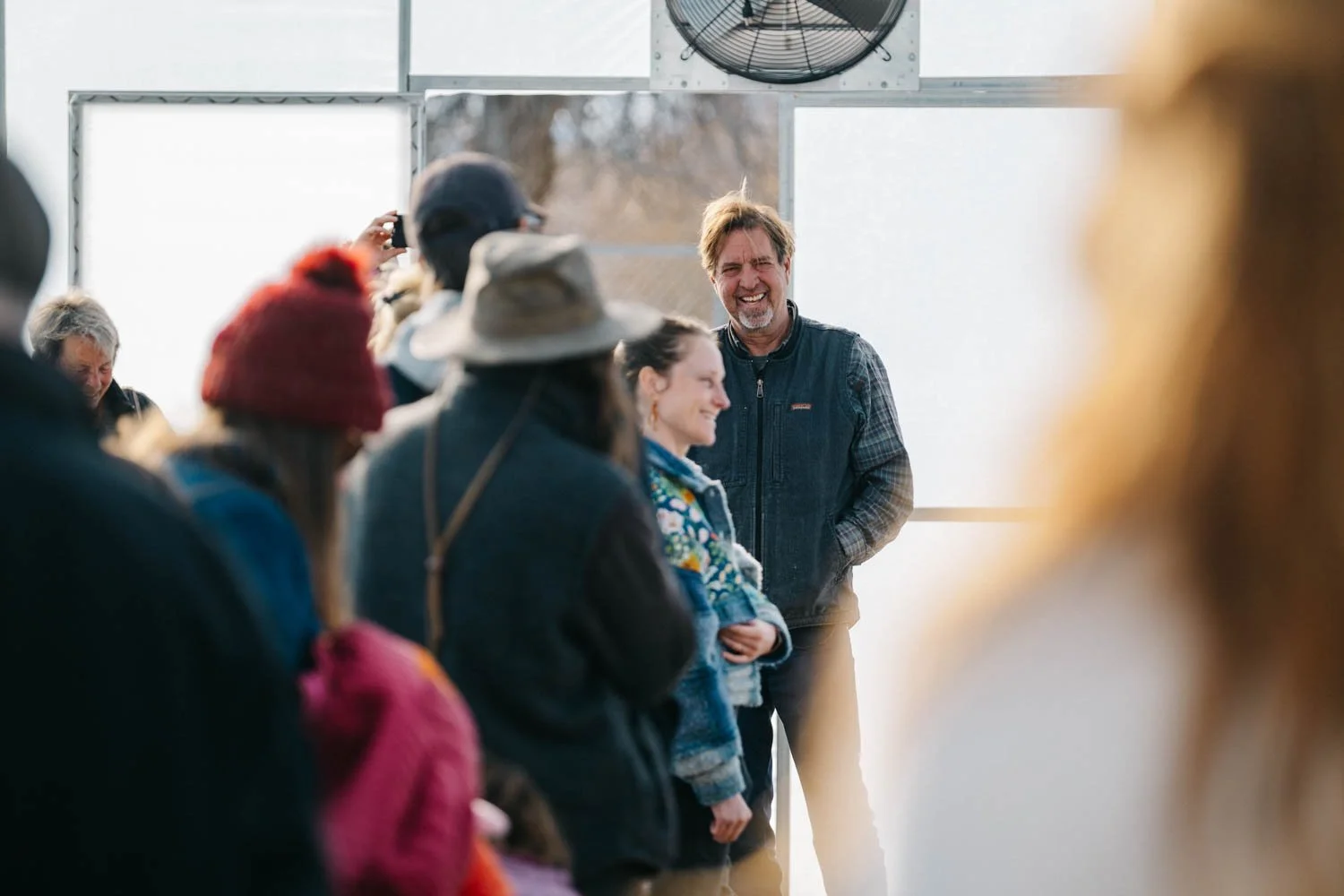
From there, we made our way to the Cantina at the Tri-County Fairgrounds.
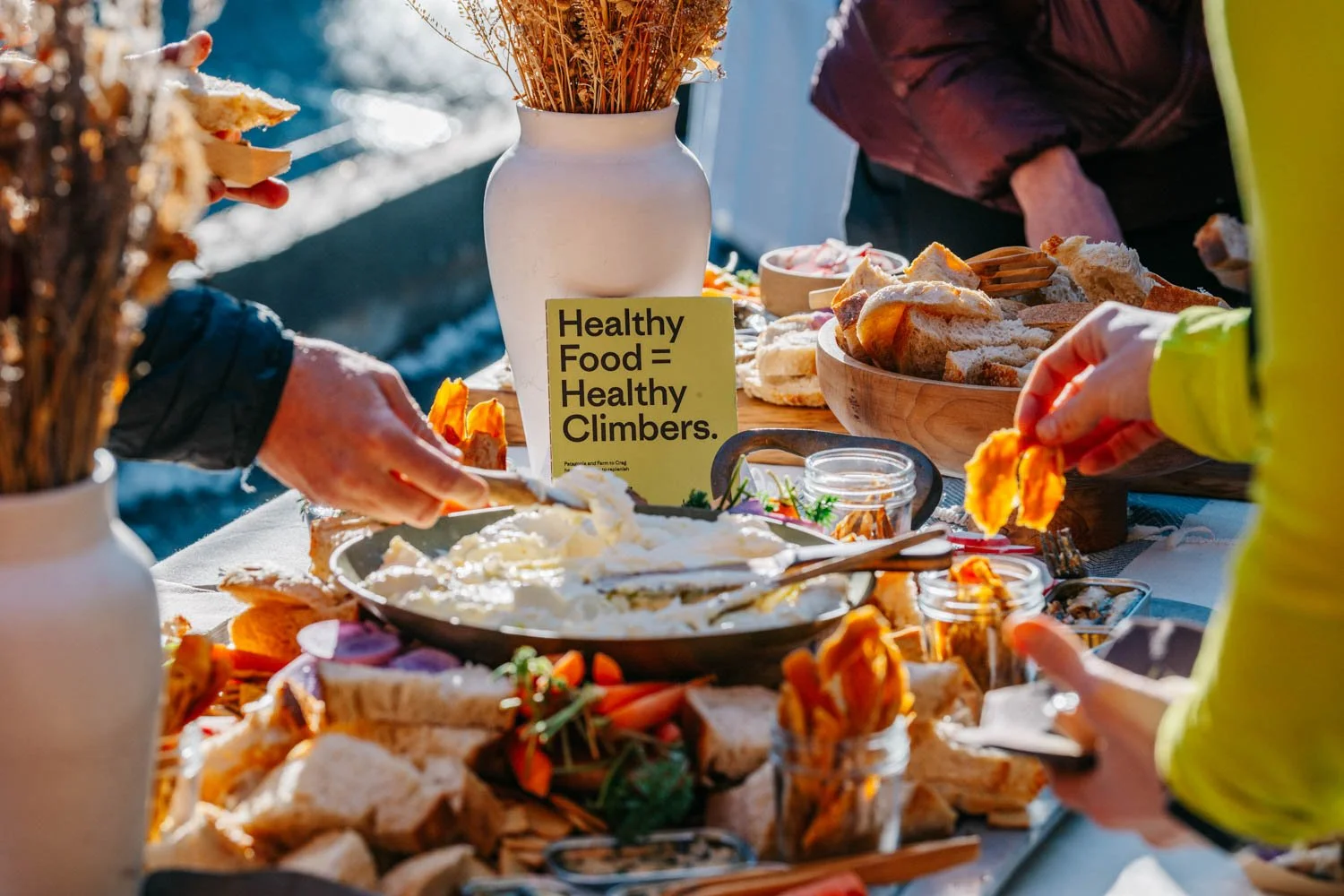
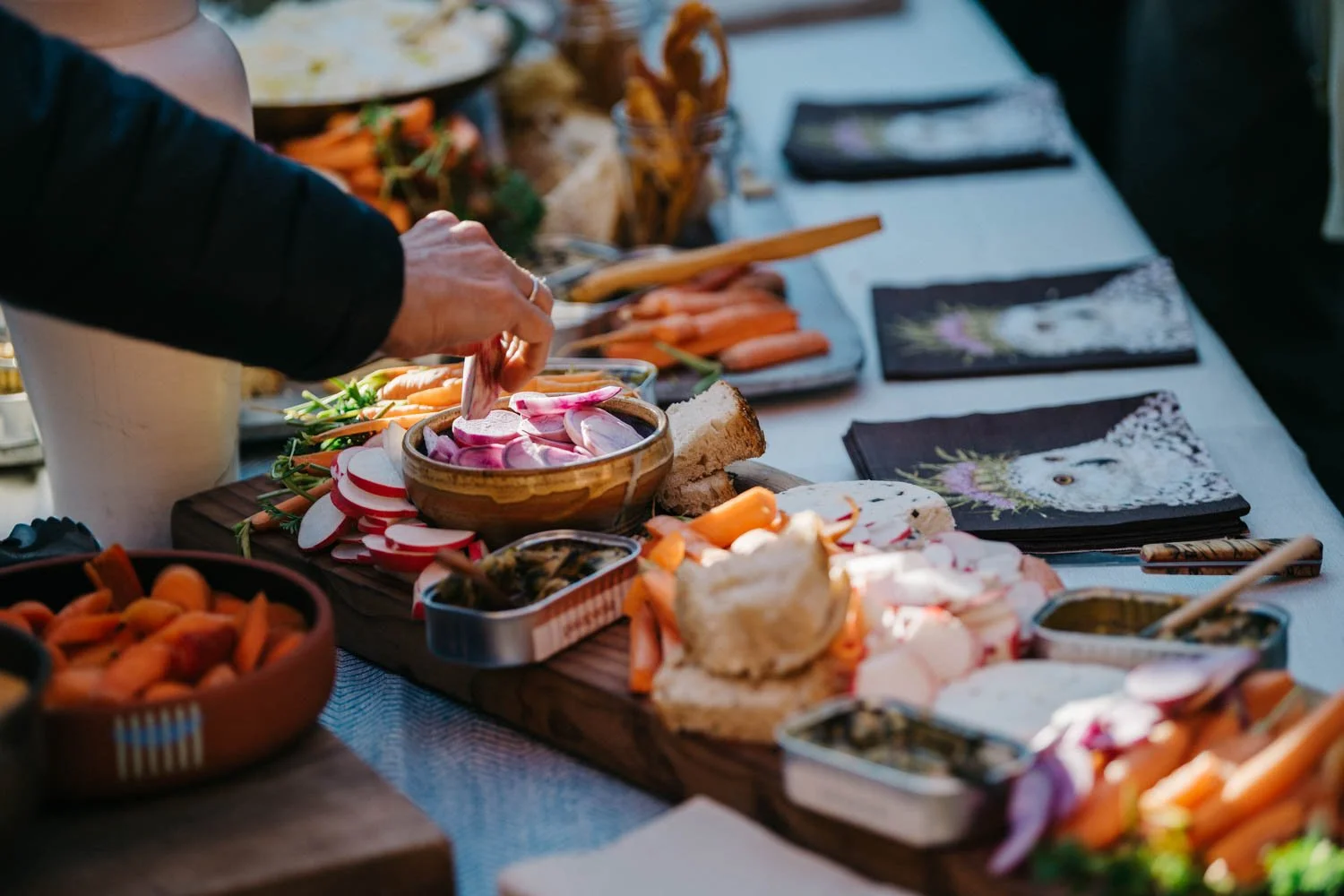
We were introduced to Outward Wines, whose wines fit the evening beautifully. A partnership between Natalie Siddique and Ryan Pace, Outward Wines focuses on minimal-intervention winemaking that allows vineyards to speak for themselves. Native yeast fermentations, small lots, and a restrained approach result in wines that feel honest and alive. As glasses were poured and conversations began to unfold, the hors d’oeuvres table was filled with local, delicious bites. We are super grateful to Patagonia Provisions and Sol Simple for generously donating nourishing snacks that rounded out the spread.
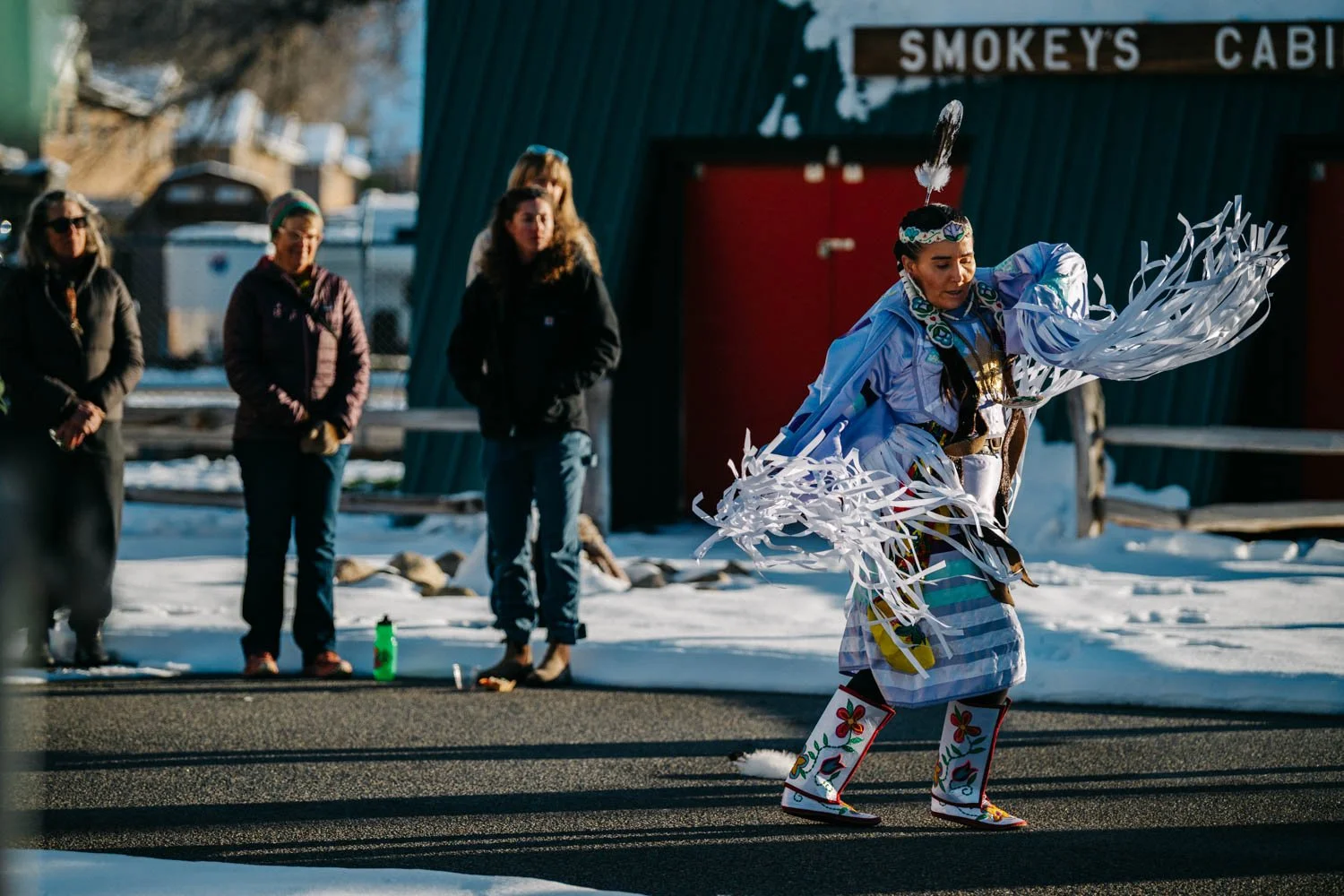
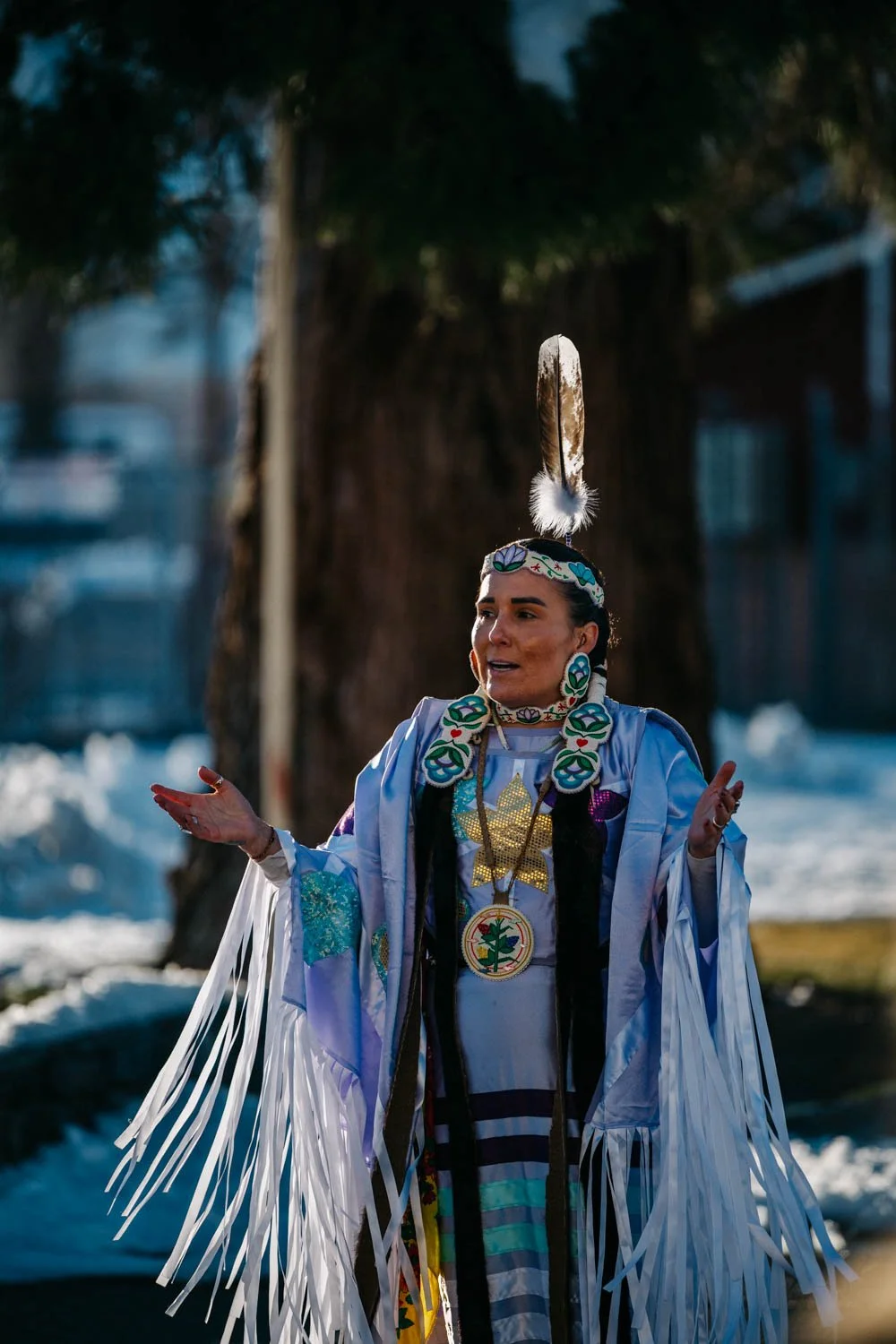
One of the most powerful moments came when the AkaMya Culture Group shared their Fancy Shawl Dance. The movement was joyful and strong, full of intention and beauty. AkaMya’s work centers on preserving and sharing Indigenous culture through education, storytelling, and dance. It was a reminder that food, land, and culture have always been inseparable, long before any of us gathered around modern tables.
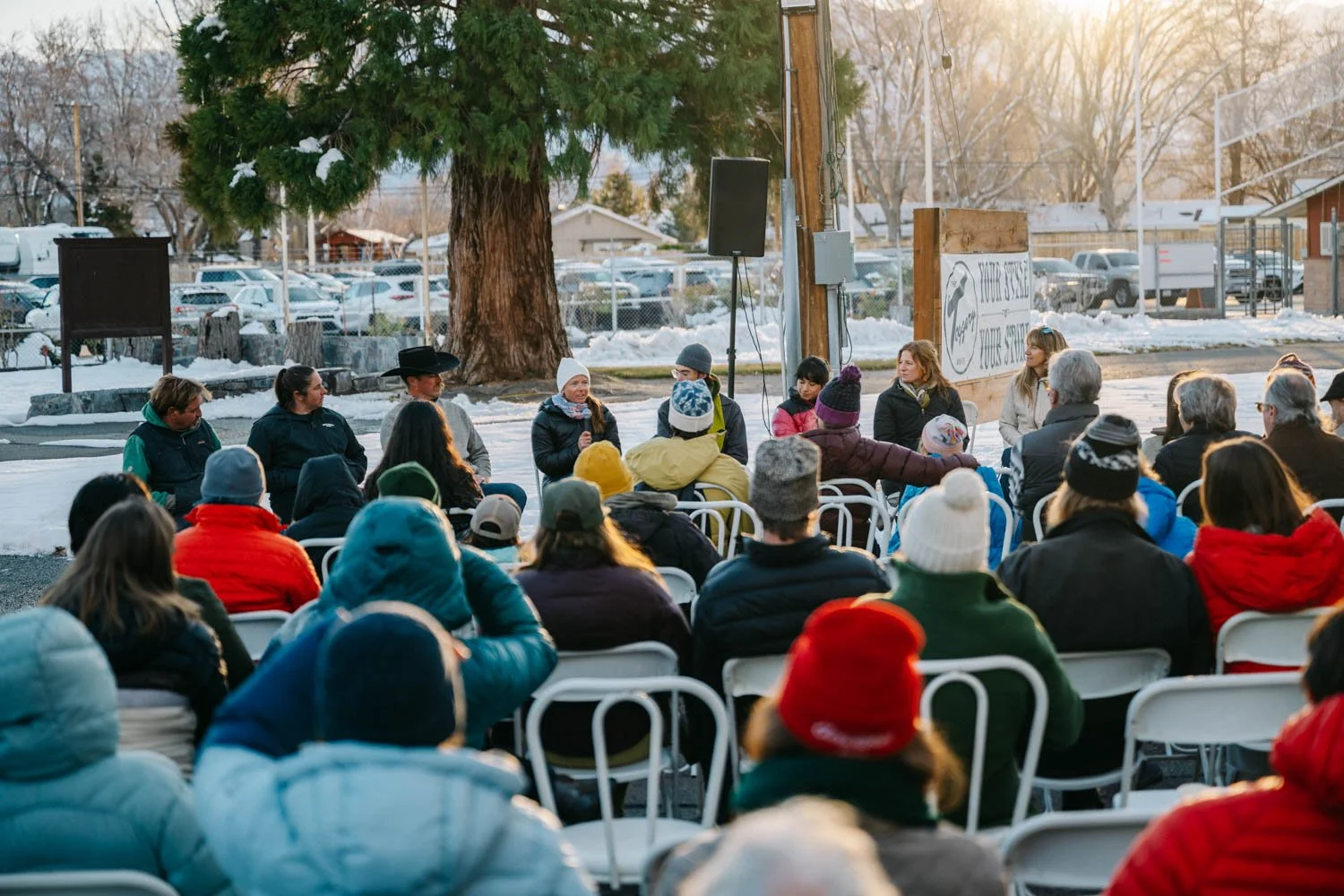
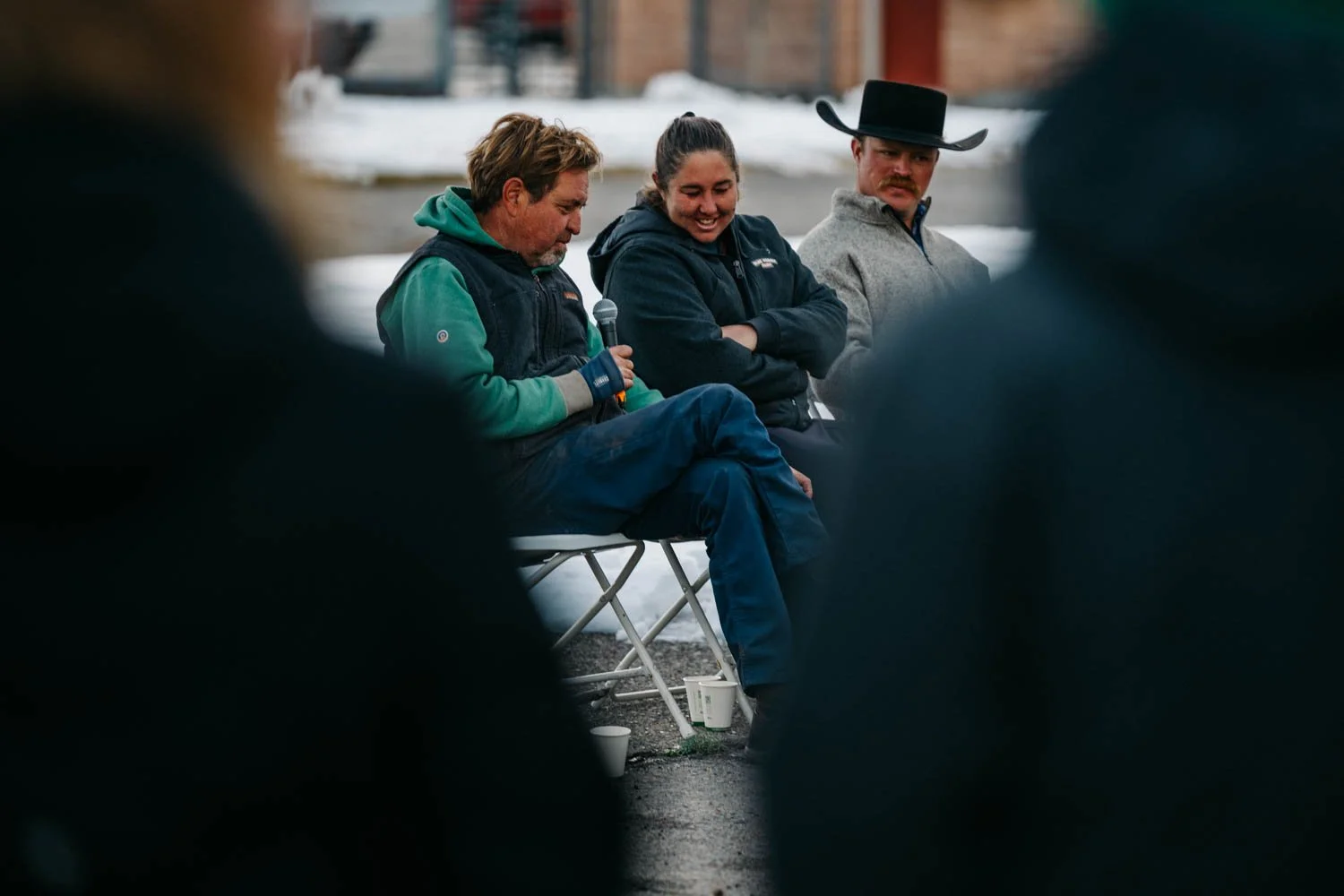
Then we sat together for a panel conversation that felt like a true cross-section of this valley. Climbers, farmers, ranchers, planners, and educators all sharing what they care about most when it comes to bringing agriculture back into the fabric of this place. The panel included Kate Rutherford, climber and founder of Farm to Crag; Nina Williams, professional climber; Milo Vella, Head of the Bishop Paiute Food Sovereignty Program; Ellyn Greene, farmer at Deep Springs College; Lindsay Gucker, founder of Plena Planning; Jake Doonan, rancher at Montgomery Creek Ranch; Rachel Kulchin, farmer at Blue Heron Farm; and Bruce Willey, farmer at Inyo Farm@School.
The conversation was brief but energizing. Hearing perspectives from climbers who care about stewardship, from farmers and ranchers rooted in soil and water, and from system designers thinking long-term made one thing clear. There is real momentum here. Rebuilding a local food system is not one project or one farm. It is a network of people choosing to care, collaborate, and imagine something better together.
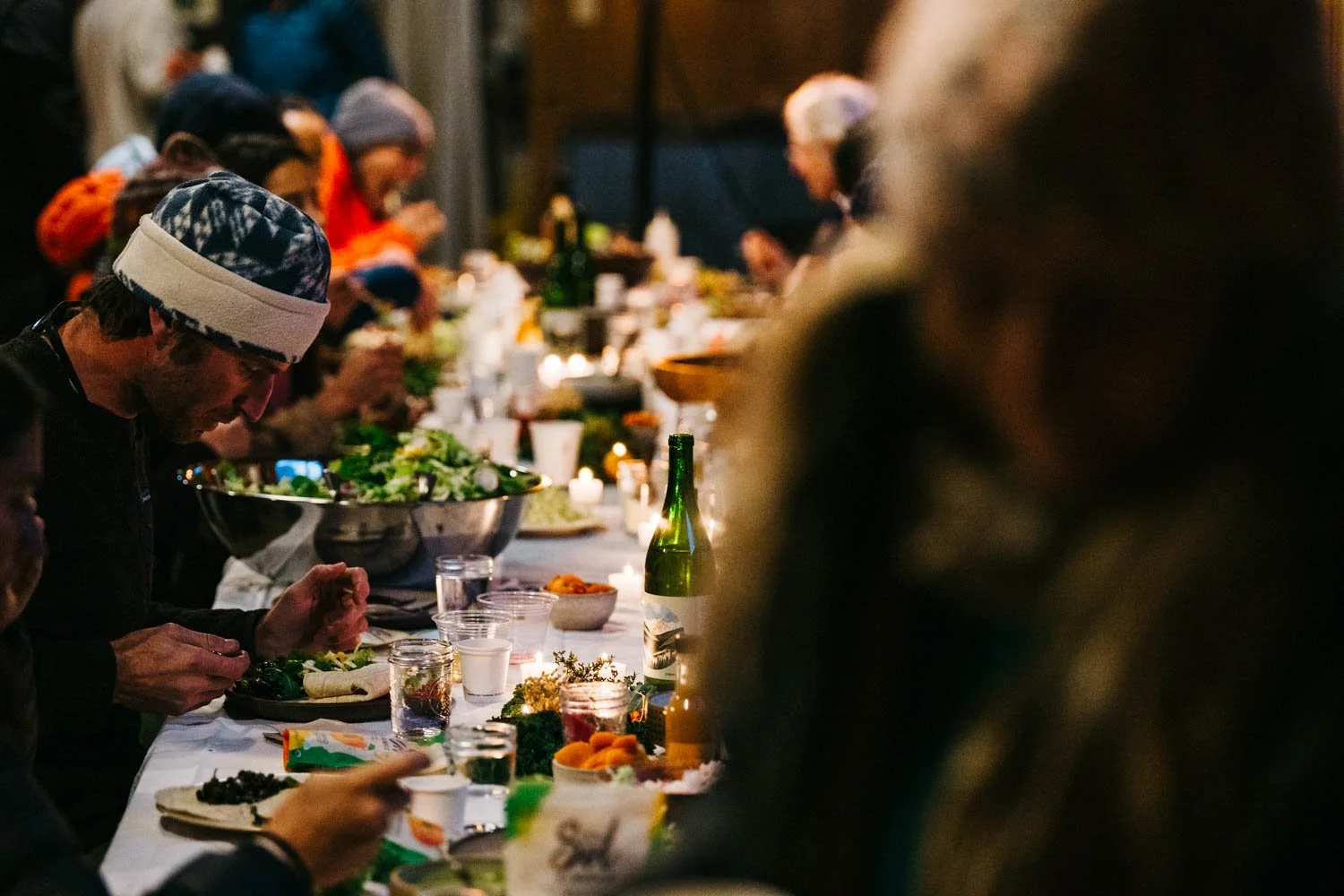
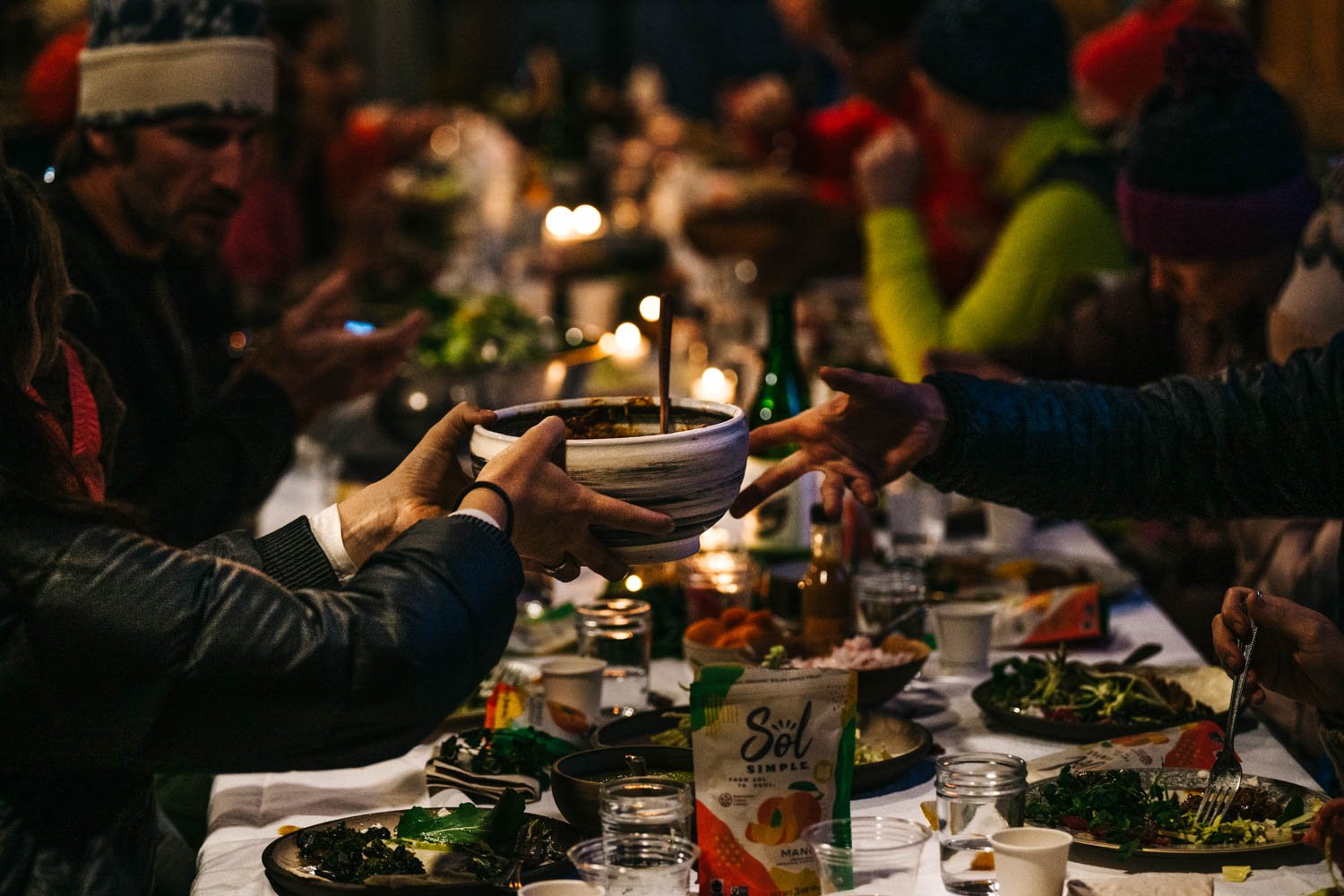
Afterward, we gathered for dinner. Family style. Big bowls passed hand to hand. Plates filled, emptied, and filled again. Laughter rose. Conversations stretched long. The majority of the food served that night was sourced right here from our valley, and even in February, with the land resting under snow, we were able to share a meal that reflected home. That felt deeply meaningful.
The magical evening was organized and led Farm to Crag and the work they do connecting people over food. Their mission is rooted in building relationships between climbers, farmers, and local food systems, prioritizing place-based food, fair pay for farmers, and a culture of reciprocity with the landscapes we love. This dinner embodied that work fully and thoughtfully.
We want to say thank you, from both Aki and me.
Thank you to everyone who bundled up, shifted plans, and came anyway. Thank you to the people who showed up with open hearts, good questions, and a willingness to sit together and really listen. Thank you to the farmers, ranchers, climbers, educators, cooks, speakers, dancers, volunteers, and behind-the-scenes helpers who gave their time, energy, and love to make this evening what it was.
This night mattered to us more than we can easily put into words. It reminds us why we farm, and why we believe so deeply in the power of food to bring people together. We felt held by this community, and we carried so much dang gratitude home with us. May it be the first of many.
A Dinner with a Cause
Together, we did something very real. So far, Farm to Crag has raised $11,000 toward critical water infrastructure at the farm. Pipes, filters, and systems that quietly make everything else possible.
Phase one of the irrigation project costs over $55,000. Farm to Crag’s goal is to help make this work possible by rallying community support around the foundational pieces of the system. Our first fundraising milestone is $20,000, and we are getting close.
If you felt connected to this gathering, if you believe in keeping good food growing here in the valley, and if you want to help build the systems that support it all, we invite you to be part of the next step.
How to Donate
To support Blue Heron Farm’s water infrastructure through our nonprofit partner Farm to Crag (501(c)(3)), please donate through Farm to Crag and earmark your contribution for Blue Heron Farm.
When donating:
Visit the Farm to Crag donation page
Select your donation amount
Click the checkbox that says “write us a comment”, write: “Blue Heron Farm – Water Infrastructure”
All earmarked donations will go directly toward critical water system improvements at Blue Heron Farm and are tax-deductible through Farm to Crag.
To Learn More:
If you would like to learn more about some of the voices we were lucky enough to hear from, you can click below to read more about their work and the projects they are nurturing here in the valley.
Farm to Crag
is a climber-driven nonprofit responding to climate change by encouraging food choices that build healthier bodies, thriving communities, and climate-resilient soils. Their mission is to inspire people, especially outdoor enthusiasts, to invest in regenerative food systems by connecting climbers with locally grown, seasonal, and sustainable food sources through tangible resources, community gatherings, education, and a national interactive map of local farms and markets. Farm to Crag believes that eating food grown with care for soil health and community wellbeing is a joyful and powerful way to take action for the planet, support farmers, and strengthen connections between the places we play and the places we live.
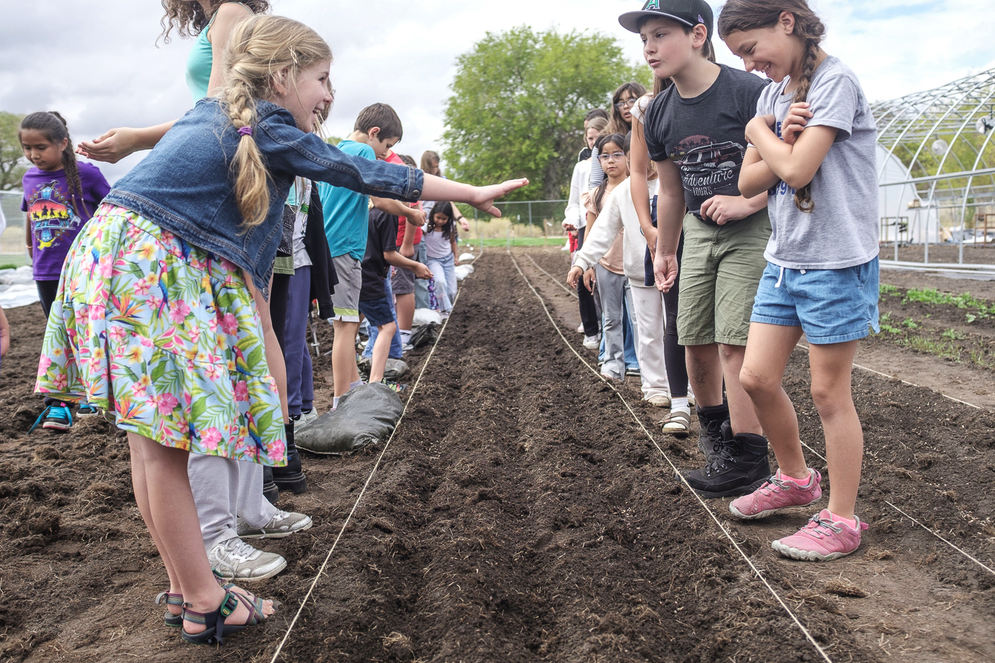
Inyo Farm @ School
is a hands-on educational agriculture project based within the Bishop Unified School District that engages students in growing food, caring for soil, and learning sustainable farming skills. Through gardens, greenhouse production, compost systems, and an expanding agroforest of fruit trees, grapes, and berries, the project gives young people real experience with where food comes from and how it grows.
AkaMya Culture Group
is a collective dedicated to preserving and sharing Indigenous cultural traditions through movement, storytelling, and education. Rooted in authentic expression and community connection, AkaMya offers performances, workshops, and cultural exchanges that celebrate Native identity and heritage. Their Fancy Shawl Dances and other artistic practices honor tradition while inviting audiences into deeper understanding and appreciation of Indigenous culture and resilience.
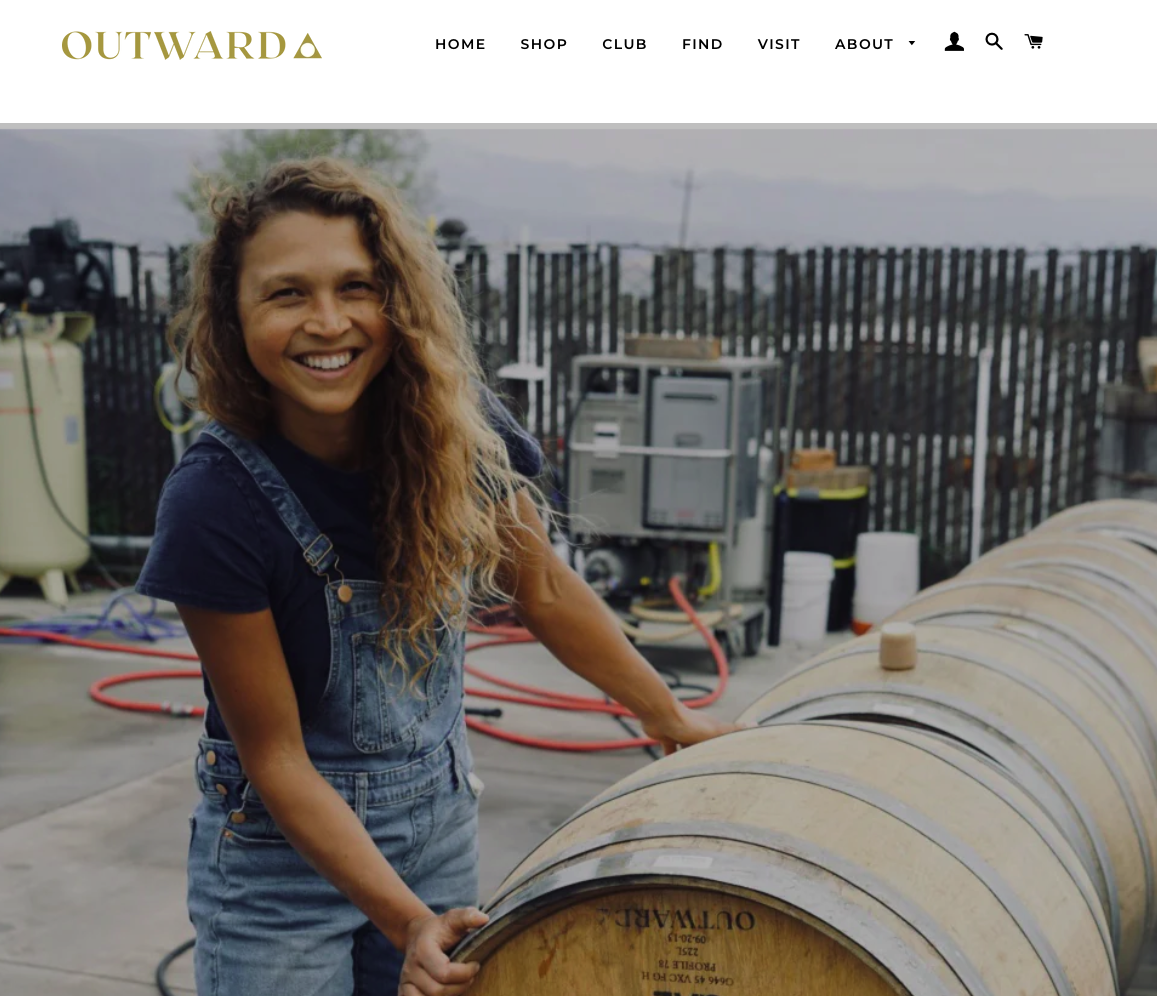
Outward Wines
is a California-based winery focused on expressing a true sense of place through minimal-intervention winemaking. Partnership between Natalie Siddique and Ryan Pace, Outward emphasizes natural fermentation with native yeasts, small lots, and restrained use of sulfur. Their wines are made to reflect the unique character of the vineyards they come from while encouraging connection, conversation, and a deeper appreciation for the land behind every bottle.
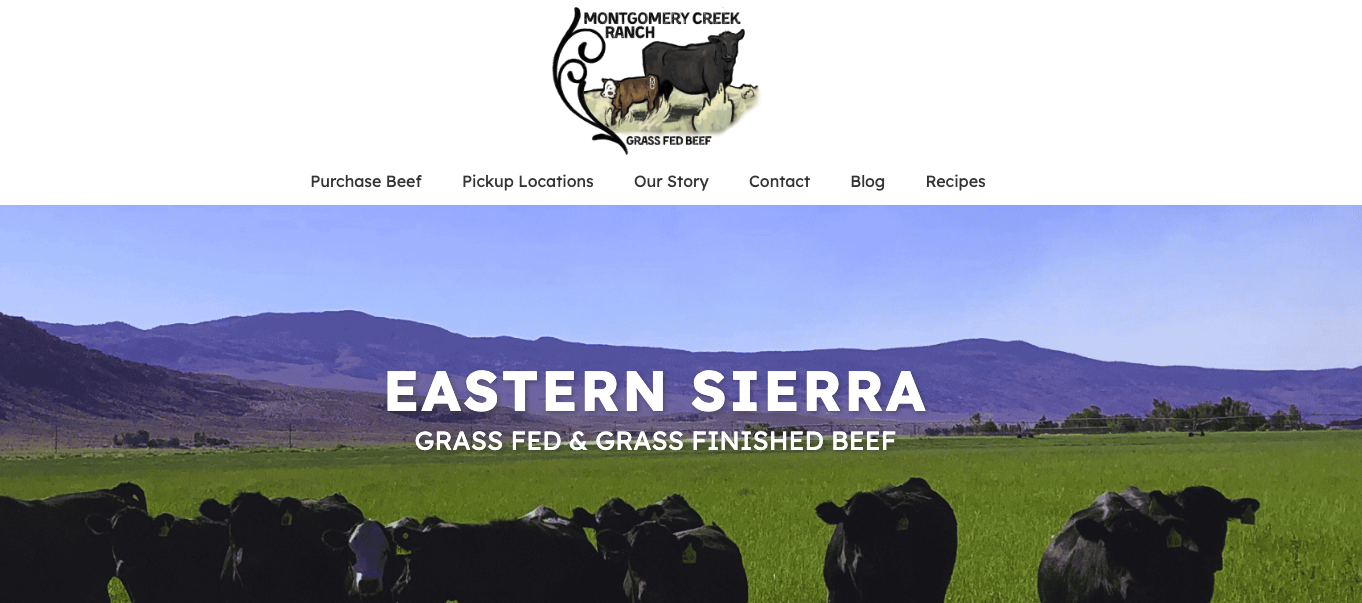
Montgomery Creek Ranch
is a family-owned ranch dedicated to regenerative livestock production and sustainable land stewardship. Located in the Eastern Sierra region, the ranch focuses on raising cattle in a way that supports healthy soils, vibrant rangelands, and long-term ecological balance. Through careful grazing practices and deep connection to the landscape, Montgomery Creek Ranch works to honor both agricultural heritage and environmental resilience, contributing to a stronger, more locally grounded food system.
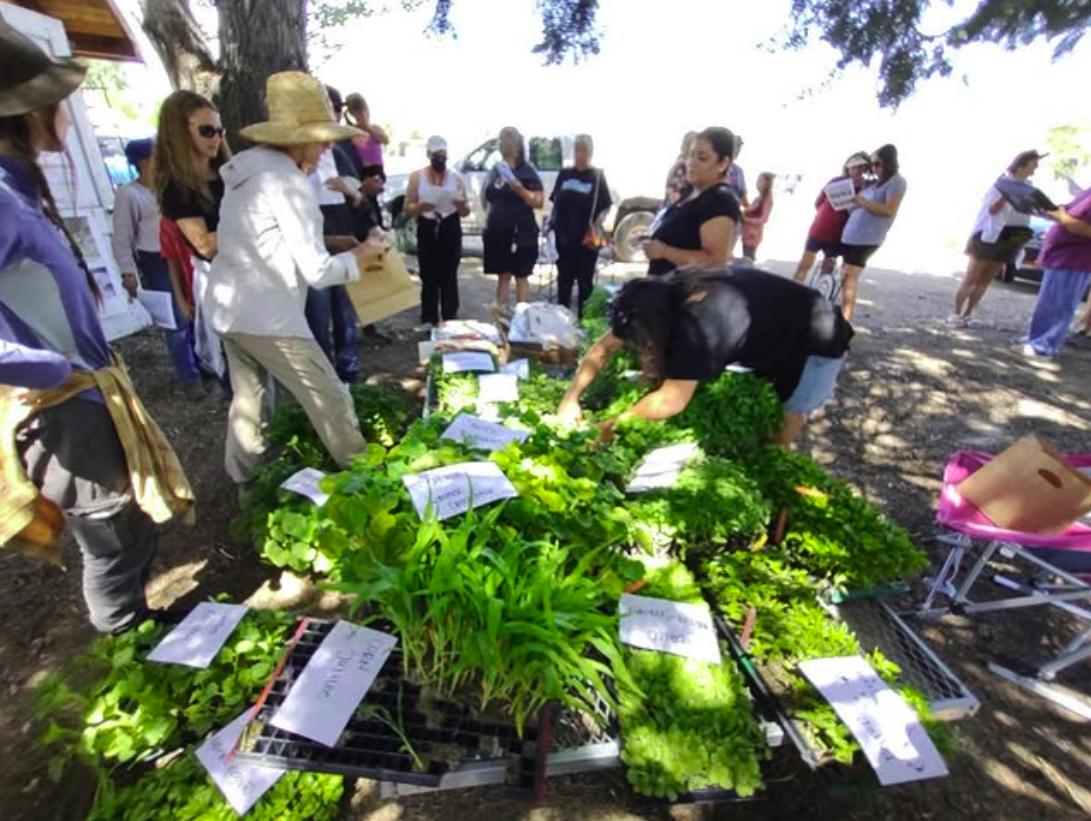
Bishop Paiute Food Sovereignty Program
is an initiative led by the Bishop Paiute Tribe focused on strengthening community health, culture, and self-determination through local food systems. The program supports traditional and contemporary food practices, increases access to healthy and culturally relevant foods, and works to rebuild connections between the land and the people who have stewarded it for generations. Through education, food production, harvesting, and community engagement, the program centers Indigenous knowledge, food sovereignty, and long-term wellbeing for tribal members and the broader valley community.
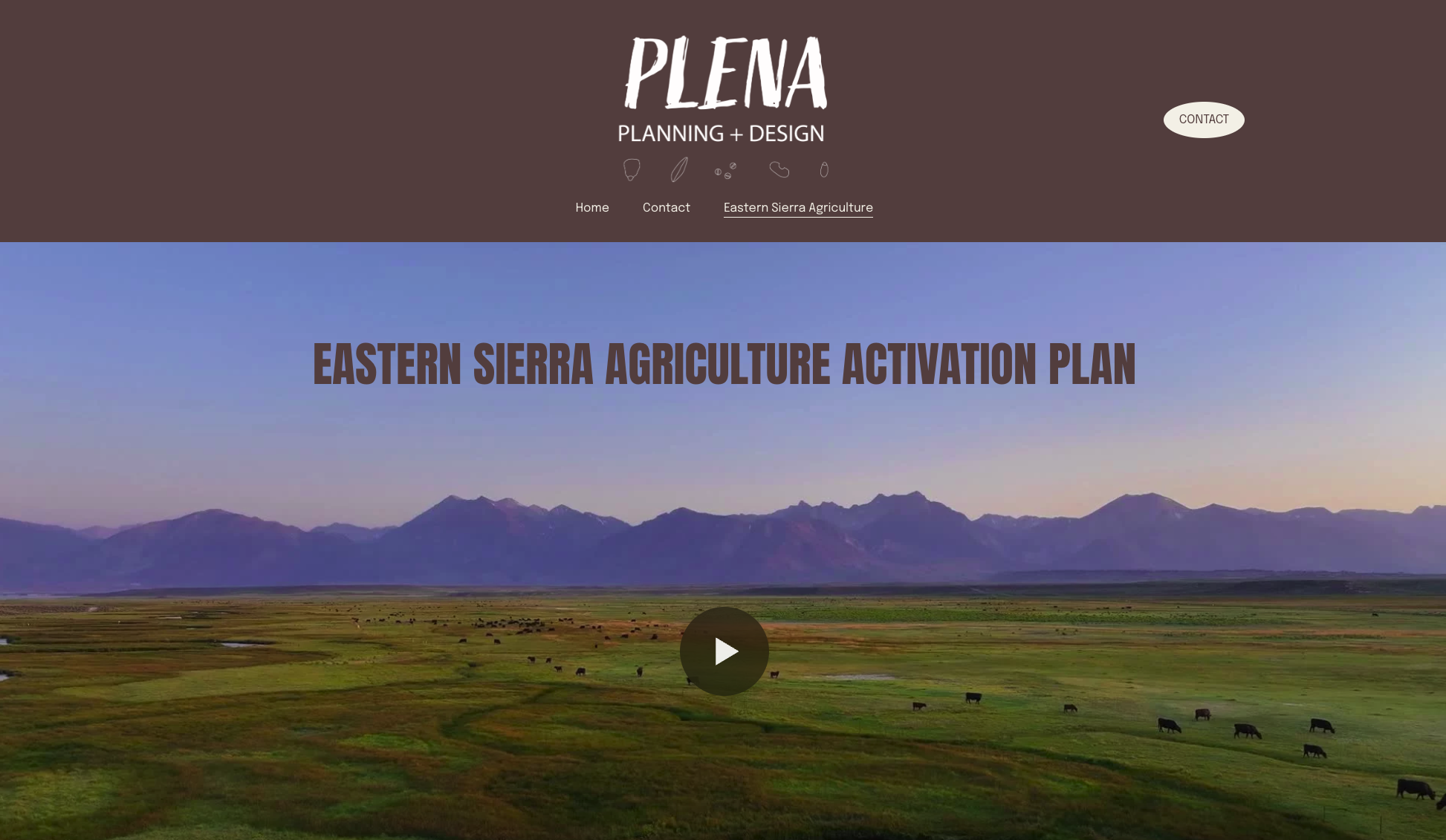
Plena Planning + Design
is a local planning and design practice rooted in holistic, resilient food system planning in the Eastern Sierra. Through projects like the Eastern Sierra Agriculture Activation Plan, they work with ranchers, farmers, community members, and local government to identify challenges and opportunities for agriculture in Inyo and Mono Counties. Their work focuses on strengthening economic opportunities for producers, supporting environmental stewardship, enhancing local food systems, and fostering community-led strategies that reflect the region’s unique agricultural heritage and landscape. Community voices — both producers and residents — are central to how Plena engages in planning and shaping the future of agriculture in the valley.
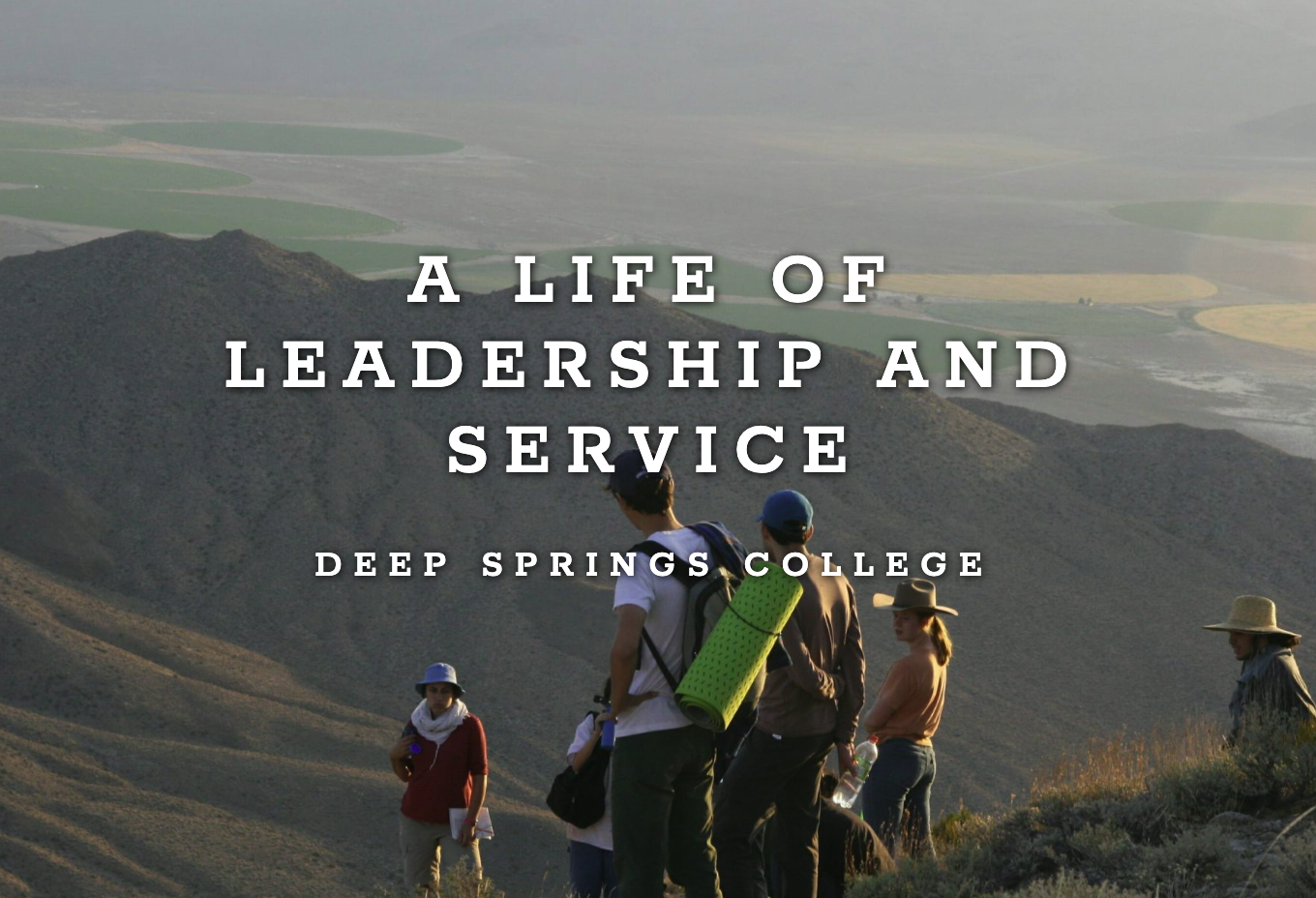
Deep Springs College
is a unique two-year educational institution nestled in a remote ranch valley in Eastern California that blends rigorous academic study with hands-on work in agriculture and ranching. At Deep Springs, students participate directly in managing the land, livestock, gardens, and daily operations of the college, learning not just through books but through labor, community governance, and stewardship of place. This distinctive approach fosters self-reliance, critical thinking, and a deep connection to agricultural and ecological systems as an integral part of a transformative educational experience.
Blue Heron Farm
is a regenerative farm rooted in the Eastern Sierra where soil health, ecological balance, and community connection are central to everything they grow. The farm focuses on diversified vegetable, fruit, and perennial production using organic and regenerative practices that build long-term soil fertility and support vibrant local food systems. Blue Heron Farm champions thoughtful stewardship of the land, seasonal abundance, and education through harvests, farm experiences, and community events that nourish both body and place.