Is Local Food Actually More Expensive?
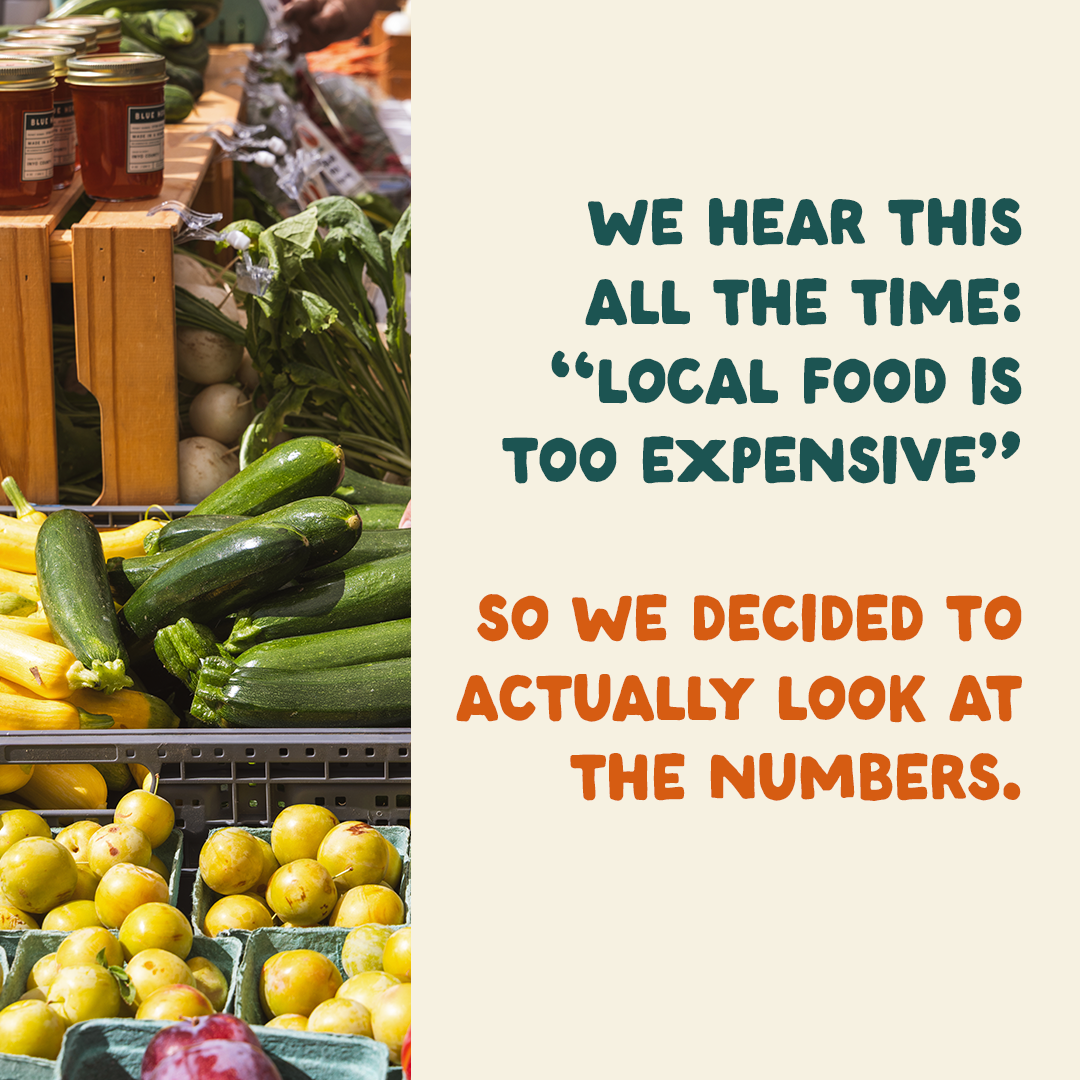
There is a sentence I hear a lot through our local food feasibility studies we have been working on. It is usually said kindly, sometimes apologetically, and sometimes with a little bit of certainty behind it.
“Local food is just too expensive.”
And honestly, I understand where that comes from. Food is expensive right now. Groceries are expensive. Gas is expensive. Rent is expensive. Most families are watching every dollar that leaves their bank account, and gosh, we are no different. We are not farming in some separate reality where numbers do not matter. They matter deeply. They matter to our customers, and they matter to us.
But lately, I have been wondering if we have all accepted this idea without ever really stopping to check it.
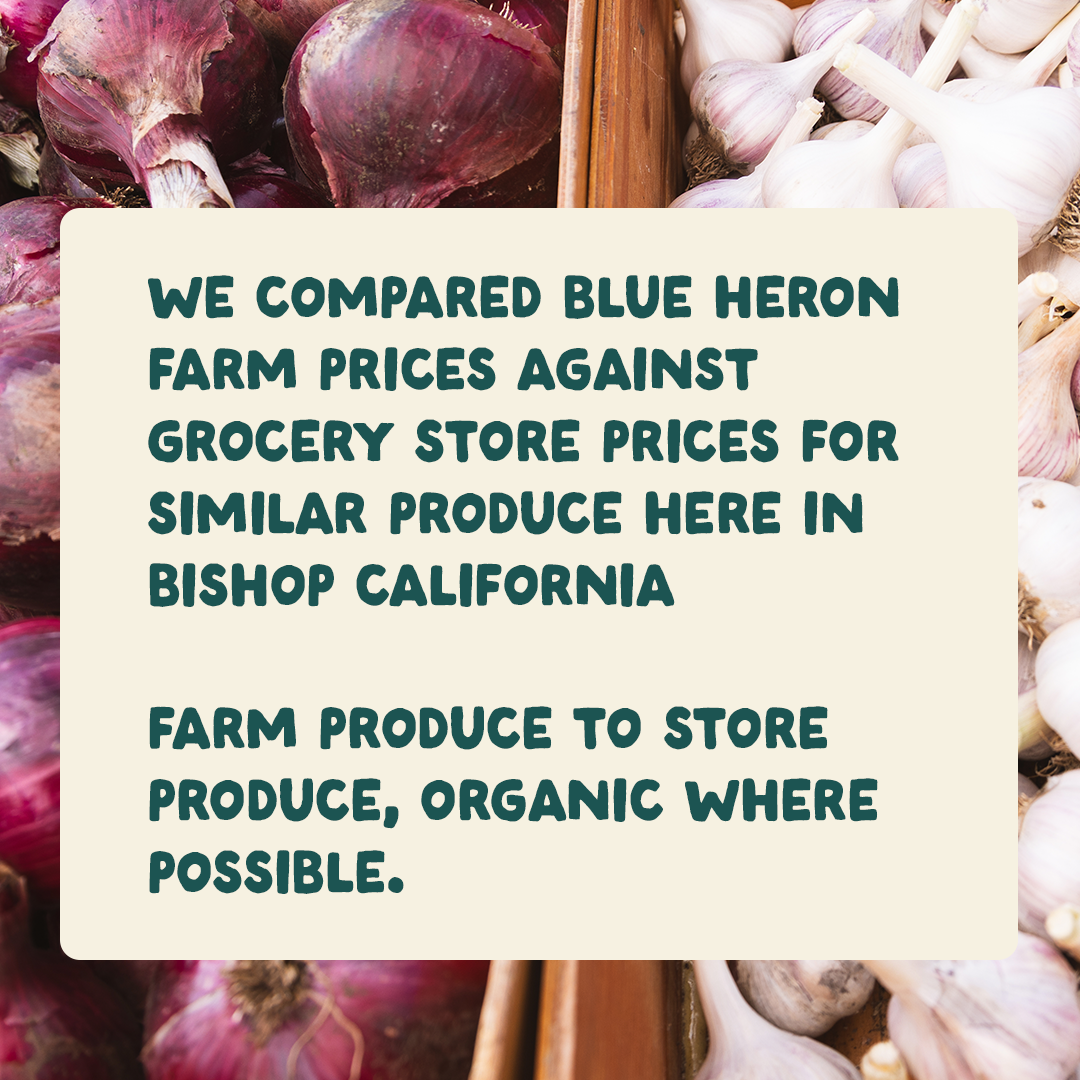
So we decided to do something simple. We took our farm stand prices and compared them to grocery store prices for similar produce here in Bishop. We compared fresh to fresh, organic where we could, and importantly, we compared the actual unit.
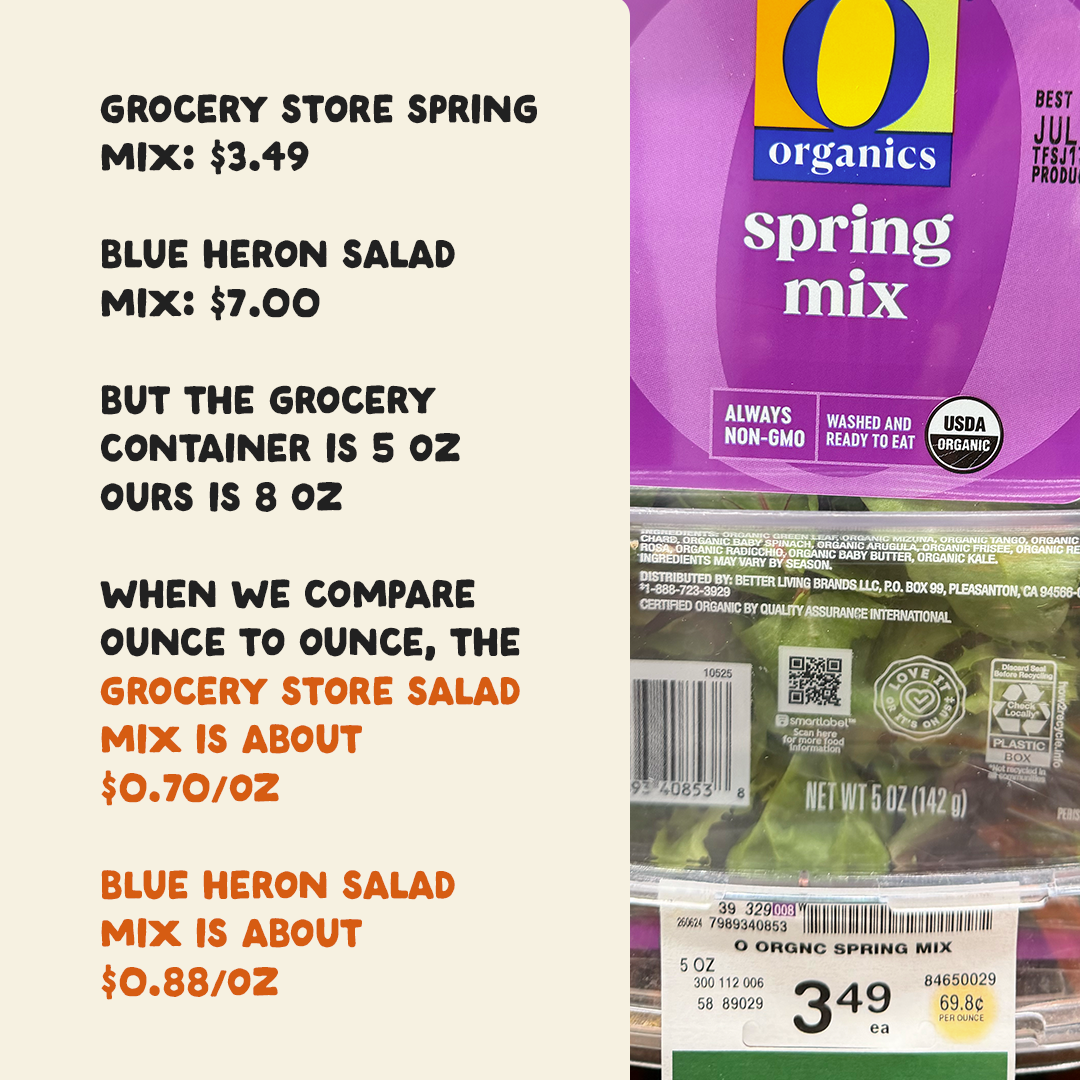
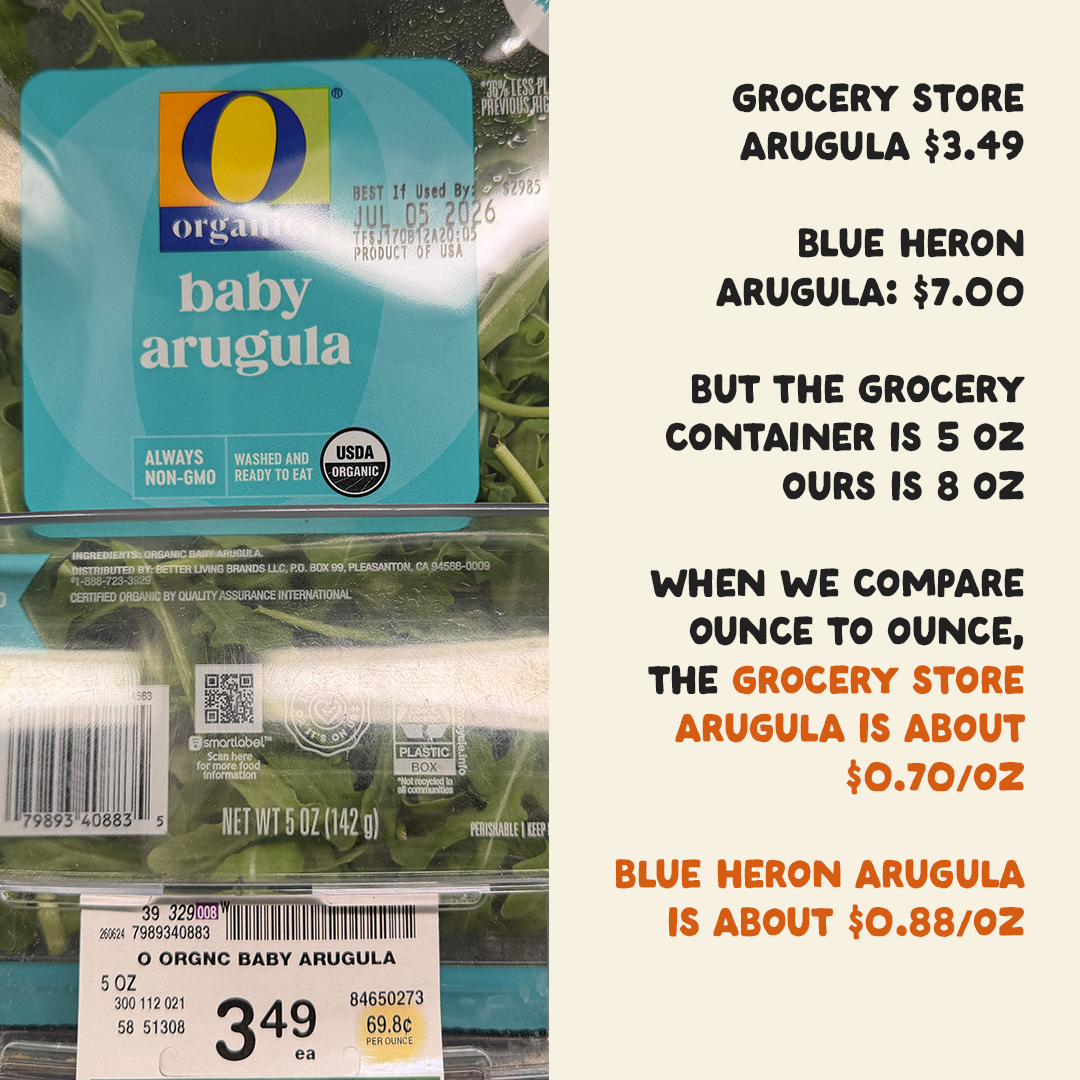
Take salad mix, for example. At the grocery store, a 5-ounce container of organic spring mix was $3.49. Sitting there on the shelf, that looks like a pretty good deal. And if you compare that number straight across to our $7 bag of salad mix, it looks like Blue Heron is twice as expensive.
But our bag is not 5 ounces. Our bag is 8 ounces.
Once you actually do the math, the grocery store salad mix comes out to about $0.70 an ounce. Our salad mix comes out to about $0.88 an ounce. So yes, ours costs more. I am not trying to hide that. But it is not double. Greens grown here, seeded by Rachel, harvested fresh by Rachel, washed by Nick, packaged by Aki, and sold directly to you at the farm stand, traveling exactly ZERO miles from the field to your hands…
And once we started looking at the numbers that way, the whole thing got more interesting.
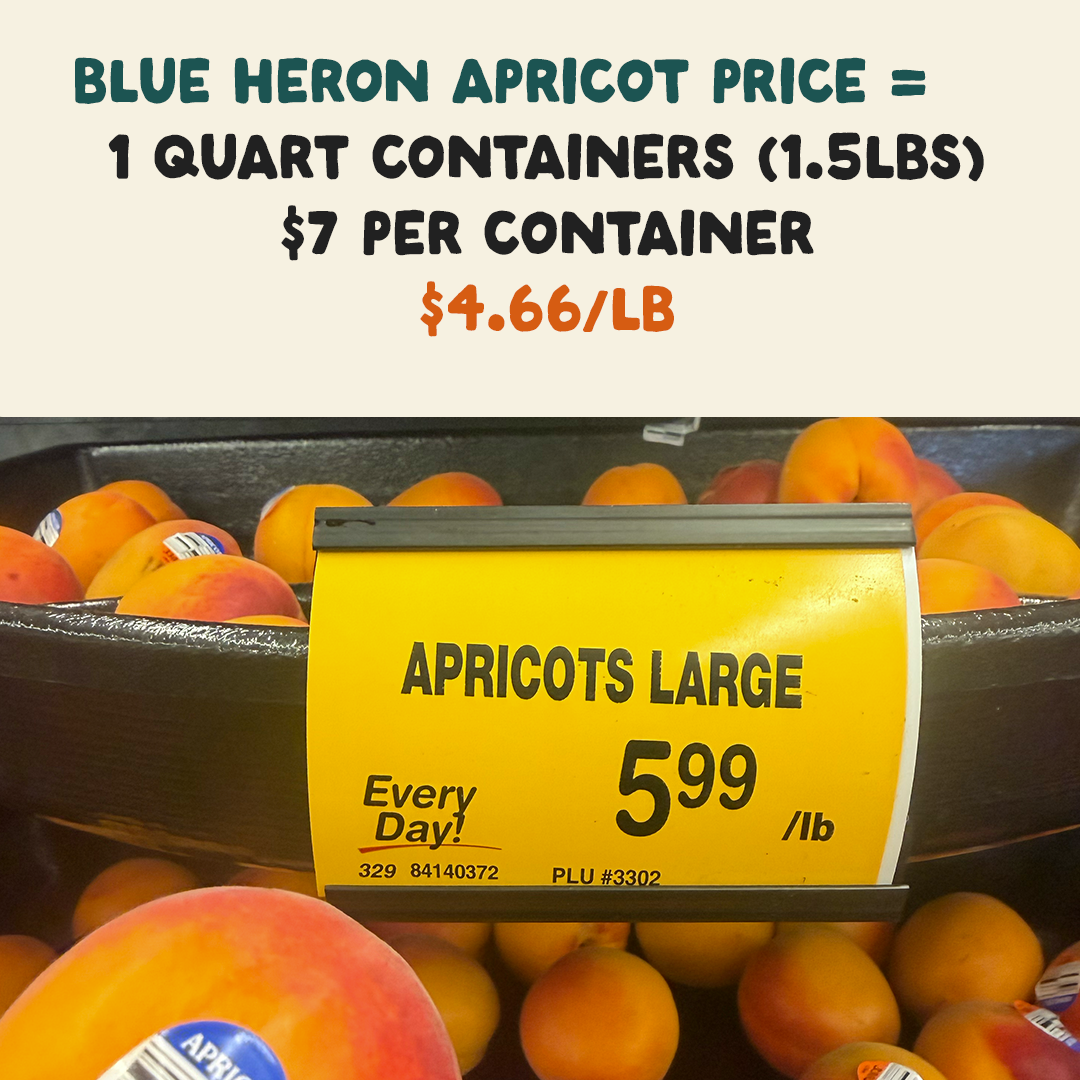
Our apricots were $7 for a quart container, which holds about 1.5 pounds. That comes out to about $4.66 per pound. The grocery store apricots we found were $5.99 per pound. In that case, our local apricots were less.
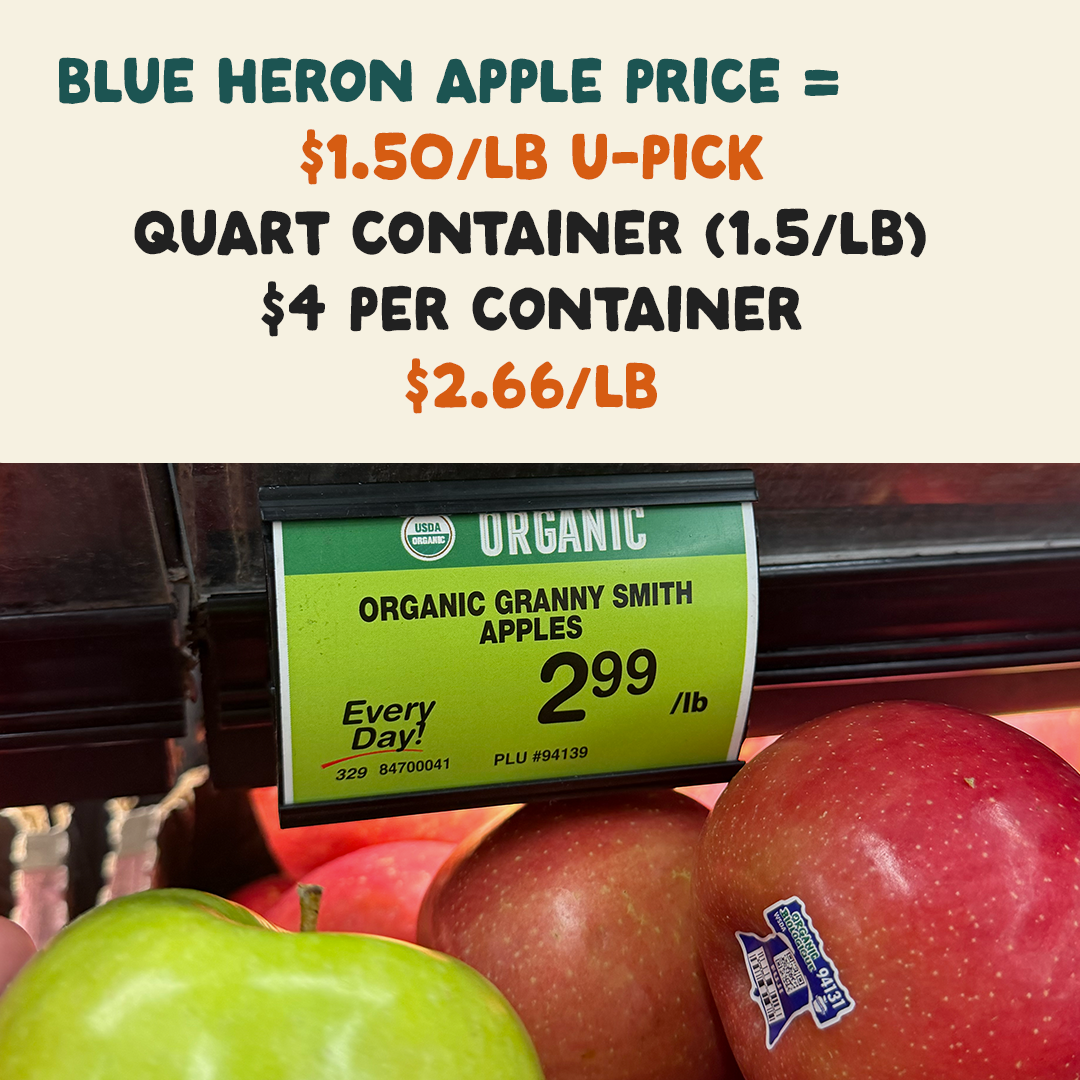
Our u-pick apples are $1.50 per pound. Our quart containers of apples are $4 for about 1.5 pounds, which comes out to about $2.66 per pound. The organic Granny Smith apples at the grocery store were $2.99 per pound. Again, lower.
Our chard is $3 per bunch. The organic rainbow chard at the grocery store was $2.99 per bunch. So in this case, the same price.
Our eggplant is $4 per pound. The grocery store Chinese eggplant was $4.99 per pound. Again, cheaper.
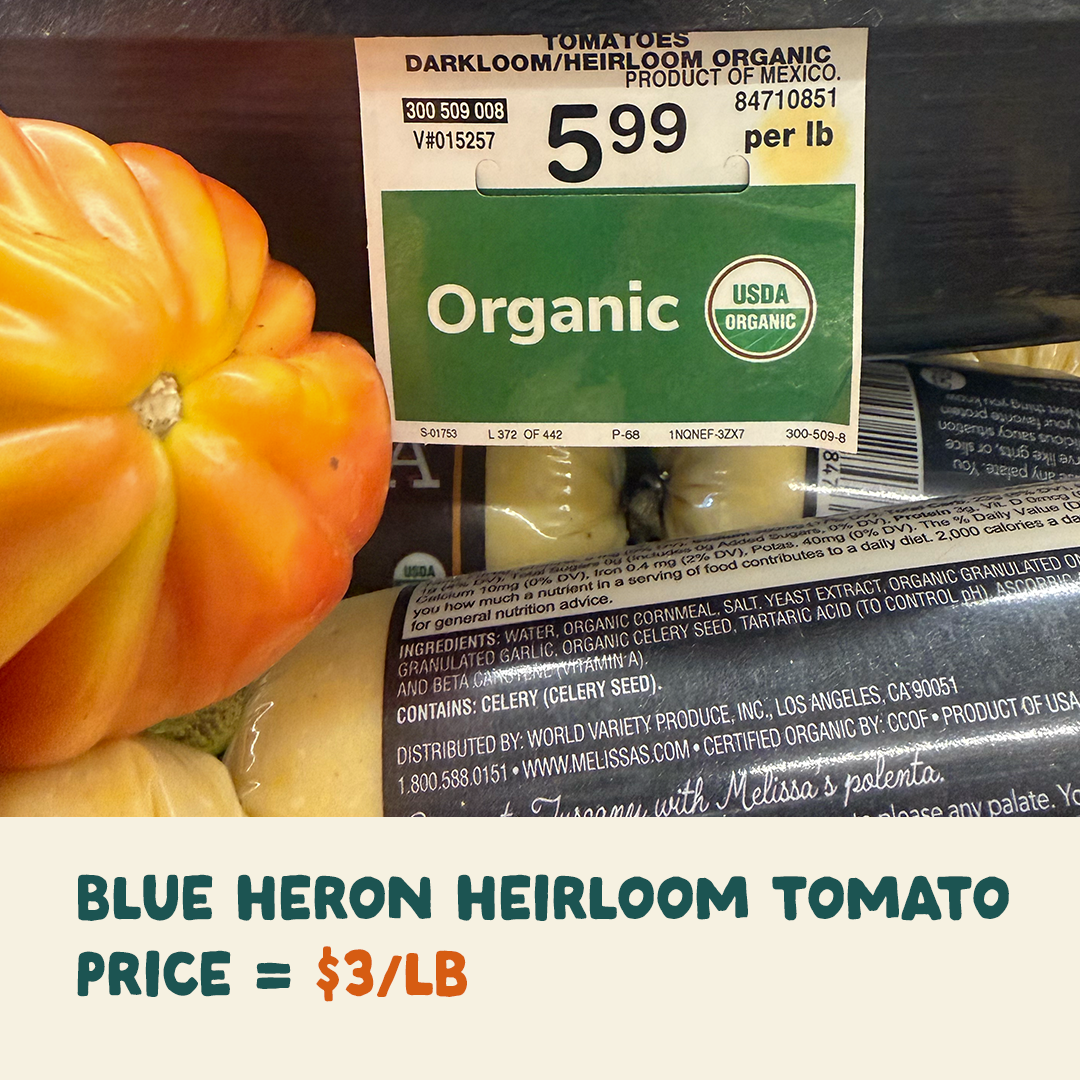
Our heirloom tomatoes are $3 per pound. The organic heirloom tomatoes at the grocery store were $5.99 per pound. Half the price at the farm stand.
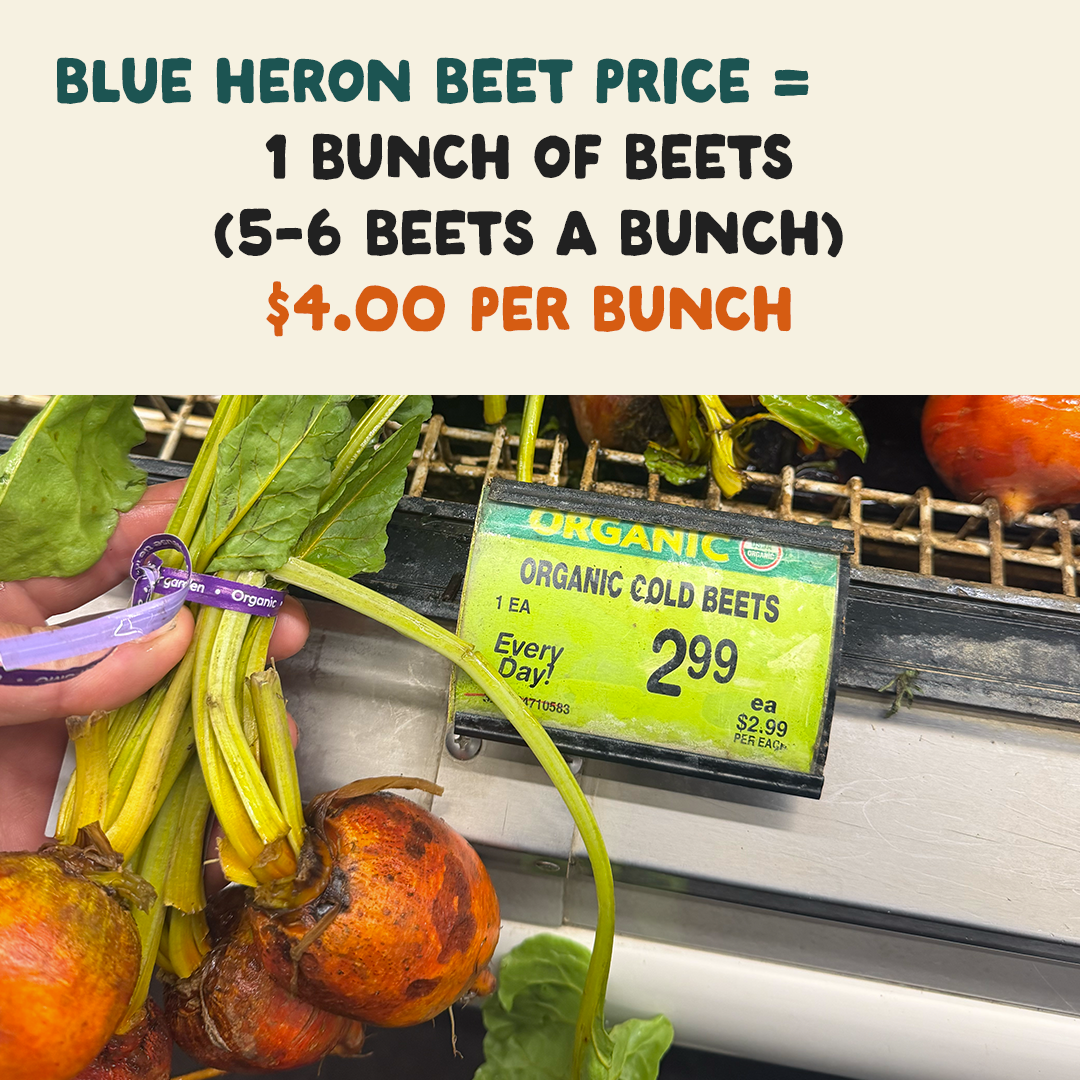
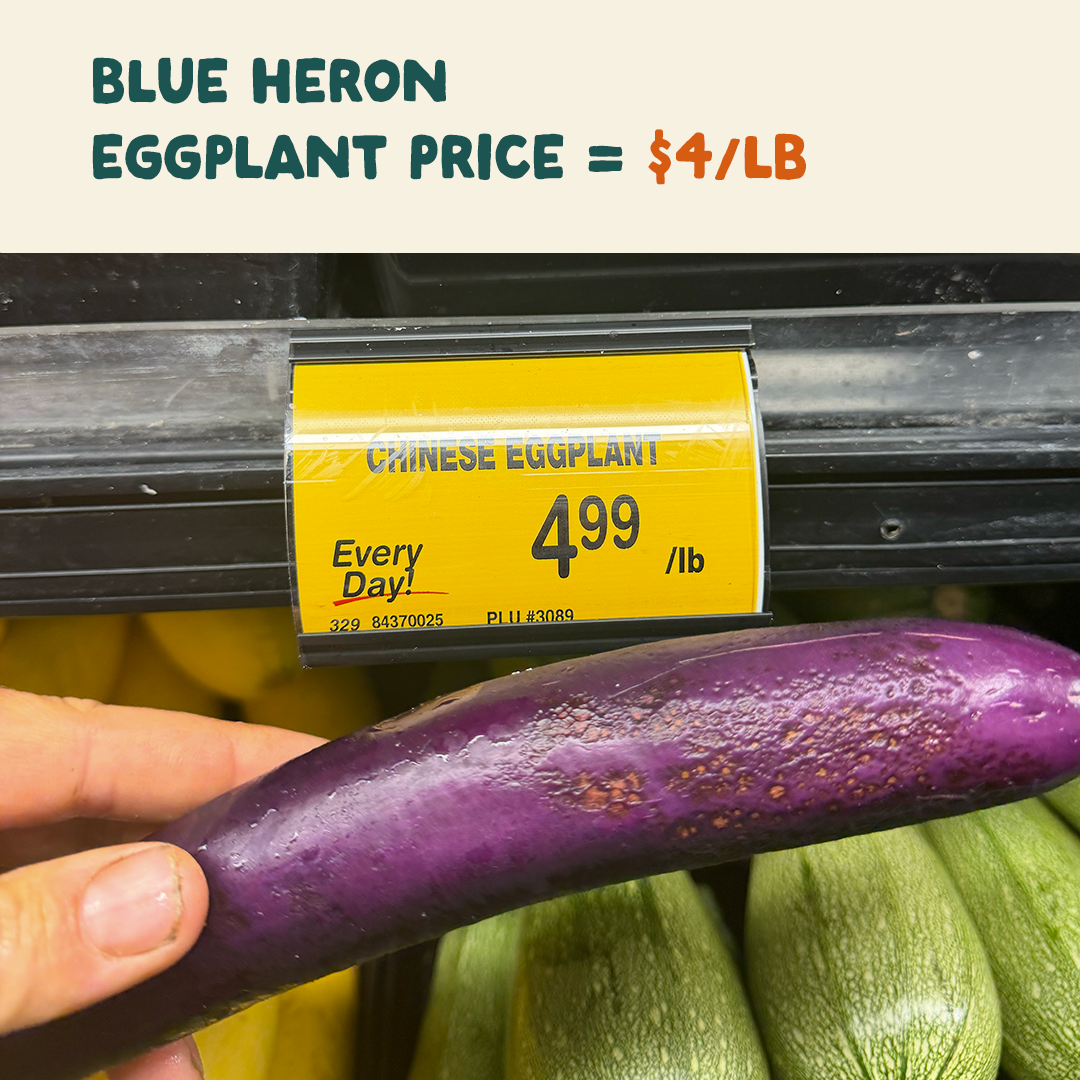
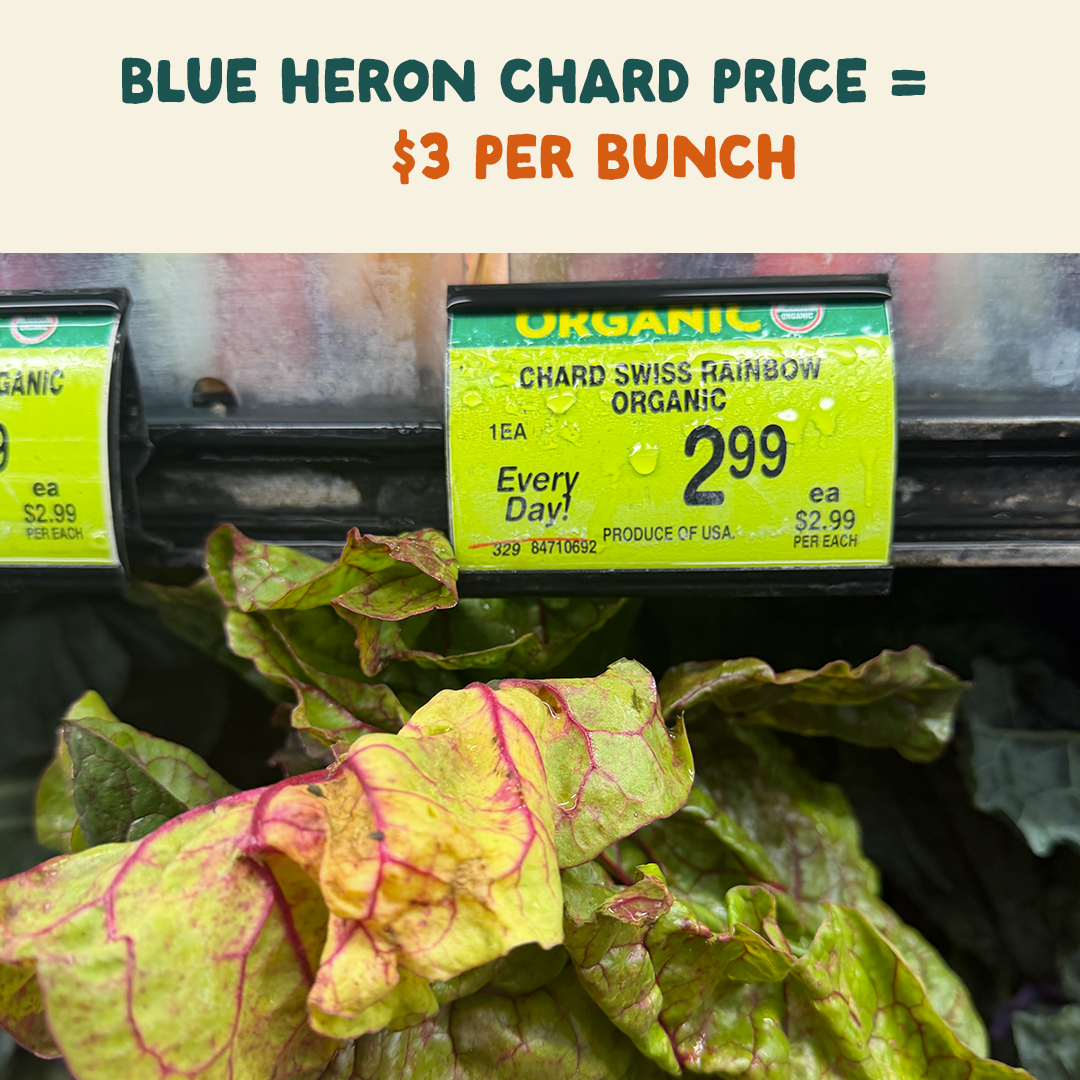
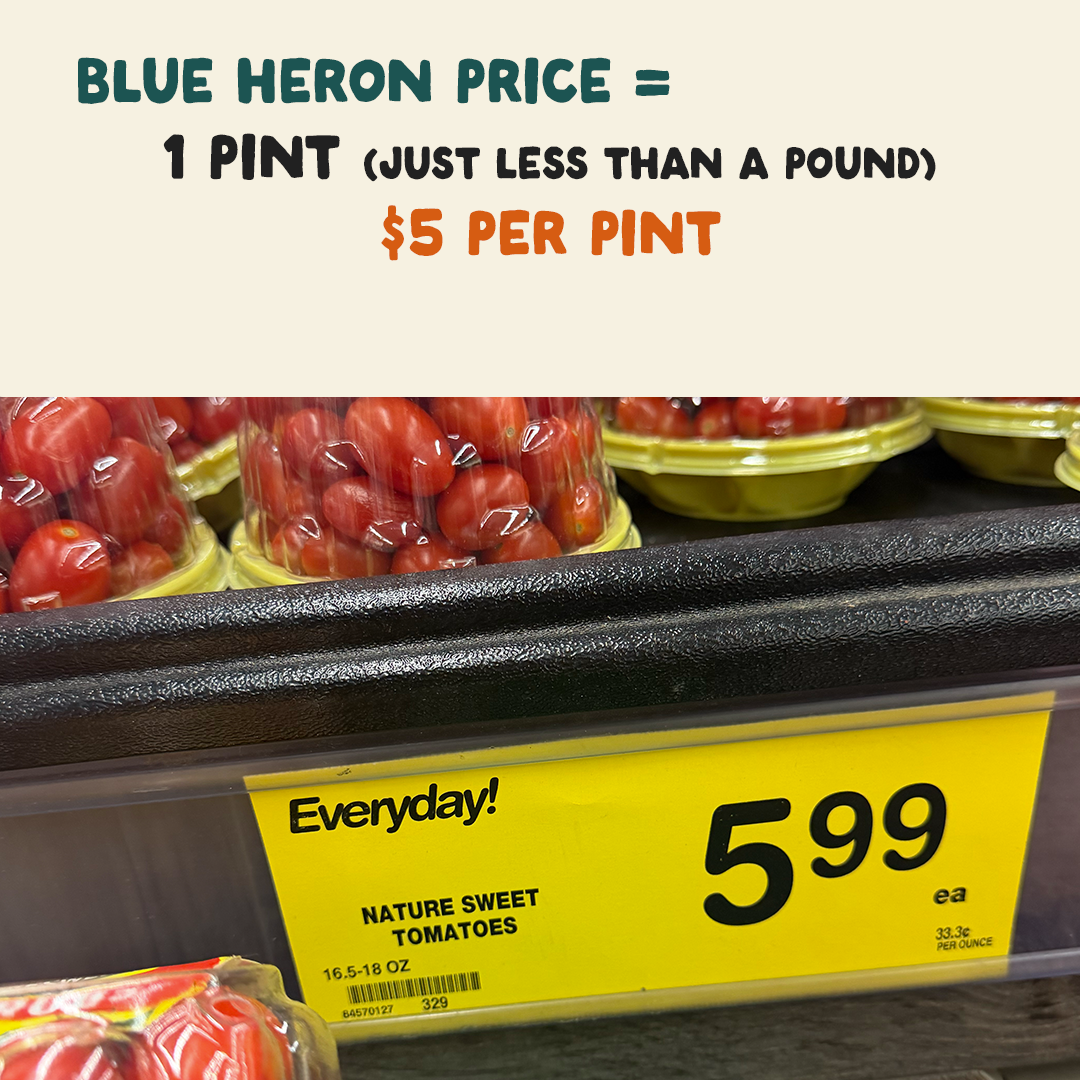
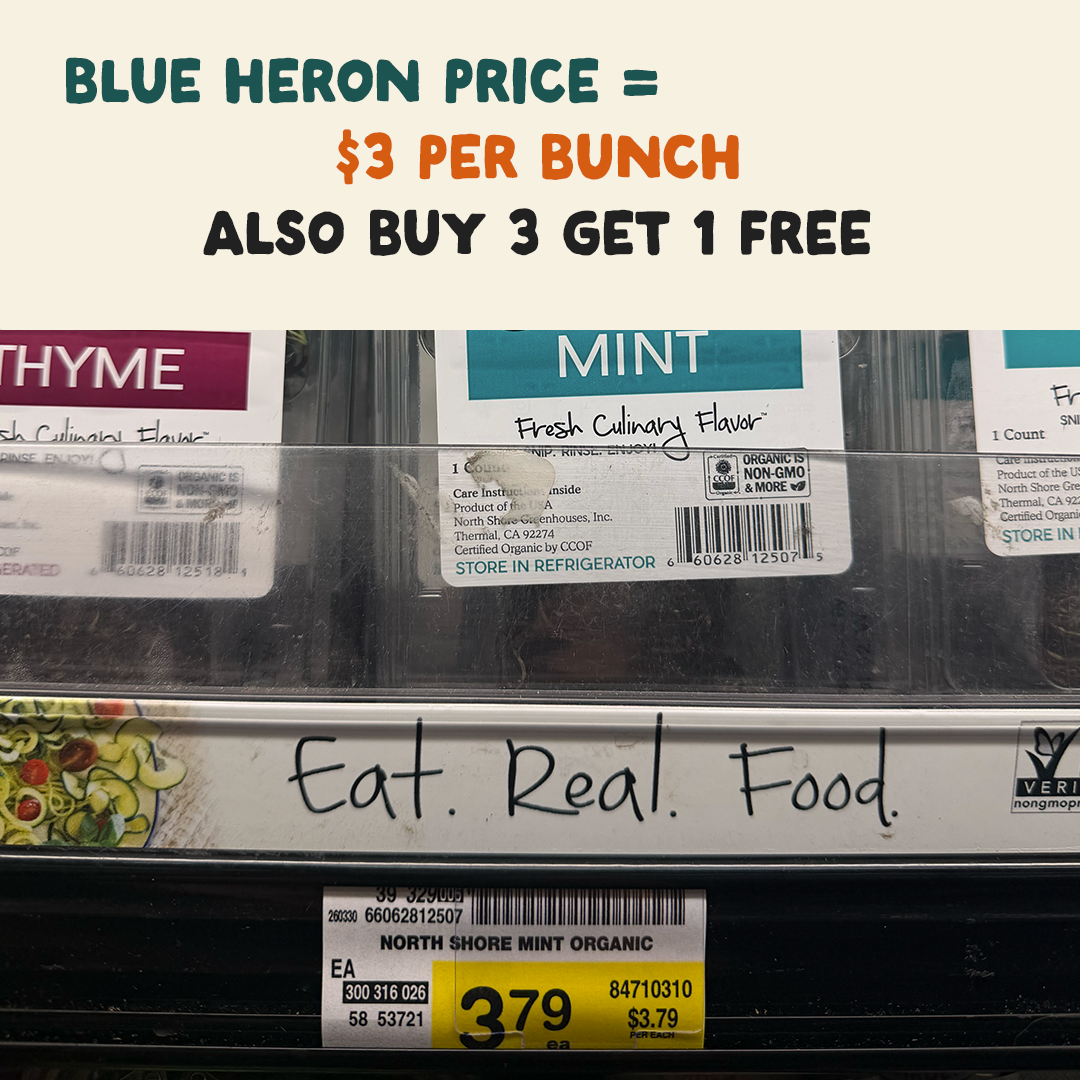
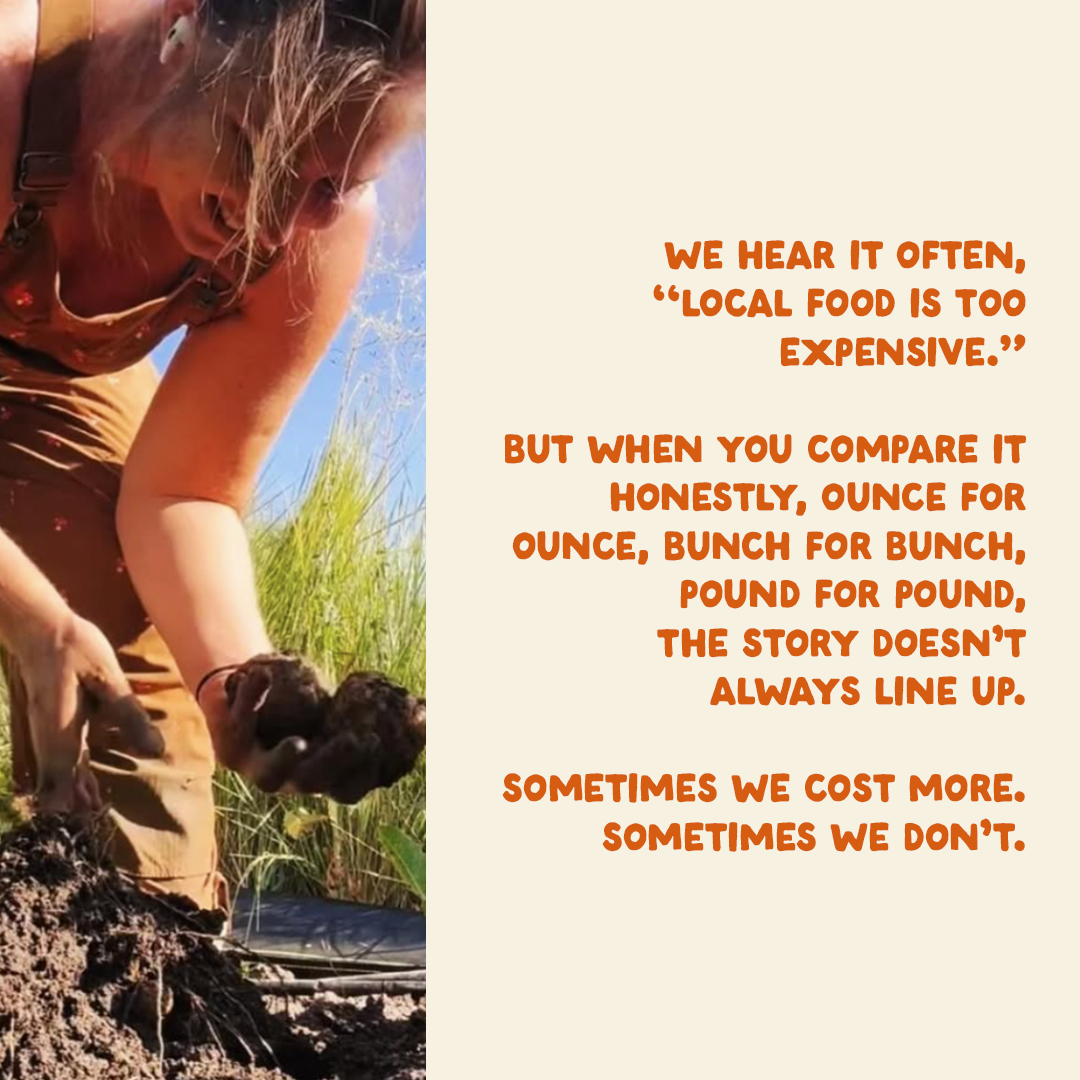
We are not always cheaper. Sometimes we cost more. Sometimes we are right in line. Sometimes we cost less. And when you actually compare the same unit, the gap is often a lot smaller than the story people carry around in their heads.
A grocery store price tag can make food look cheaper than it really is because the units are not always the same. Five ounces of greens looks cheaper than eight ounces of greens.
And that is where the perception starts to get muddy.
Grocery stores are very good at making food look cheap. Smaller containers, different units, sale pricing, conventional produce next to organic produce. It all gets mixed together in our heads. Before long, we are not comparing the actual value of the food anymore. We are just reacting to the number on the tag.
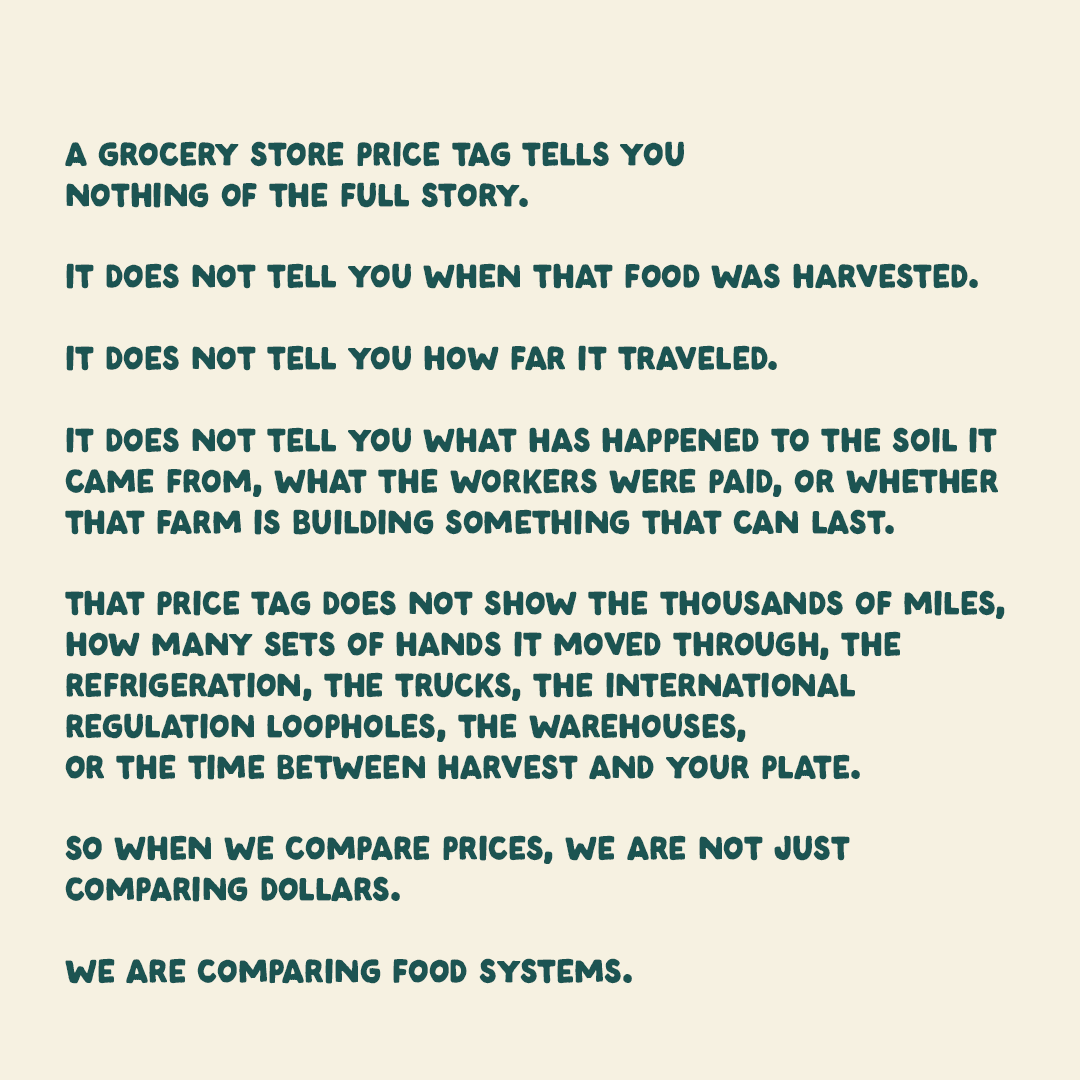
And a grocery store price tag tells you almost nothing of the full story.
It does not tell you when that lettuce was harvested. It does not tell you how many miles it traveled before it reached the shelf. It does not tell you how many warehouses it moved through, how many trucks it rode on, or how many days passed between harvest and your plate. It does not tell you what happened to the soil it came from. It does not tell you what the workers were paid. It does not tell you whether the farm that grew it is building something that can last, or whether it is part of a system that depends on food being cheap at any cost.
A price tag only tells you what you pay at the register.
It does not tell you the story, and it also does not tell you anything about its nutritional value.
Freshness is not just a nice idea. It matters. The longer produce sits after harvest, the more time it has to lose flavor, texture, and some of its nutritional value. A head of lettuce that was cut, packed, cooled, shipped, warehoused, and then stocked on a shelf is not the same thing as greens harvested down the road and eaten within a days.
Food is alive when it comes out of the field.
So when something is picked ripe, handled less, stored for less time, and eaten sooner, you are not just getting better flavor. You are often getting farm more nutritional value from that food as well.
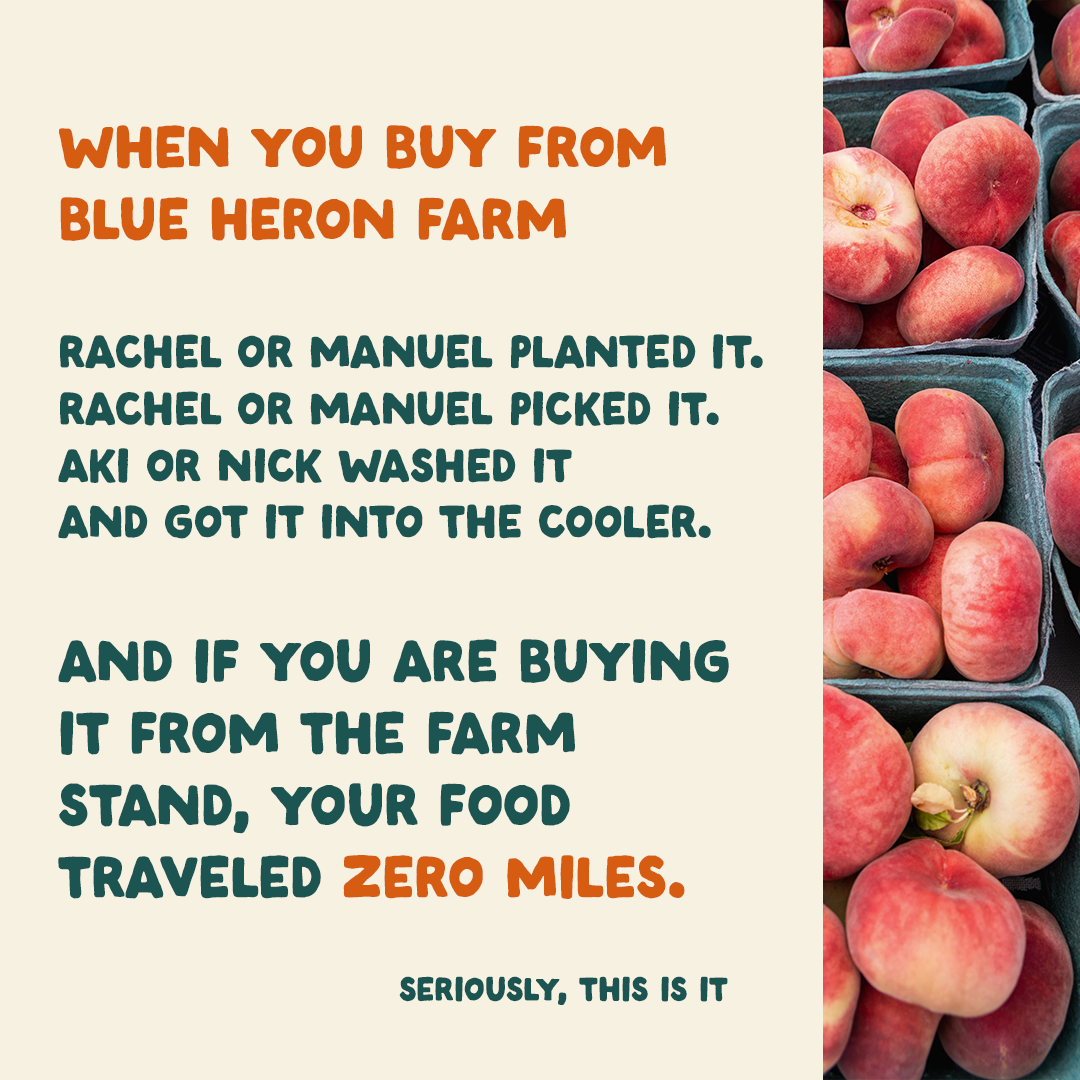
At Blue Heron, the story is very easy to follow. Rachel or Manuel planted it. Rachel or Manuel picked it. Aki or Nick washed it and got it into the cooler. Aki sold it to you at the farm stand. And if you bought it from the farm stand, it traveled zero miles. That is it.
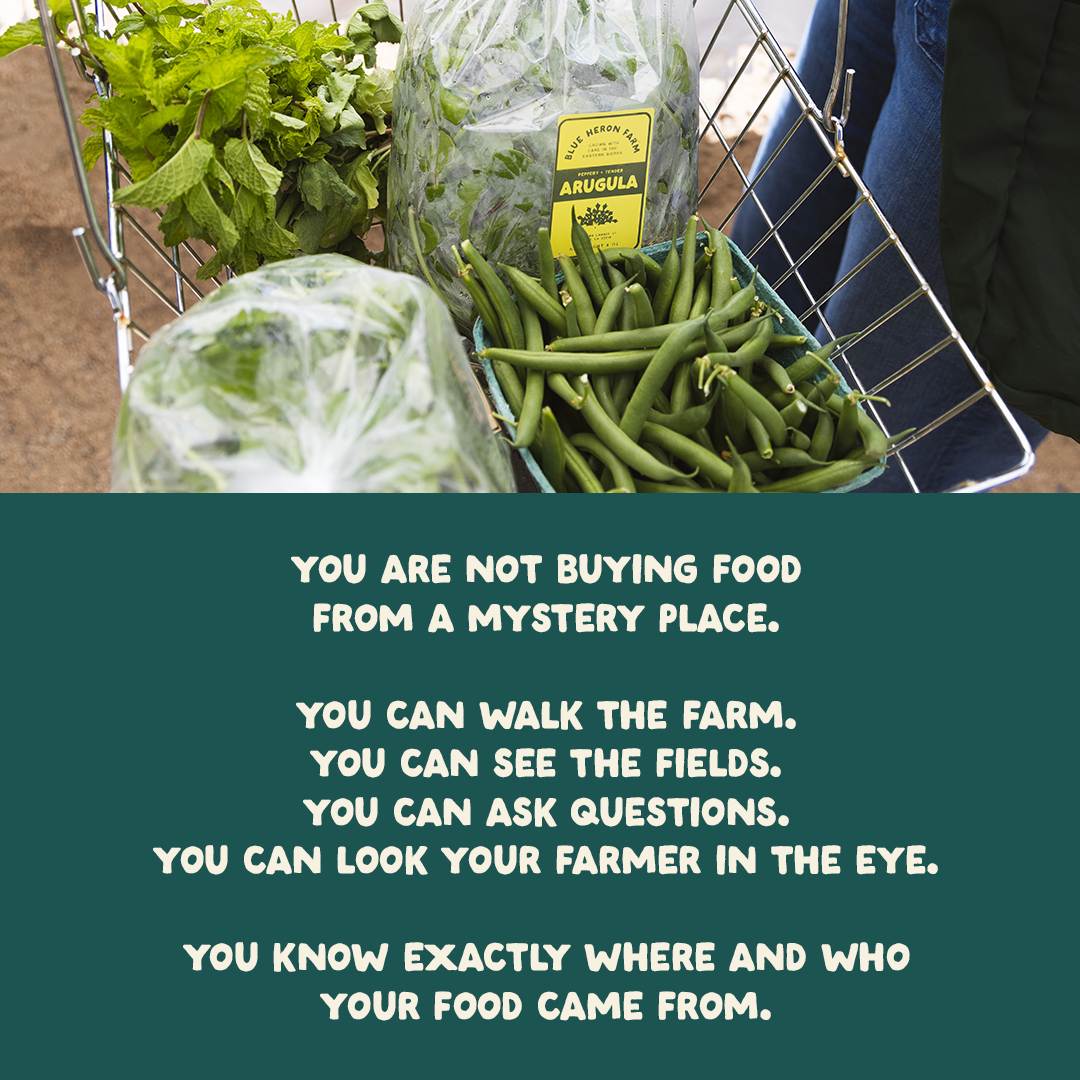
You can walk around the farm and see where it grew. You can ask questions. You can look at the field, the orchard, the compost, you can look your farmer in the eye.
There is no mystery here.
And that is part of what you are paying for. You are paying for food that was grown in this place, by people who live here, for people who live here. You are paying for freshness, but you are also paying for a food system that is visible. You are paying for something you can ask about. Something you can walk through. Something that is small enough to have a face and a name attached to it.
And I want to be clear about something: our goal is not to sell the cheapest food in town.
It can’t be.
This farm carries land debt, infrastructure costs, irrigation costs, equipment costs, labor costs, and all the crazy expenses that come with trying to keep a farm alive in the real world. We are not just trying to sell vegetables for one season. We are trying to build a farm, and a community hub, that can still be here generations from now.
We also want to pay our crew fairly. That matters.
If our only goal was to sell food at the cheapest possible price, we would not make it. And this community would lose this farm. Period.
So the goal is not cheap food at any cost.
The goal is balance: reasonable affordability for our customers, and a price point that allows this farm to survive, care for the land, pay people, invest in infrastructure, and keep showing up season after season.
This does not mean price does not matter. It absolutely does.
Food access is deeply important to us. We never want Blue Heron to become a place where good food is only available to people with plenty of extra money. That is not the food system we are trying to build.
That is why we went through the long, clunky process to be able to accept SNAP at the farm stand and at our farmers market booth. It is why we keep working on ways to make the CSA more accessible. It is why we partner with Farm to Crag to offer scholarships for 15 CSA members.
Because if local food is only available to a small slice of the community, then we have not built the food system we say we believe in.
Access has to be part of the conversation. Affordability has to be part of the conversation. We think about that constantly.
But honesty has to be part of the conversation too.
Because local food gets labeled as too expensive before anyone actually checks the math. And when we do check the math — ounce to ounce, pound to pound, bunch to bunch — the answer is not nearly as clean as people assume.
Sometimes we cost more. Sometimes we are right in line. Sometimes we cost less.
And even when we do cost more, I think it is worth asking what that extra little bit is actually buying.
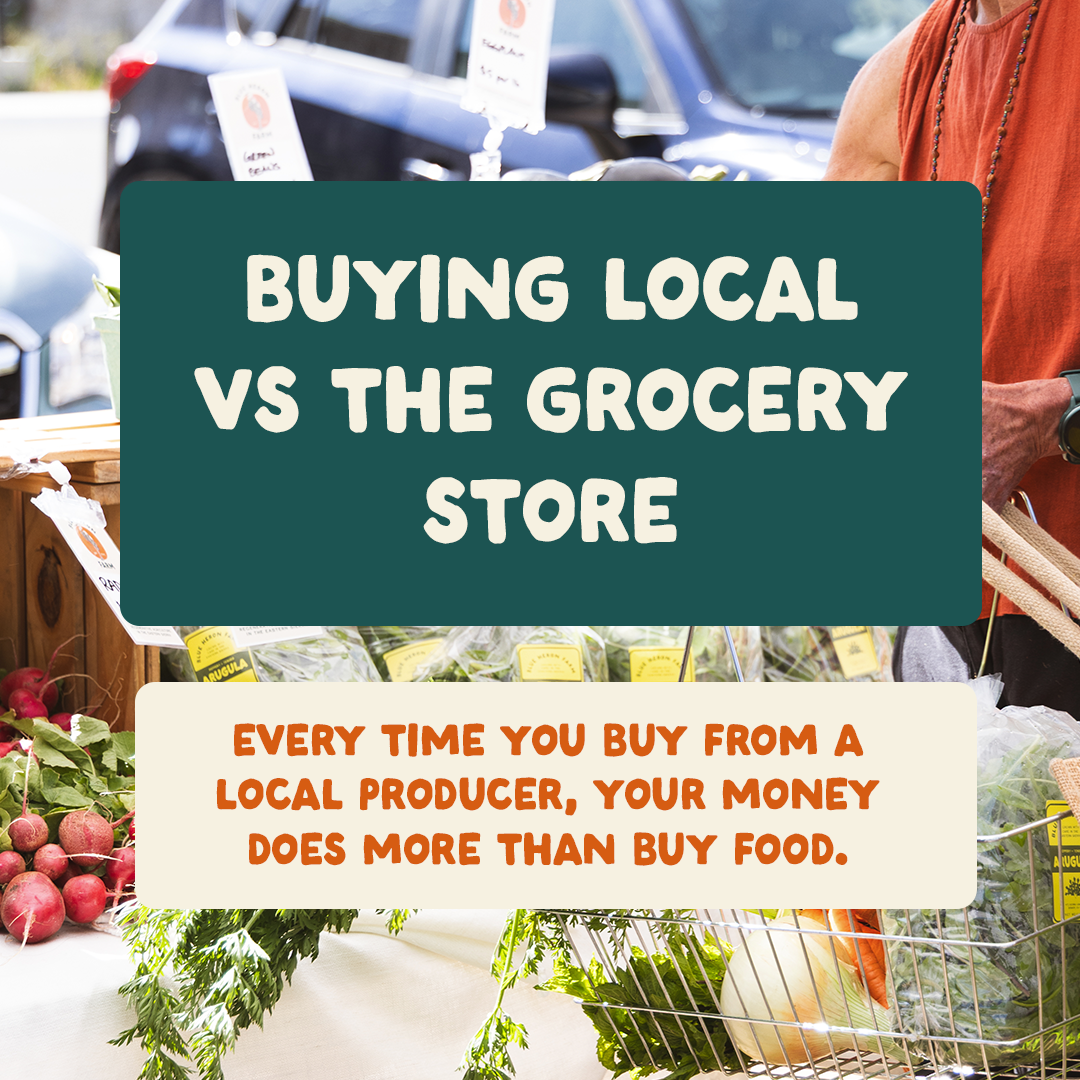
Because this is bigger than Blue Heron Farm. Every time you buy from a local farmer, rancher, baker, beekeeper, or producer, that money keeps moving through this community. It supports local businesses. It supports local families. It helps keep working land in production. It gives another producer one more reason to plant another season, raise another animal, bake another loaf, or show up at another market.
That matters. It is building more resilience into our community.
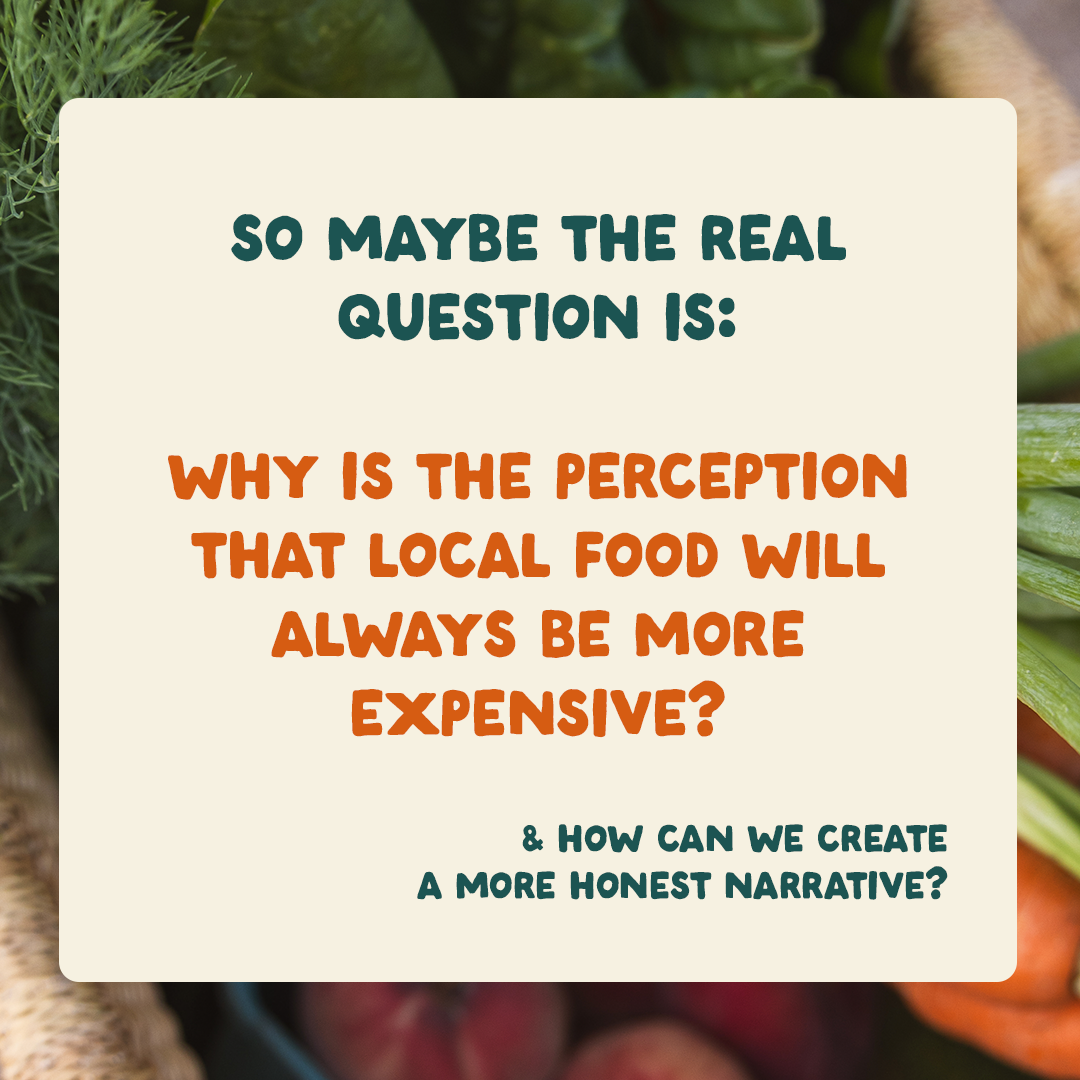
So maybe the next time someone says local food is always too expensive, we can ask, is it? We can compare fairly. We can look ounce to ounce, pound to pound, bunch to bunch. We can ask where food came from, who grew it, how far it traveled, and what that price does — or does not — include.
Because the perception that local food will always cost more did not come from nowhere. It came from years of being trained to see the cheapest food as the normal food, and everything else as expensive.
But we can start to untangle that.
We can build a different narrative. One rooted in real numbers, real farms, real people, and real costs.
A narrative that says local food is not always the luxury item people assume it is.
A narrative that is honest about price, honest about access, and honest about the kind of food system we are trying to build here.
That is the work in front of us.
Not just growing the food, but helping our community see it clearly.