The Good Farmer Award
All photo credit goes to the incredibly talented Ramon Madrid
I still can’t quite believe I’m writing this.
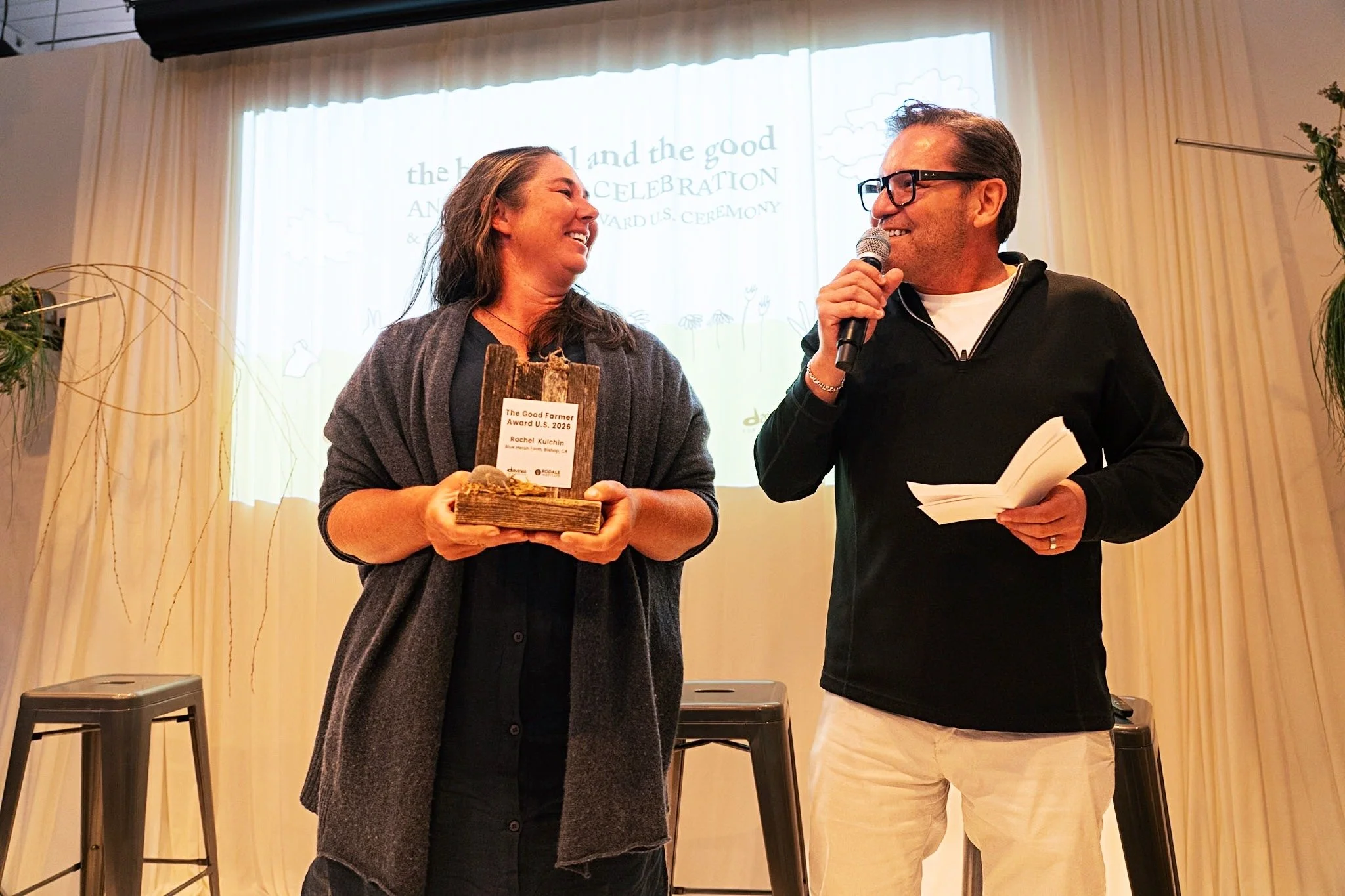
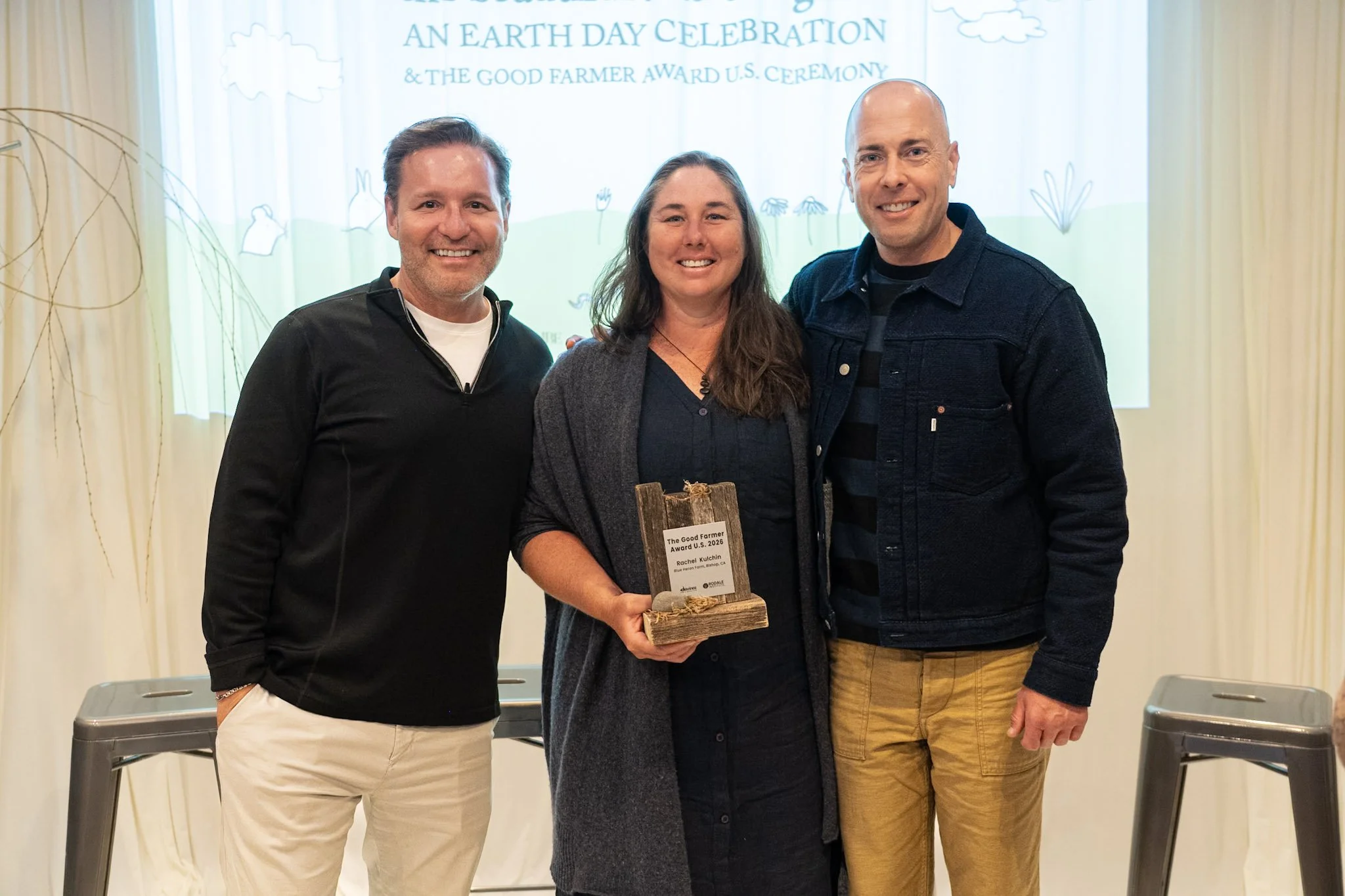
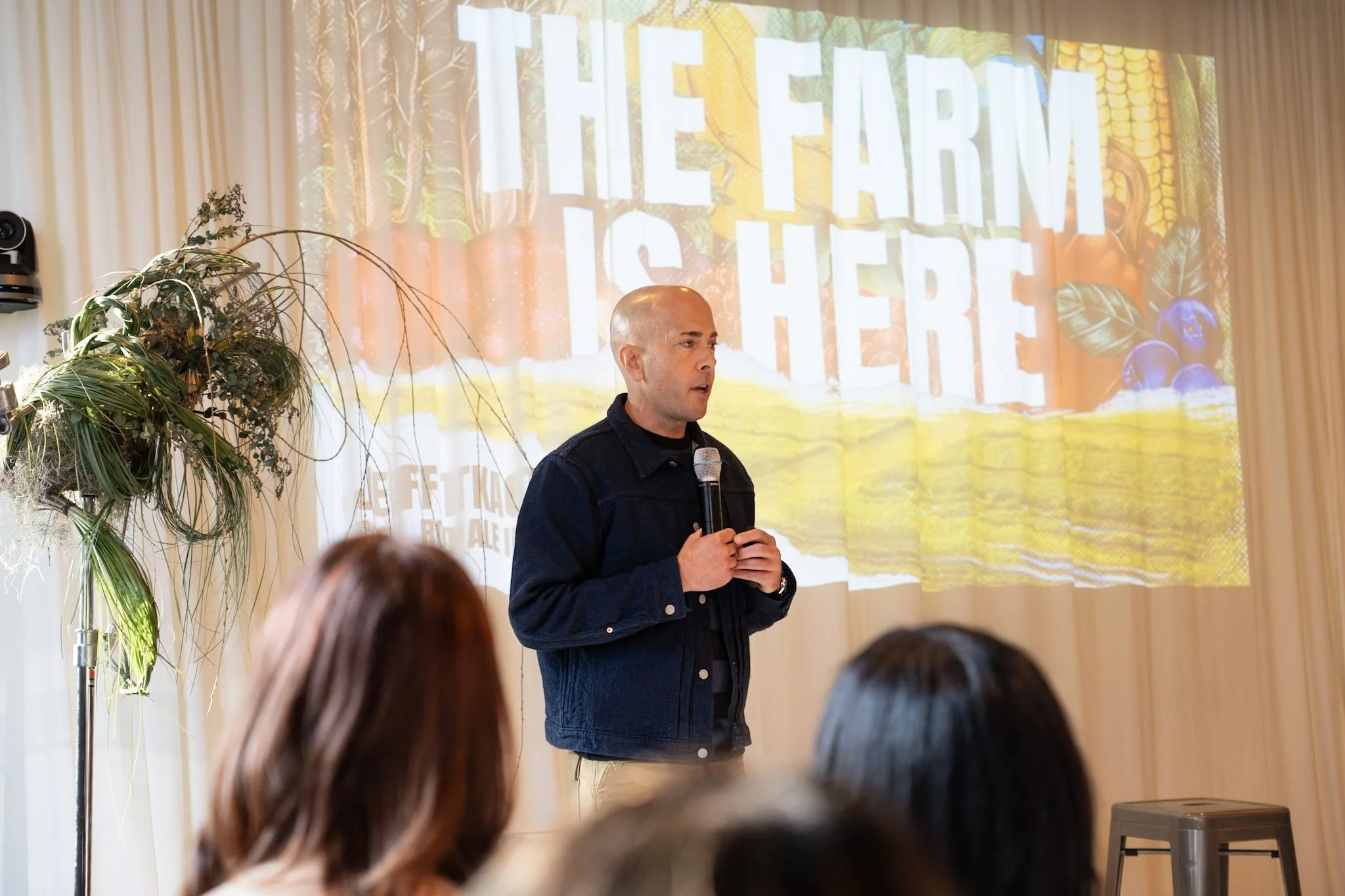
Receiving the Good Farmer Award from Rodale Institute, in partnership with Davines Group, is one of the greatest honors I could ever imagine. It still feels incredibly surreal. To have the work we are doing out here in this small, rural valley seen and recognized in this way carries a real weight. But gosh, is it a good kind of weight. The kind that makes you stand a little straighter and take a deeper look at what you are building.
What makes this award especially meaningful is the group of people behind it.
Rodale Institute has been leading organic agriculture research for more than 75 years. Through long-term trials like their Farming Systems Trial, they have measured how different farming systems impact soil health, yields, and resilience over time. Their work has helped bring scientific grounding to regenerative organic agriculture and has shaped how farmers and researchers think about land stewardship.
Davines Group is an Italian company known for its commitment to sustainability and ethical sourcing. As a certified B Corporation, they meet high standards for environmental and social responsibility. Through their partnership with the Rodale Institute, they actively invest in regenerative organic agriculture, supporting farmers and funding work that improves soil health and long-term resilience.
To be recognized by organizations doing this level of work carries real significance.
Out here in the Eastern Sierra, nothing about farming is easy. Water is limited. Land is limited. The weather has become more erratic with each passing year, swinging from extremes that are harder and harder to predict. And in a rural valley like this, even sourcing the basic materials you need to farm can feel like an uphill climb.
All of this means that about 98% of the food that feeds our community is brought in from somewhere else. This kind of dependence is easy to overlook until something goes wrong. When roads close, supply chains stall, or shelves thin out, it becomes very real, very fast.
So for us choosing to grow food here is not just about farming.
It is about asking bigger questions.
What would it take to bring agriculture back to this valley in a real way?
What would it take to rebuild a food system that is rooted here, one that can actually feed the people who live here?
What would it take to make this place more resilient, when land, water, and resources are all limited?
Those are the questions we are sitting with every day.
Because this work is not just about growing crops. It is about helping lead a conversation. It is about bringing together farmers, ranchers, neighbors, and partners and asking what is possible if we choose to build a different future for this valley, together.
This work takes grit. It takes patience. It takes stepping into something that does not have a clear roadmap yet. And it takes a deep belief that even in a place like this, something strong, beautiful, and lasting can be built.
Day by day, season by season, we are working to build something that holds. We are growing food, yes, but we are also building soil, creating habitat, and caring for this land in a way that gives more than it takes. At the same time, we are working to help shape a larger vision of what a resilient, local food system could look like here in the Eastern Sierra.
That is the work behind this award.
And I feel deeply proud of that.
But I also know this just as clearly. This farm does not stand on its own.
It stands because of this community.
It stands because you choose to show up. You choose to come to the farm stand on the weekend instead of the grocery store. You show up at the Mammoth Wednesday Market for your weekly veggies. You sign up for the CSA and trust us to grow your food for the season. You bring your kids out here to run through the orchard and taste fresh fruit off the tree. You come to workshops and classes. You tell your friends, and then they come too.
Those choices matter more than you might think. In a place like this, they are the difference between a farm making it or not.
In our first season, we grew over 47,000 pounds of food. We welcomed school groups, families, neighbors, and visitors onto this land. But what stays with me is not the number, it is the feeling that something is taking root here. That people are leaning in. That there is a real desire for something closer, more connected, more grounded.
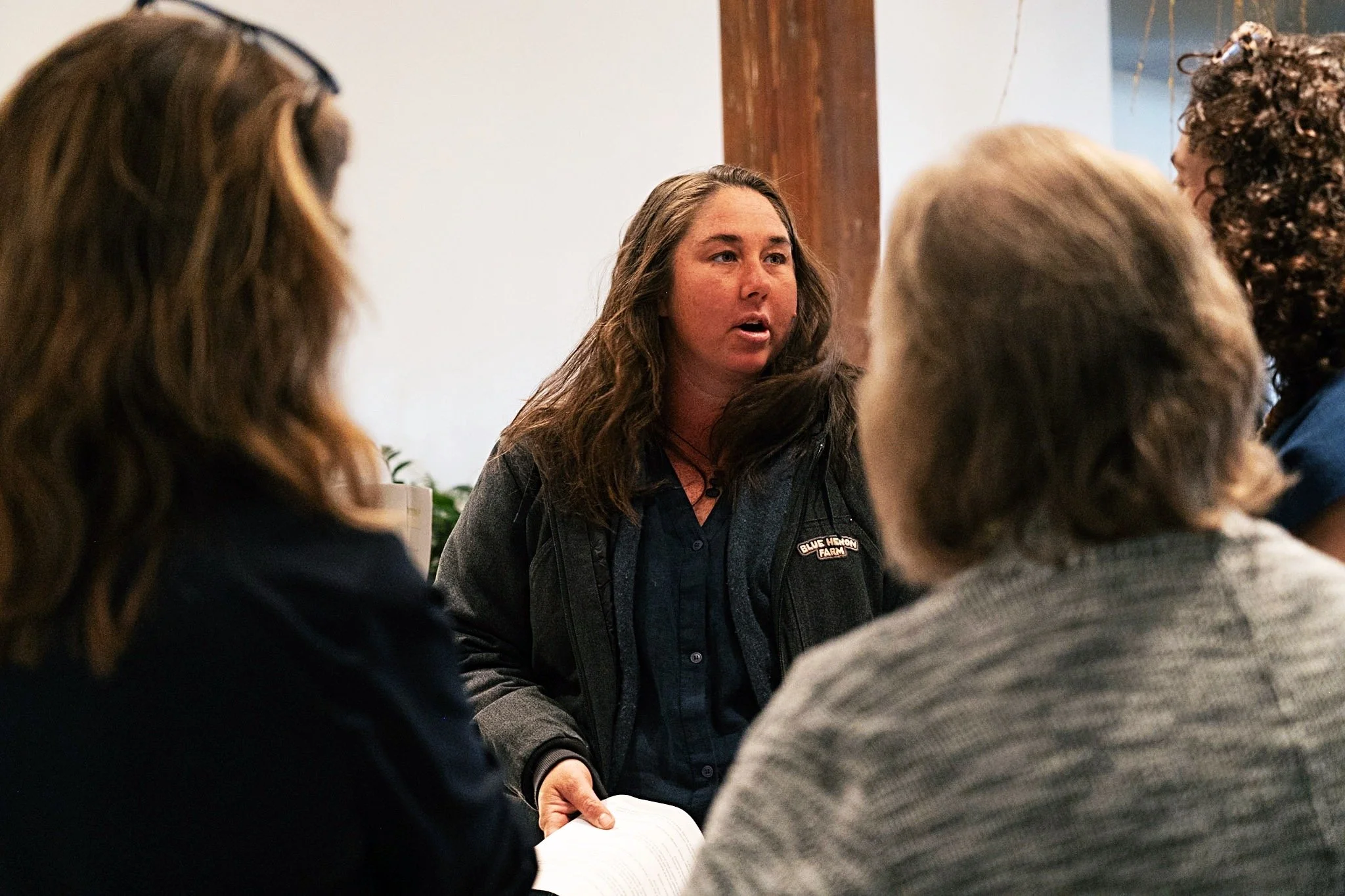
When I stood on that stage to accept this award, I felt a deep sense of gratitude. And right alongside it, a strong sense of responsibility.
Because this is not the finish line. It is the beginning.
I am incredibly proud to receive this award. I hold it with a lot of care, and I do not take it lightly. And I carry a deep knowing that it reflects more than just my work. It reflects Aki. It reflects the most incredible farm crew.
It reflects a community that continues to choose this.
So thank you.
For being here.
For believing in this farm.
For making the choice, again and again, to support it.
Good food grows here.
Because you keep choosing it.
Learn more about the Good Farmer Award
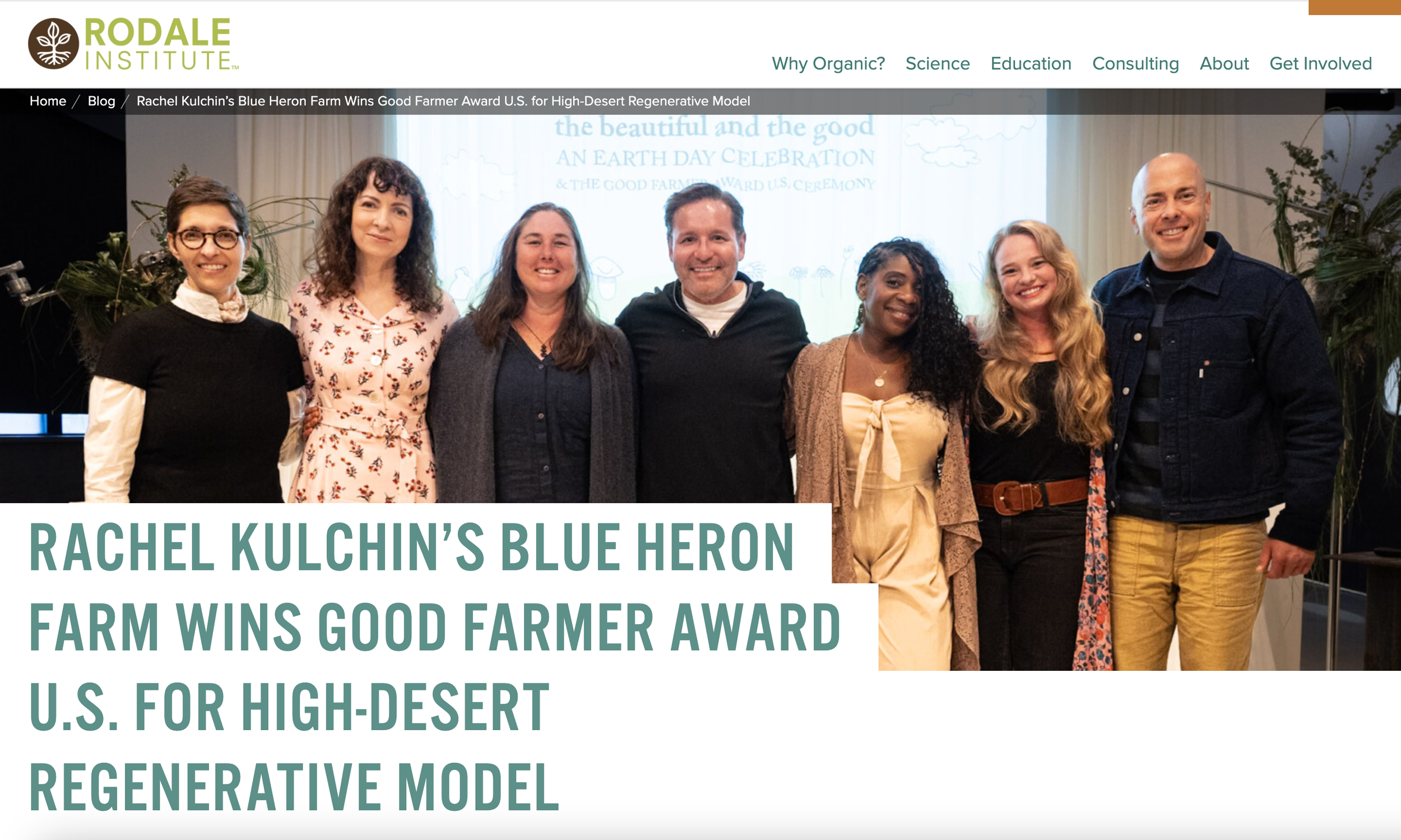
Rachel Kulchin of Blue Heron Farm was named the 2026 recipient of the Good Farmer Award U.S. by Rodale Institute and Davines Group, recognizing her work building a regenerative, community-rooted farm in the high desert of the Eastern Sierra. In just one season, the farm produced over 47,000 pounds of food, engaged thousands of community members, and demonstrated that even in a region with limited water, infrastructure, and local food production, it is possible to build a resilient and viable local food system. The award highlights not just the farm’s production, but its broader impact on soil health, biodiversity, and reimagining food security in a rural, isolated landscape.
Learn more about the Davines Group
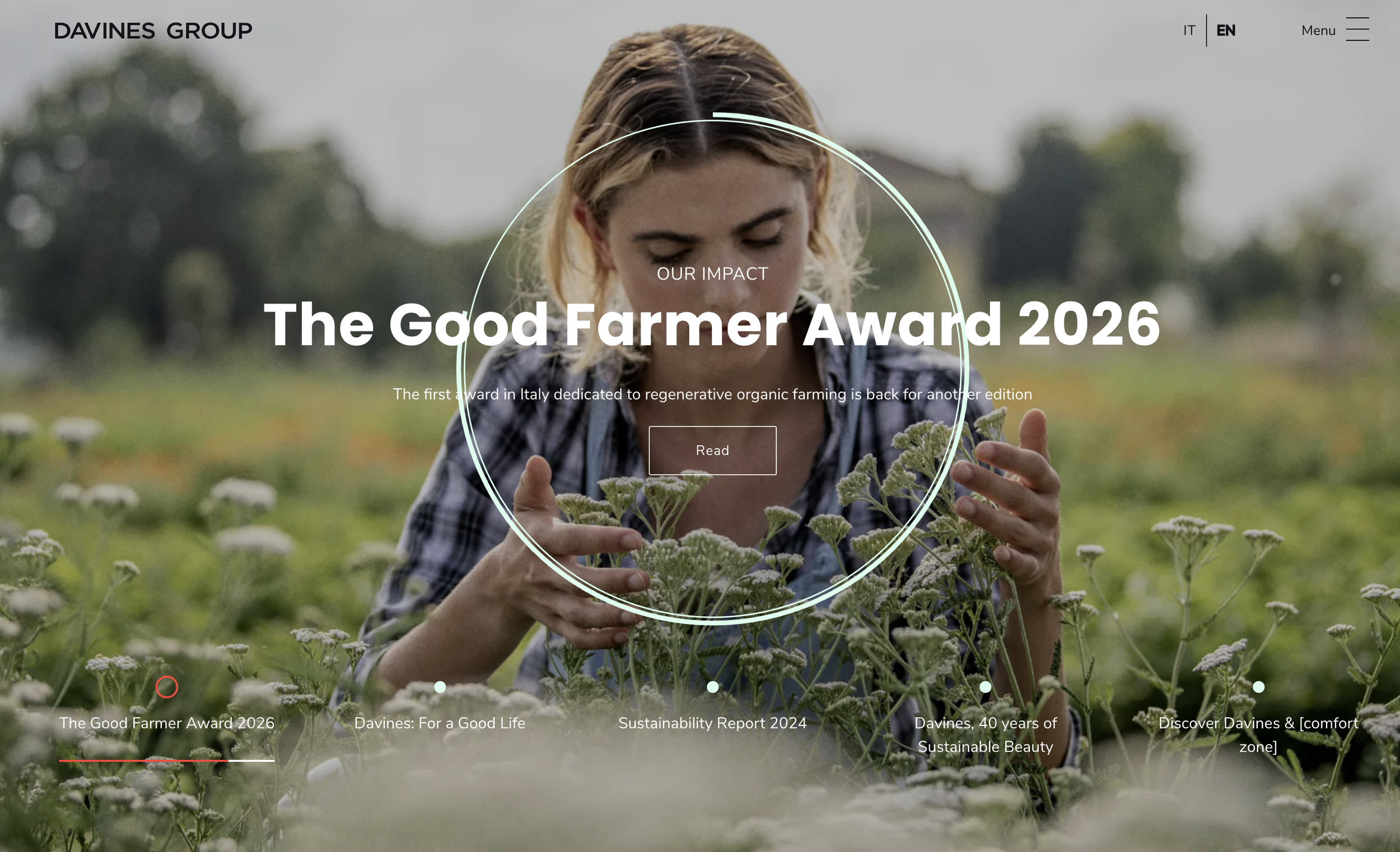
Davines Group is a family-owned company founded in Parma, Italy in 1983, originally as a research lab focused on high-quality cosmetic products. Today, it operates in over 90 countries, producing professional haircare and skincare through its Davines and [comfort zone] brands.
The company is a certified B Corporation, meaning it meets rigorous standards for environmental and social responsibility and is committed to using business as a force for good.
At the core of Davines Group is a philosophy they call “sustainable beauty,” which aims to balance high-performance products with care for the environment, people, and the communities they are part of.
Through partnerships like their work with Rodale Institute and the European Regenerative Organic Center, Davines is actively investing in regenerative agriculture, supporting research, farmers, and systems that restore soil health and build long-term resilience.
Learn more about the Rodale Institute
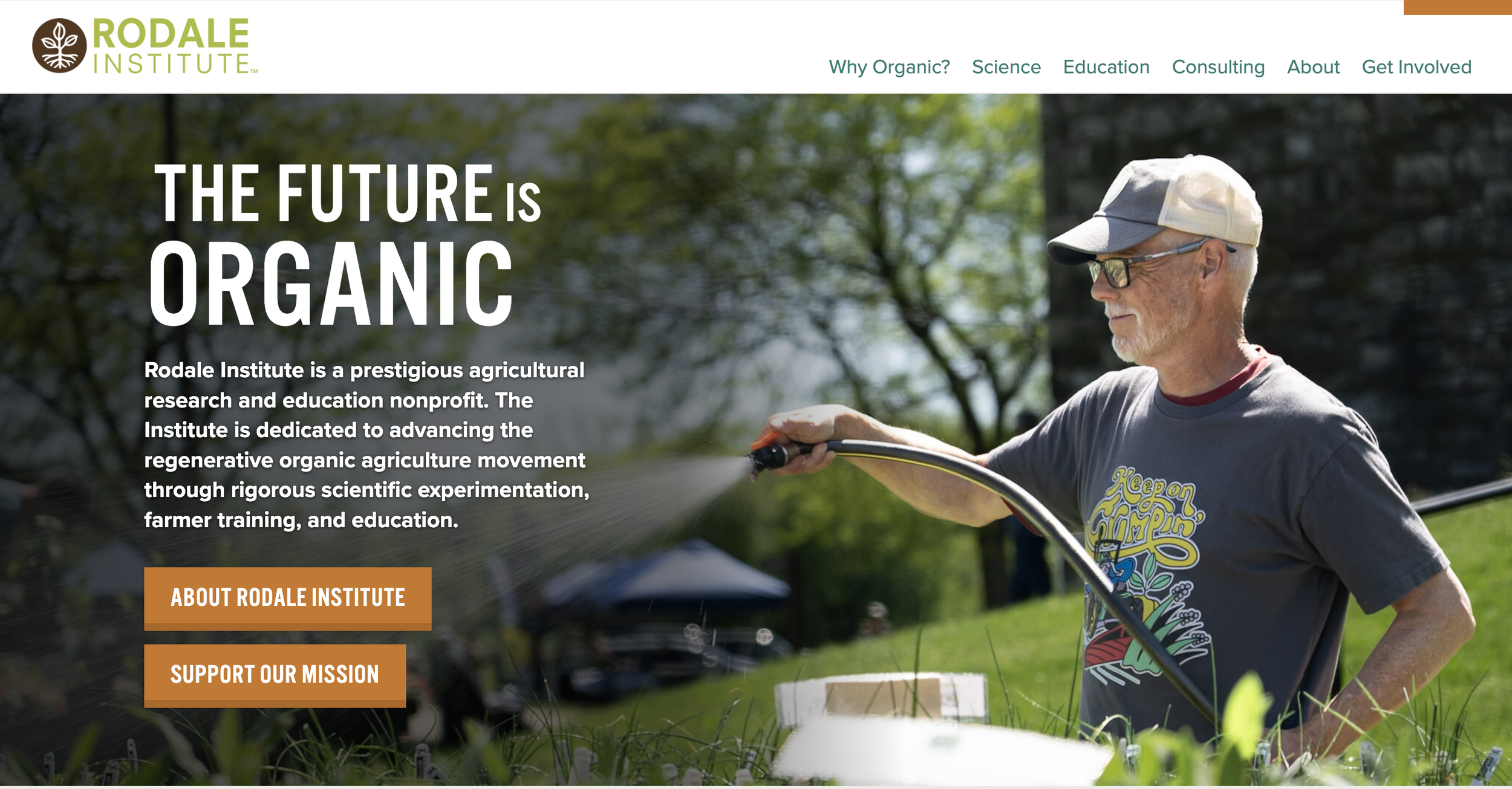
Founded in 1947, Rodale Institute is a nonprofit research and education organization that has been a leader in organic agriculture for more than 75 years. Based in Pennsylvania, they are best known for their Farming Systems Trial, one of the longest-running side-by-side comparisons of organic and conventional farming in the world, studying impacts on soil health, crop yields, and resilience over time.
Through research, farmer training programs, and global partnerships, Rodale Institute works to advance regenerative organic agriculture as a solution for improving soil health, strengthening farms, and building more resilient food systems. Their work bridges science and on-the-ground farming, helping farmers adopt practices that restore land while maintaining productivity.