The Work Behind the Harvest
The Work Behind the Harvest
A training day in the field and wash pack with the Bishop Paiute Tribe Food Sovereignty Program
Some of the most important farm knowledge lives in the in-between moments. How a harvest is planned. How a crew moves through a field. How crops flow through a wash pack space.
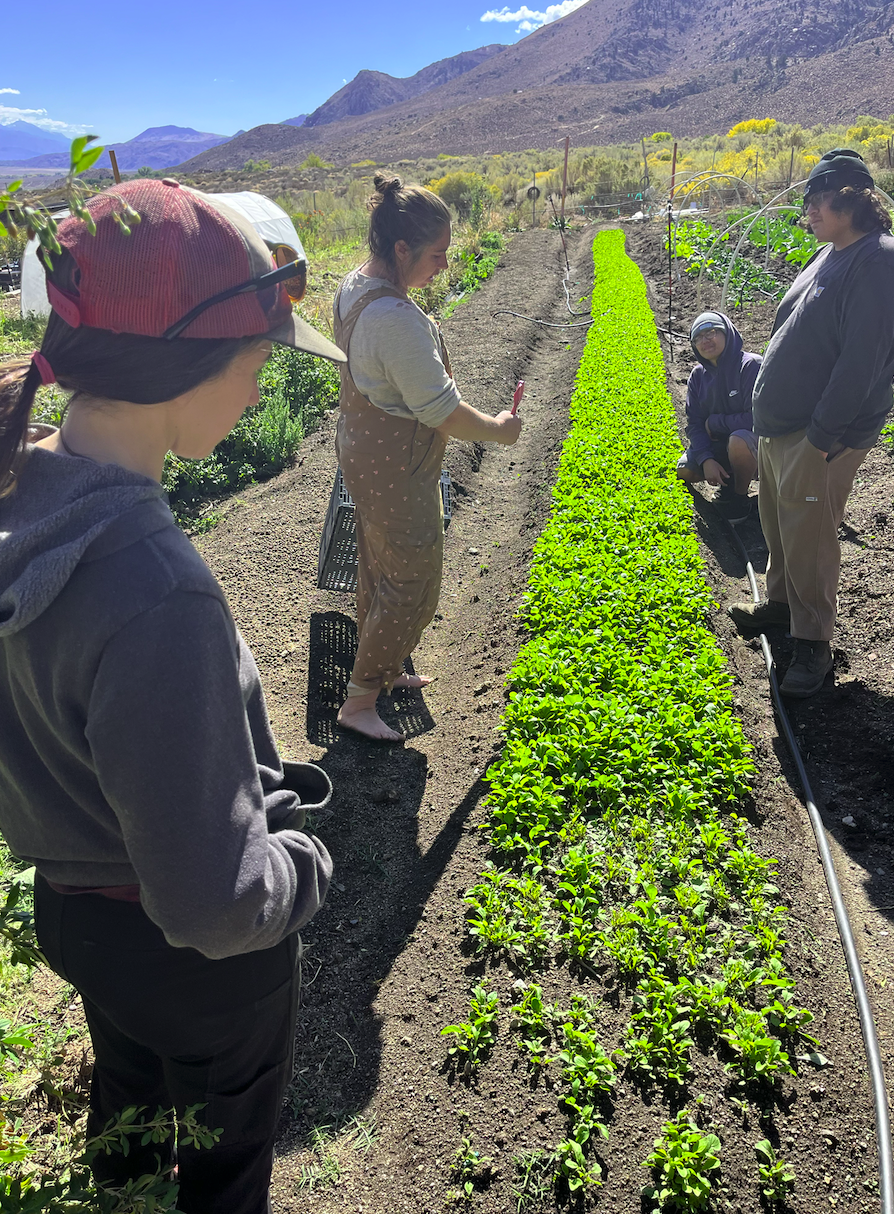
We hosted members of the Bishop Paiute Tribe at Blue Heron Farm for a hands on training focused on the inner workings of our harvest and wash pack days. The goal was simple. To slow the process down, look closely at the systems we use, and talk through why they are set up the way they are.
This was a working training built around real crops, real tools, and real decisions that we as a small farm make every week.
Walking through a real harvest day
We started with the backbone of our harvest days. Simple systems that keep us organized when things get busy.
Pick sheets came first. How we build them, how we use them, and how they keep harvest focused so we cut what we need and leave the rest growing. From there we talked about flow. One direction from field to wash pack. Fewer steps. Fewer hands on the crop. Less chaos when the day picks up speed.
Out here, efficiency is not about rushing. It is about care. About making sure the food stays clean, cool, and respected from the moment it is cut.
Crops in hand
Then we got to work.
We cut arugula together, talking through cut height, different harvest techniques, and how timing shifts with weather and demand. We pulled daikon radish from the soil and talked about sizing, soil conditions, and tricks for how to bunch in the field for faster harvests.
Each crop opened up bigger conversations. Labor pacing. Crew size. Designing systems that work for real people on real days.

The Wash Pack Station
Often overlooked the Wash Pack station on the farm is one of the most important lifelines of the farm.
Inside the wash pack
The wash pack station is the heart of harvest days, so we slowed down here.
We walked through how everything is laid out and why. Clean to dirty flow. Tools where your hands expect them to be. Bins, wash tanks, and tables arranged so crops move smoothly without backtracking.
We talked about washing leafy greens versus roots. How to efficiently wash without comprising quality or safety.
Why days like this matter
This training was not about doing things one right way. It was about sharing what actually works for us and opening the door for conversation, questions, and adaptation.
Farming in a place like this requires cooperation, shared knowledge, and a willingness to learn from one another. We are grateful for the chance to spend the day alongside the Bishop Paiute Tribe, trading notes, stories, and practical skills that strengthen local food systems.
This is the kind of work that keeps us grounded. Growing food. Sharing systems. Building something resilient together, one harvest day at a time.
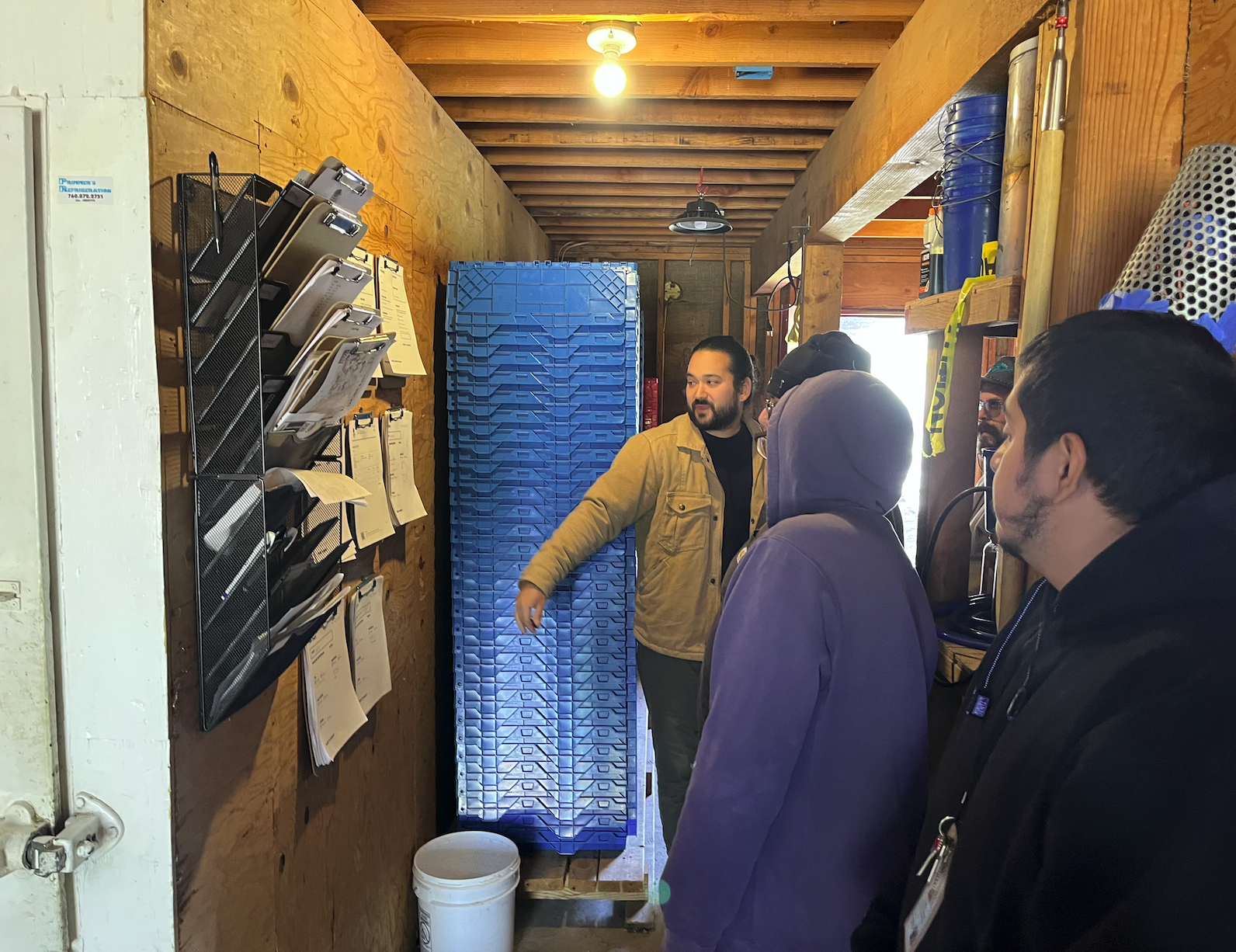
This farm runs on clipboards
Aki giving an overview of our clipboard system and how we use our “Task Ticket” System on the farm.
Looking Ahead…
Looking ahead to next season, we are excited to deepen this collaboration and continue building more of these hands on training days into the life of the farm. Sharing the inner workings of how we harvest, wash, and pack food feels essential to the kind of food system we are trying to grow here. Knowledge should not be guarded. Strong local agriculture depends on practical skills being passed hand to hand, field to field. These sessions create space for shared learning, problem solving, and trust, and they help ensure that food grown in this valley stays rooted in the people and communities who live here. This work matters to us because it strengthens more than a single farm. It strengthens the whole system that supports local food, now and into the future.