Arugula Has An Attitude
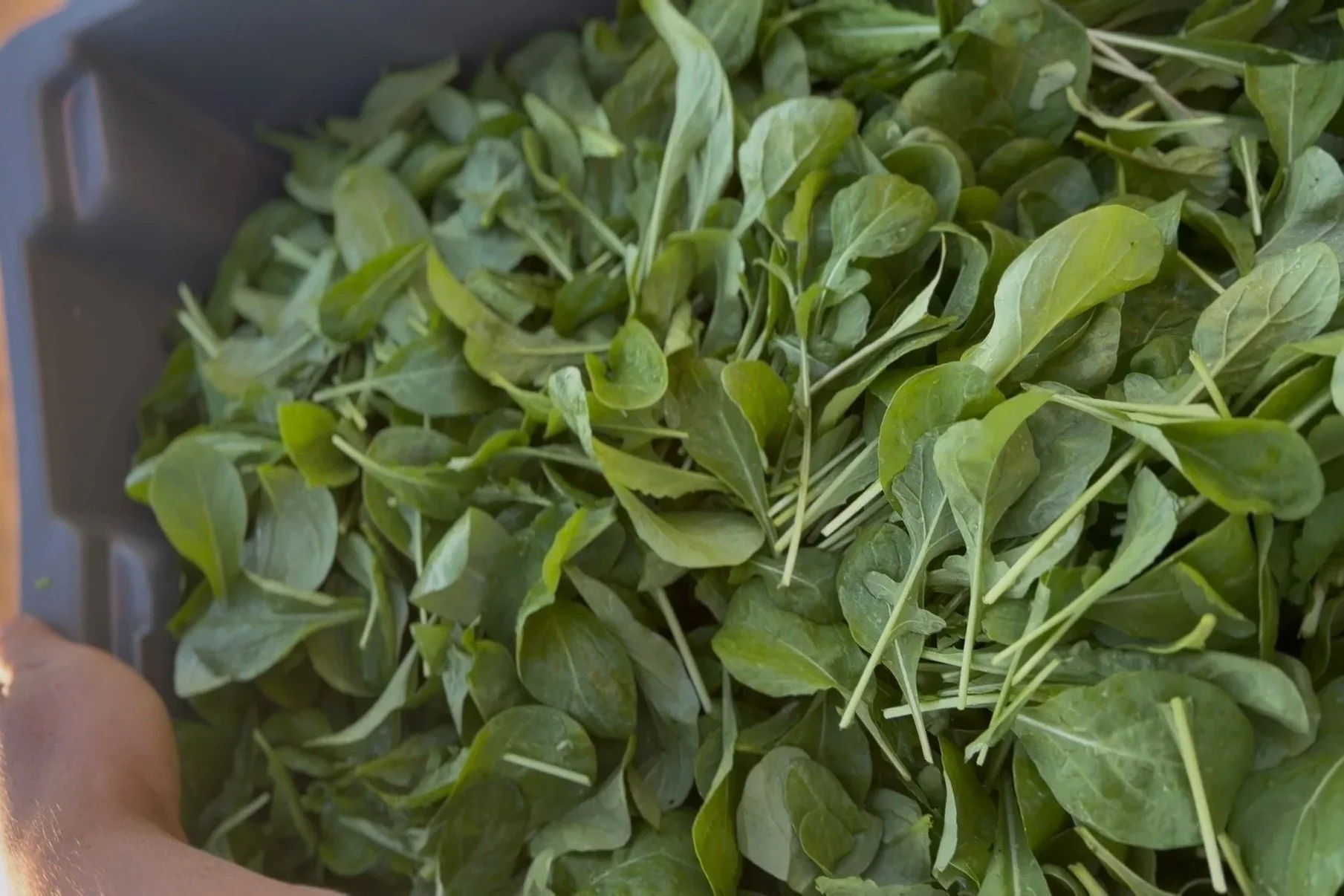
Arugula has an attitude.
There is really no polite way to say it. Some greens come out of the ground soft and agreeable, ready to be tucked politely into a salad and chewed without much thought.
Arugula is not one of those greens.
She comes comes up spicy, peppery, and sharp around the edges. She does not ease herself into a meal. She announces herself. She kicks the door open, walks in wearing leather boots, and makes sure everybody knows she has arrived.
And honestly, I respect that.
There is something refreshing about something owning exactly what it is. It is not interested in being sweet, mild, or universally adored. It has bite. It has backbone. It has a little bitterness built right into its bones.
At Blue Heron Farm, arugula is not a crop we plant once and forget about. If we want to have it available week after week, it has to run on a schedule. We grow it in succession, planting smaller sections over and over again so one planting is ready as the next one is coming up behind it.
When the system is working, one row is being harvested, another is growing, and another is getting seeded or turned over. Seed. Grow. Cut. Regrow. Cut again. Turn the bed. Start over. It sounds clean when you write it down, but of course farming never is. There are weeds. There are irrigation problems. There are hot days that push the crop faster than we wanted and cold mornings where everything seems to be sulking.
In the right weather, it can go from seed to first harvest in about three weeks. During the cooler shoulder seasons, we can often get three cuts from a row before it is time to move on. But when the heat comes in hard, the window gets shorter. Sometimes we get two cuts before the plants decide they are done producing leaves and would much rather just become flowers.
And once arugula decides to bolt, there is no negotiation.
That is one of the things this crop teaches better than almost anything else: timing. Some good things do not wait for the perfect moment. They arrive when they arrive, and your job is to notice. Fruit has a window. Flowers have a window. Weather has a window.
Arugula belongs to that exact moment.
It is one of the first crops that makes the season feel real. After winter, after wind, after frost, after repair lists, irrigation headaches, and the long stretch of wondering whether any of this is actually going to work, arugula comes charging out of the soil with all its spicy little confidence.
It is not comforting, exactly. It is more like a slap across the face in the best possible way.
Wake up. Pay attention. Put something fresh on the table.
That is the role arugula plays. It is early-season electricity. For us, it is the taste of the farm coming back online.
Maybe that is why people tend to either love it or have absolutely no idea what to do with it. Arugula is not the kind of green you dump onto a plate and ignore. It thrives in balance. Fat, acid, salt, lemon juice, olive oil, shaved parmesan, soft cheese, a fried egg, a pizza crust, a sandwich with something creamy on it.
Arugula asks for a little confidence from the person using it. It also asks you to understand that bitterness is not a flaw.
Sweetness gets all the praise. Sweet carrots. Sweet corn. Sweet peaches. Sweet tomatoes. People know what to do with sweet. Sweet is easy to love.
Bitter asks more of us. It makes us pay attention. It refuses to be instantly pleasing. And in a world that seems determined to make everything softer, sweeter, and easier to consume, I think there is something valuable about a green that still talks back.
A good life is not all sweetness. A good farm season definitely is not.
There is sweat. There is wind. There are late frosts and broken fittings and crops that fail for reasons you may never fully understand. When the to-do list feels like it is multiplying behind your back. When you are bone tired and still have to harvest, wash, pack, irrigate, weed, email, invoice, make dinner, answer messages, and pretend you are a functioning human.
There is bitterness in the overwhelm of it.
But bitterness, in the right balance, makes the whole dang thing better. It gives the sweetness somewhere to land. It keeps things honest, and in that, it makes you realize what an incredible privilege it is to grow food for your community.
This is what arugula knows.
How we grow it on the farm
To learn more about how we grow it on the farm, check out this article: The Arugula Machine: A Salad Green with a Schedule.
How to grow it at home
You can use the same idea in your garden at home, just on a much smaller scale.
Instead of planting a whole packet of arugula at once, plant a short section every week or every other week. Even a two-foot row can give you a useful weekly harvest if you keep the rhythm going. Plant a little, wait a week, plant a little more, and keep repeating. By the time your first patch is ready to cut, the next one is already coming up behind it.
Harvest the leaves when they are young and tender. Cut above the growing point and water well, and you will get another round of growth. Spring and fall are usually the best times for sweeter, more tender arugula. Just a heads up, in the heat, it will get stronger, spicier, and much quicker to bolt. So watch it carefully!
How to eat arugula
Toss arugula with olive oil, lemon juice, salt, and shaved parmesan. Put it on pizza after it comes out of the oven. Tuck it into sandwiches with something creamy. Pile it next to eggs. Stir it into pasta at the very end so it wilts just enough but does not lose itself completely.
Do not overthink it.