Many Hands, Good Food, and Something Bigger Than Ourselves
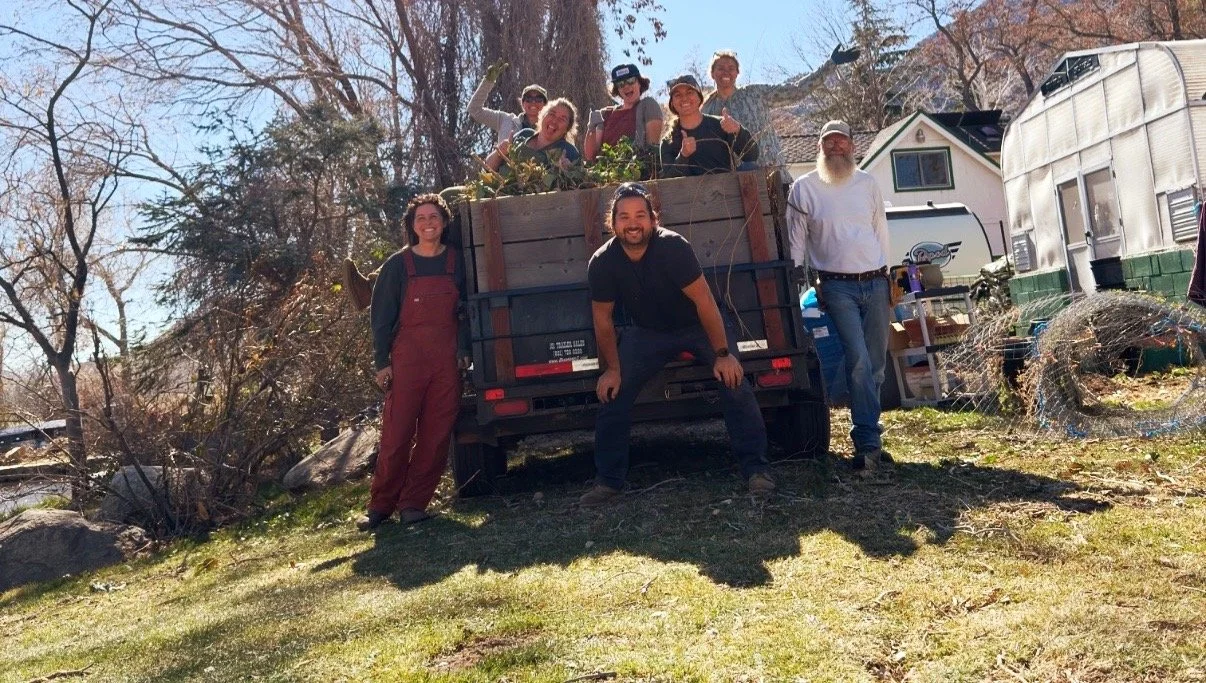
Reflections on our first Work-Trade season at Blue Heron Farm
There is an old saying that many hands make light work. Whoever came up with that one clearly understood a thing or two about farming.
When Aki and I first started dreaming up our Work-Trade Program, the idea was pretty simple. We needed some extra hands around the farm, and we wanted to create another way for people in our community to access to fresh, locally grown food. What if we invited folks to come spend a few hours working alongside us each week, and in exchange, sent them home with farm credit to spend on the food we grow? A way for folks to lend a hand to the farm, while making sure that the time, energy, and hard work they gave us was reciprocated in a meaningful way. This is not a volunteer role, it has always been important to me that our work-traders aren't simply giving to this farm, they should get to reap the rewards of the work they put into it, quite literally. If you spend your morning helping us grow food, I want some of that good food going home with you.
But underneath this exchange was something I was even more excited about. I wanted to create an opportunity for people to become part of this farm. As participants in the work of growing food, caring for the land, and building a stronger local food system here in the Eastern Sierra.
And so, at the beginning of this year, we welcomed our very first Blue Heron Farm Work-Trade crew.
Now, anyone who has spent time around a working farm knows that there is no shortage of things to do. The weeds never stop growing, the orchard always needs attention, beds need preparing, compost needs spreading, irrigation needs fixing, and somehow, no matter how much you accomplish in a day, the list of things waiting for tomorrow never seems to get any shorter. Especially right now, the work in front of us is big. We’re still in the process of fixing the bones of this farm, repairing and rebuilding infrastructure, a complete rehaul of the irrigation system, bringing neglected areas back into production, and creating systems that will serve this place for years to come. These aren’t tidy little farm chores. They’re big, physical projects, the kind where a few extra sets of hands can turn something that feels monumental and basically impossible into something we can actually tackle together.
Every Friday morning, our crew shows up, ready to roll up their sleeves and get to work. And let me tell you, it is incredible what a group of determined people can accomplish in three hours.
Work that would have taken me all week suddenly gets knocked out in a morning. Projects move forward. And the impact of that work ripples through everything we do. More beds can be planted, more food can be grown, and more of our time can be spent caring for the long-term health of this land.
But Friday mornings became about a whole lot more than getting work done, and I began to realize that we were growing something pretty special here.
Recently, I asked our work-traders to share a little about their experiences.
"Participating in the Work Trade Program at Blue Heron has genuinely been the highlight of my year. I am fairly new to Bishop, and finding a new community has been difficult. Being a part of this incredible group of hard-working, outdoor loving people has been so good for my soul, and has made my Friday mornings my favorite day of the week! I've had the opportunity to get back outside, get my hands dirty, work hard, make a ton of new friends, and learn a massive amount of information on gardening and food production. Rachel and Aki have been so incredibly kind, supportive, and the biggest cheerleaders to me creating my very own garden from a bare, sandy plot of land! I am so thankful for everything this program has provided and can't wait for our next Friday together. " -Amy
I absolutely love this.
Because when I think about what we're trying to accomplish here at Blue Heron, that is exactly the kind of ripple effect I hope this farm can have. Someone comes to help us grow food, and in the process, gains the confidence to grow some of their own. The knowledge doesn't stay here. It travels home with them, into their backyards, their kitchens, and their conversations with neighbors.
I am so PROUD to have the opportunity to be in the Work-Trade Program! Some days the work is harder (like digging up willows) than others...but all days are worth every minute! What a privilege to be part of something so meaningful and grand. Yes, I'm pulling weeds and doing manual labor! But for what? For the benefit of us all here in Owens Valley! We have access to regeneratively grown LOCAL food, and that is something to celebrate! Also, the connections I have made with the other farm crew members is really pretty awesome! There is nothing like working together, getting your hands dirty, or installing irrigation and then seeing the "fruits of your labor"! The sense of accomplishment you get when you and the crew tackle a task and get it done is truly amazing! As an added bonus...you learn from a really great farmer! You work hard, you make connections, you learn, and you get to be part of something bigger than yourself!" - Venessa
Another crew member, Venessa, talked about the pride she felt being part of something that benefits the greater Owens Valley. For her, the reward wasn't just the food she took home. It was the satisfaction of seeing what the crew could accomplish together and knowing that her efforts were helping strengthen our local food system.
And that really gets to the heart of why I believe programs like this matter.
We spend a lot of time talking about the importance of supporting local agriculture. I often talk about why it is so important to shop at farmers markets, join CSAs, and purchase food from local producers. And all of those things are incredibly important. But I also believe there is something powerful about giving people an opportunity to participate directly in the work of growing that food.
Because when you've spent a morning pulling weeds from a vegetable bed, you look at those vegetables a little differently. When you've helped install irrigation, you begin to understand the infrastructure and care required to keep crops alive in our high desert climate. And when you've watched a field change through the seasons, you begin to appreciate just how much patience, persistence, and plain old hard work goes into bringing food from the soil to the table.
As Kim, one of our work-traders, put it:
"The farm food is so great and tastes even better having a hand in growing it. It’s been a lovely, fun crew to work together through the seasons." — Kim S.
I couldn't agree more.
But there's another piece of this that I think is just as important.
When we talk about rebuilding a resilient local food system here in the Eastern Sierra, it's easy to get caught up in the numbers. How many acres are being farmed? How much food can we produce? How many households can we feed? How do we make local food more accessible?
Those are all questions I spend an enormous amount of time thinking about. But this year has reminded me that a strong local food system isn't built through production alone. It's built through relationships. Through shared knowledge. Through people who care enough about the place they call home to roll up their sleeves and become part of its future.
And that's what I see happening on Friday mornings.
I see people who might never have crossed paths otherwise working side by side. I see people learning skills they can carry into their own gardens. I see people developing a deeper understanding of the work that goes into feeding their community. And I see the pride that comes from standing back at the end of a morning and looking at something you've accomplished together.
One of our work-traders, Debie, described the experience as being surrounded by kindness, respect, and camaraderie, and the joy of finishing a shift knowing the crew had accomplished something worthwhile.
"I really enjoyed the sense of community. It is nice to be a part of bringing real food, grown with good intention to our home town. There was always a sense of appreciation and gratitude. All team members always showed respect, kindness and camaraderie. No matter the chore, no matter with whom you worked, at the end of the shift, there was a feeling of joy for a job well done. It's a nice place to spend time. I am thankful for being able to be a part of the Blue Heron Project." - Debie
I think there is something we could all use a little more of in that.
Good work. Good people. A sense of purpose. The satisfaction of contributing to something bigger than ourselves.
And while I've spent a lot of time talking about what this program has meant to the people participating, I want to make something very clear: this crew has been an enormous gift to our farm.
Their work has such real value. Their consistency has allowed us to plan. Their willingness to show up and tackle whatever needs doing allows us to accomplish things that would otherwise be extremely difficult, if not impossible, without them. Without them, this farm would not look like it does right now. period.
Every bed weeded, every tree tended, every scoop of compost spread is an investment in this farm's future. And because this farm exists to feed our community, that investment reaches well beyond our property lines.
That's the part that really gets me.
These folks aren't just helping me keep up with the work. They're actively participating in building the kind of local food system they want to see here in the Owens Valley.
And I think that's a pretty incredible thing. It has reinforced something I've believed since we first took over this little farm: agriculture has the power to bring people together.
A farm can be more than a place where food is grown. It can be a place where knowledge is shared, friendships are formed, and people find a meaningful way to contribute to their community. A place where the work of caring for the land becomes something we participate in together.
And when I look at what this crew has helped us build in just one year, I am floored, and I am so excited to keep this momentum going.
A note to our very first Work-Trade crew, I want to leave you with a little something from Karl, who managed to sum up this entire experience better than I ever could: "Good honest work with good honest people for good honest food…"
Thank you for all of your incredible work. Thank you for believing in this little farm. And thank you for helping us grow something that reaches far beyond the vegetables in our fields. Friday mornings are my favorite.
Interested in being a part of the 2027 work-trade crew?
This week I am opening applications for our 2027 Blue Heron Farm Work-Trade Crew! APPLICATIONS DUE BY: October 30th, 2026 at 5:00pm
The program is built around a simple exchange: three hours of farm work each week in return for farm credit that can be used toward fresh produce and other goods sold at the farm stand or at any market booth we set up. We organize the year into four twelve-week seasonal blocks, giving participants the opportunity to join us for a single season or stick around for several.
But as our first crew has so beautifully demonstrated, what you take home from this program can be worth a whole lot more than what's in your grocery bag.
If you've been looking for a way to get more connected to your food, learn a little about farming, meet some wonderful people, or simply spend a few hours each week doing good, honest work outside, I hope you'll consider joining us.