Together, these studies offer a snapshot of where our local food system stands today: what our communities are asking for, what our farmers and ranchers need, where gaps exist, and where some of the greatest opportunities lie.
Because building a resilient local food system isn't simply about creating more places to buy local food. It is also about creating the conditions that allow more food to be grown here, more producers to succeed here, and more locally grown food to reach the people who call the Eastern Sierra home.
These studies are intended to help us better understand those conditions, identify opportunities for collaboration and investment, and contribute to the larger conversation about what a resilient food and agricultural future could look like for our region.
Building a More Resilient Local Food System in
the Eastern Sierra
Is a more resilient, connected local food system in the Eastern Sierra feasible? And if so, what will it take to build one?
Over the past year, we set out to better understand that question. Not only by looking at how much interest exists in locally grown food, but by listening to the people who grow it, buy it, distribute it, and work every day to make our regional food system more resilient.
With funding from California Jobs First, Blue Heron Farm conducted a series of Local Food Feasibility Studies examining our regional food system from multiple angles. This work brought together community surveys, producer feedback, CSA research, food-access programs, regional agricultural data, and on-the-ground experience from across Inyo and Mono Counties.
Explore the Local Food Feasibility Studies
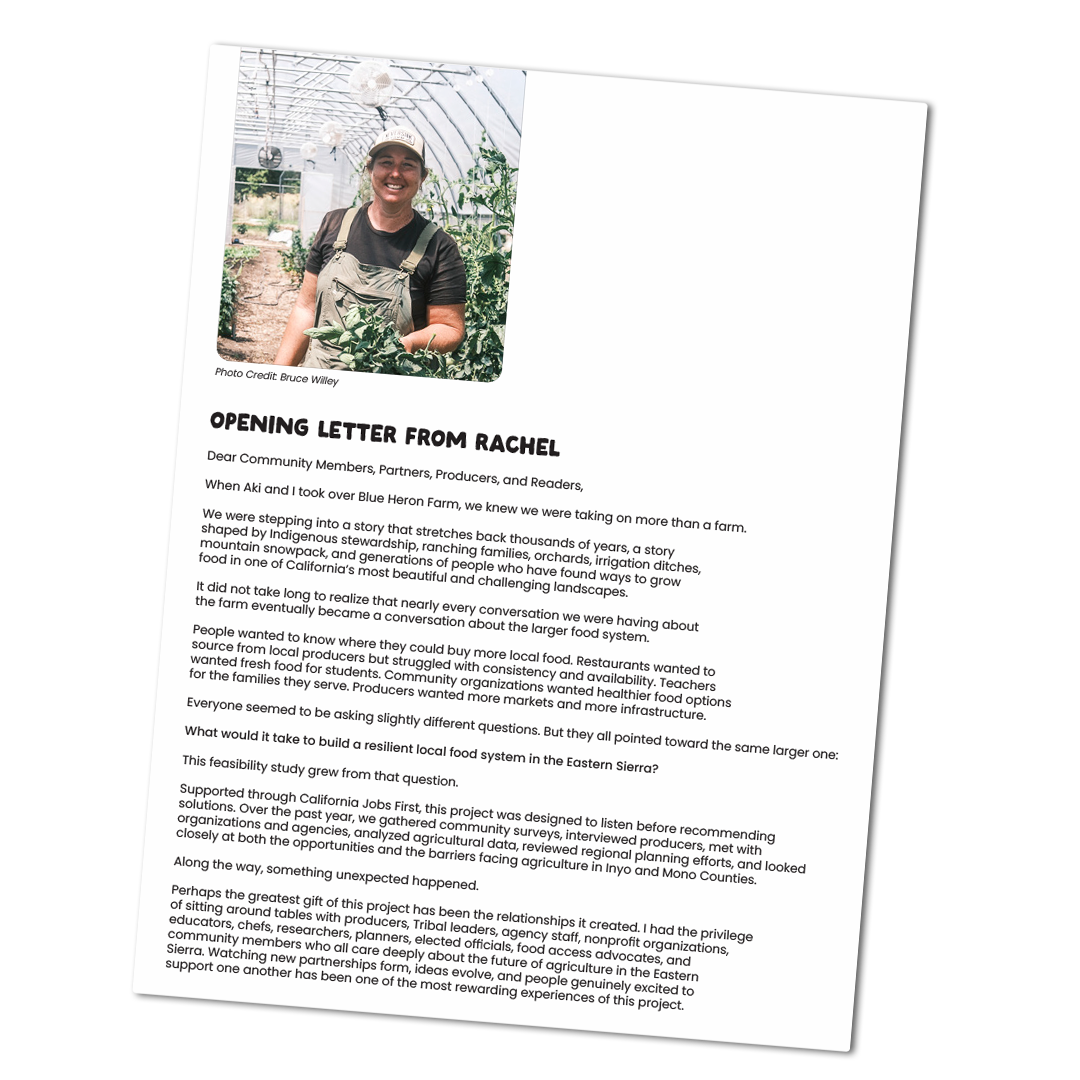
Opening Letter
A welcome from Rachel Kulchin of Blue Heron Farm introducing the purpose of this work, the questions that guided it, and the collaborations that shaped it. The letter invites readers into the research with a simple challenge: to look honestly at where our local food system stands today, what is possible, and what it will take to build a more resilient future together.
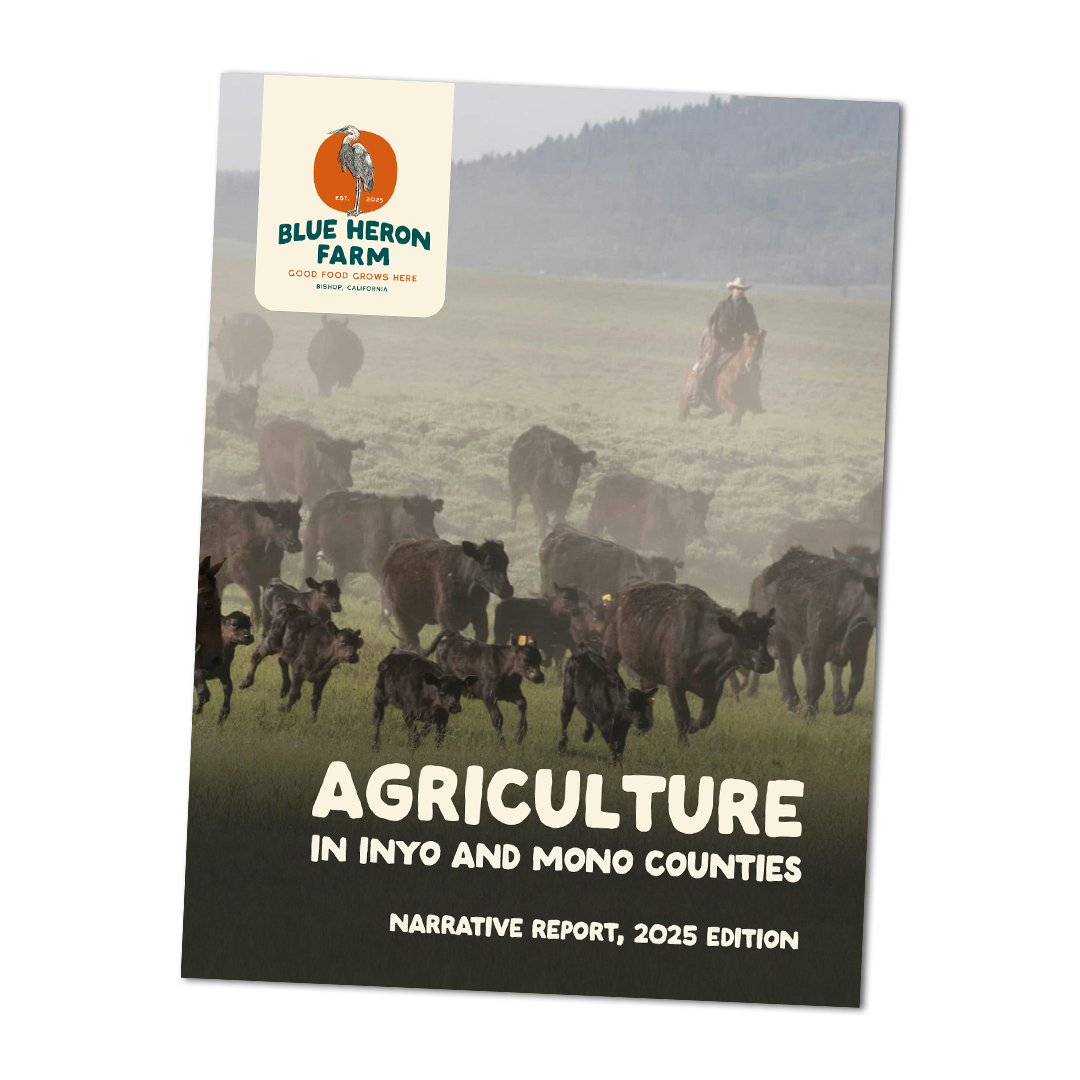
Agriculture in Inyo and Mono Counties
Narrative Report, 2025 edition
A snapshot of agriculture across Inyo and Mono Counties, exploring the region’s farms, producers, land, water, economics, and the forces shaping agriculture today.
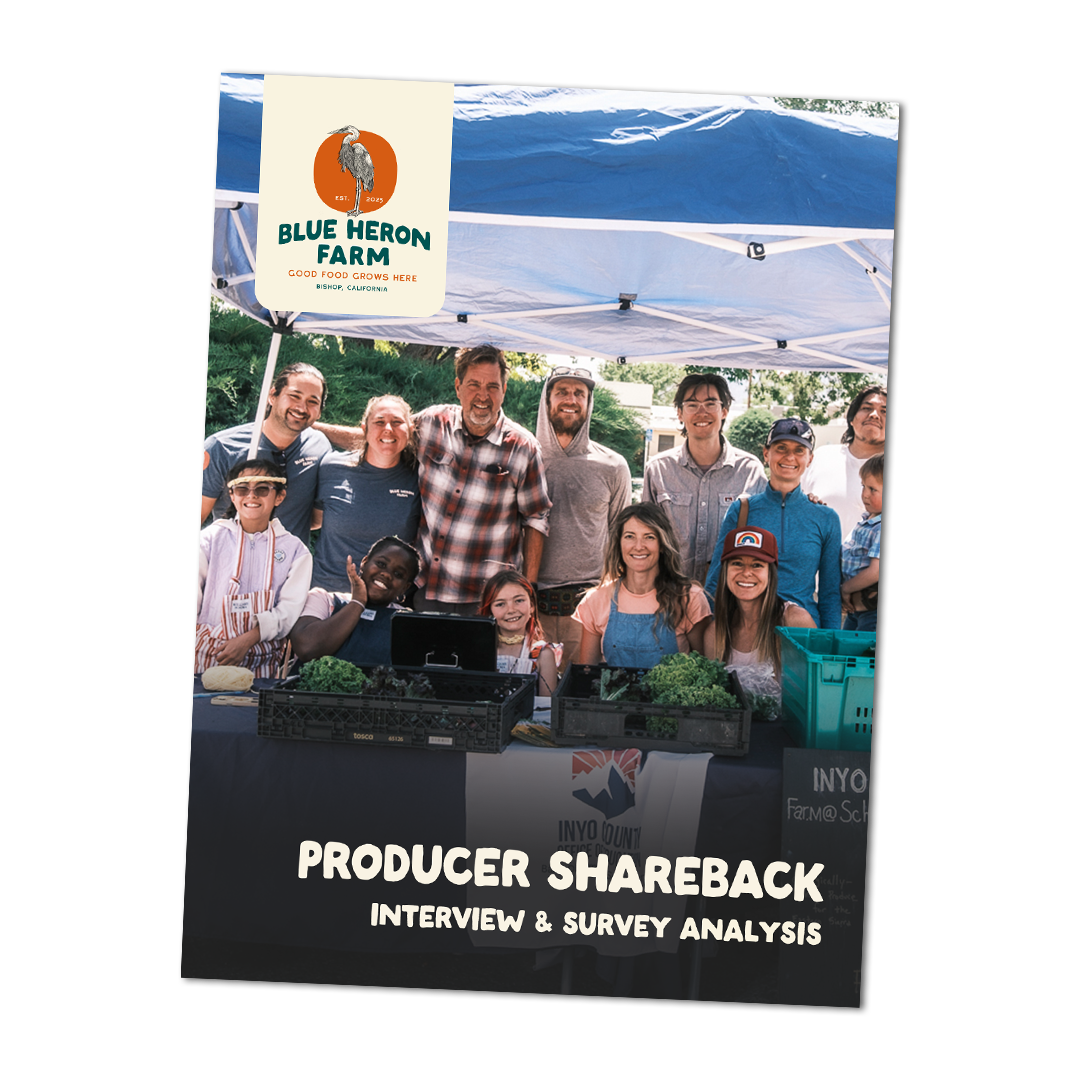
This study centers the voices of Eastern Sierra producers and asks what they need to grow, sell, and stay viable. Producers consistently pointed to gaps in aggregation, cold storage, processing, distribution, marketing, market access, and centralized support, highlighting that a more resilient local food system will require not just more demand, but stronger infrastructure behind the people producing the food.
Producer Shareback
Interview & Survey Analysis
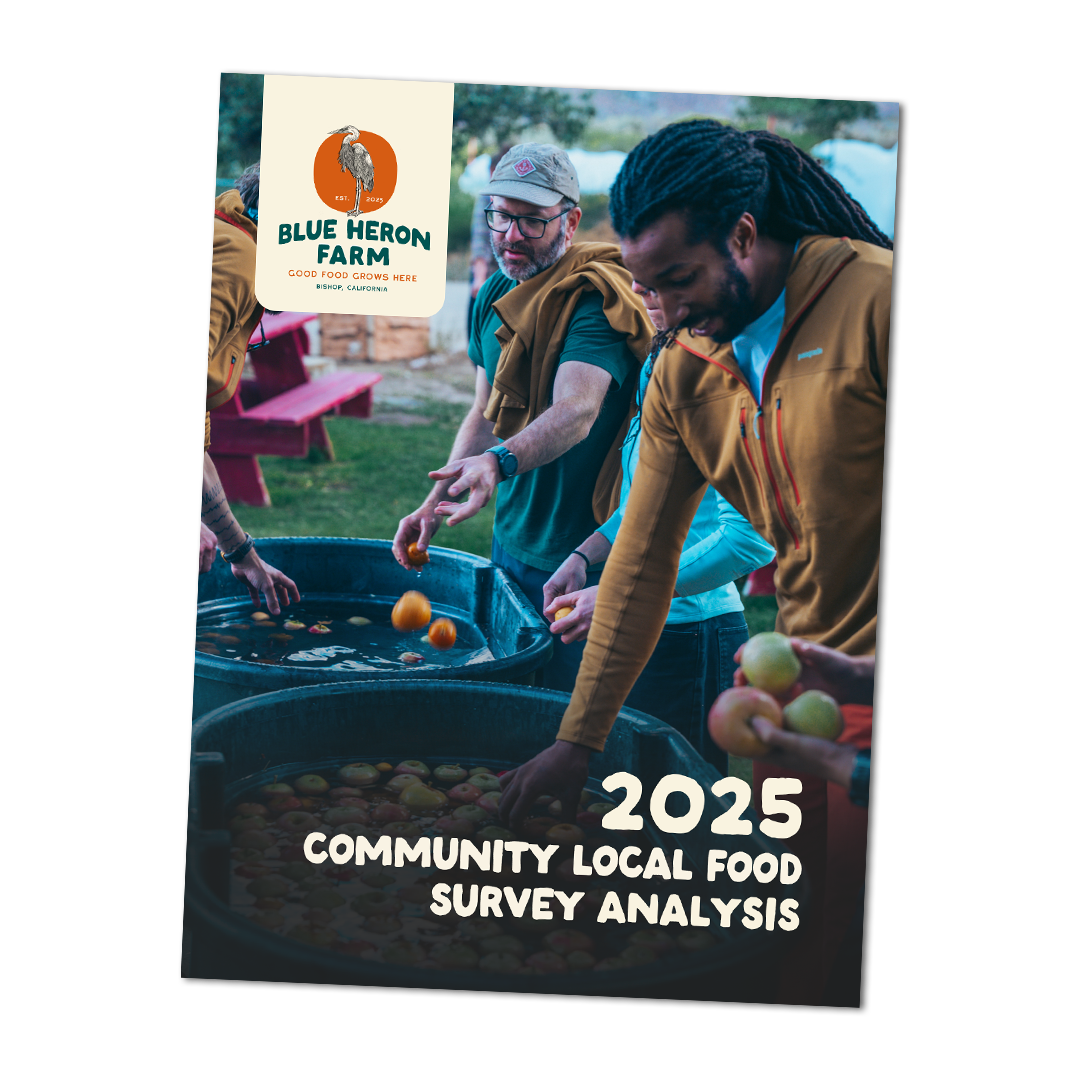
Based on 45 handwritten community surveys, this study found that the desire for local food is already here — the bigger challenge is access. Residents pointed to cost, convenience, awareness, distance, limited options, and seasonality as barriers, while overwhelmingly connecting local food to community food security. The findings make a clear case for better-connected infrastructure that makes local food easier to find, buy, and afford.
Community Local Food Survey Analysis
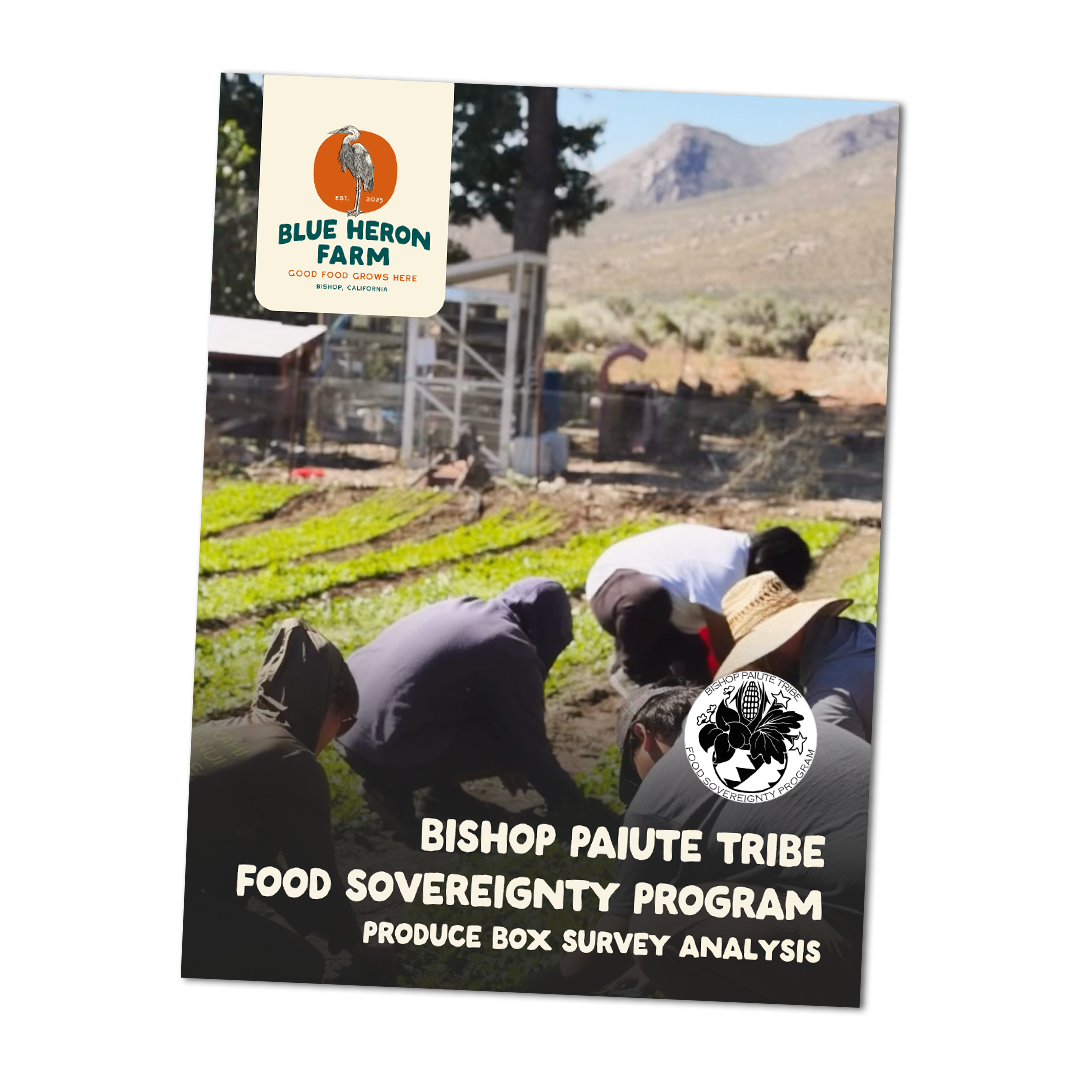
Shared with us by the Bishop Paiute Tribe Food Sovereignty Program, these survey results capture Tribal community members’ experiences receiving produce boxes from Tally Farms, a California-based CSA that was able to deliver to the Tribe through a grant-funded food access program. The feedback offers important insight into what participants valued, what barriers remained, and what can help make produce-box programs more useful, accessible, and responsive to the communities they serve.
Bishop Paiute Tribe Food Sovereignty Program
Produce Box Survey Analysis
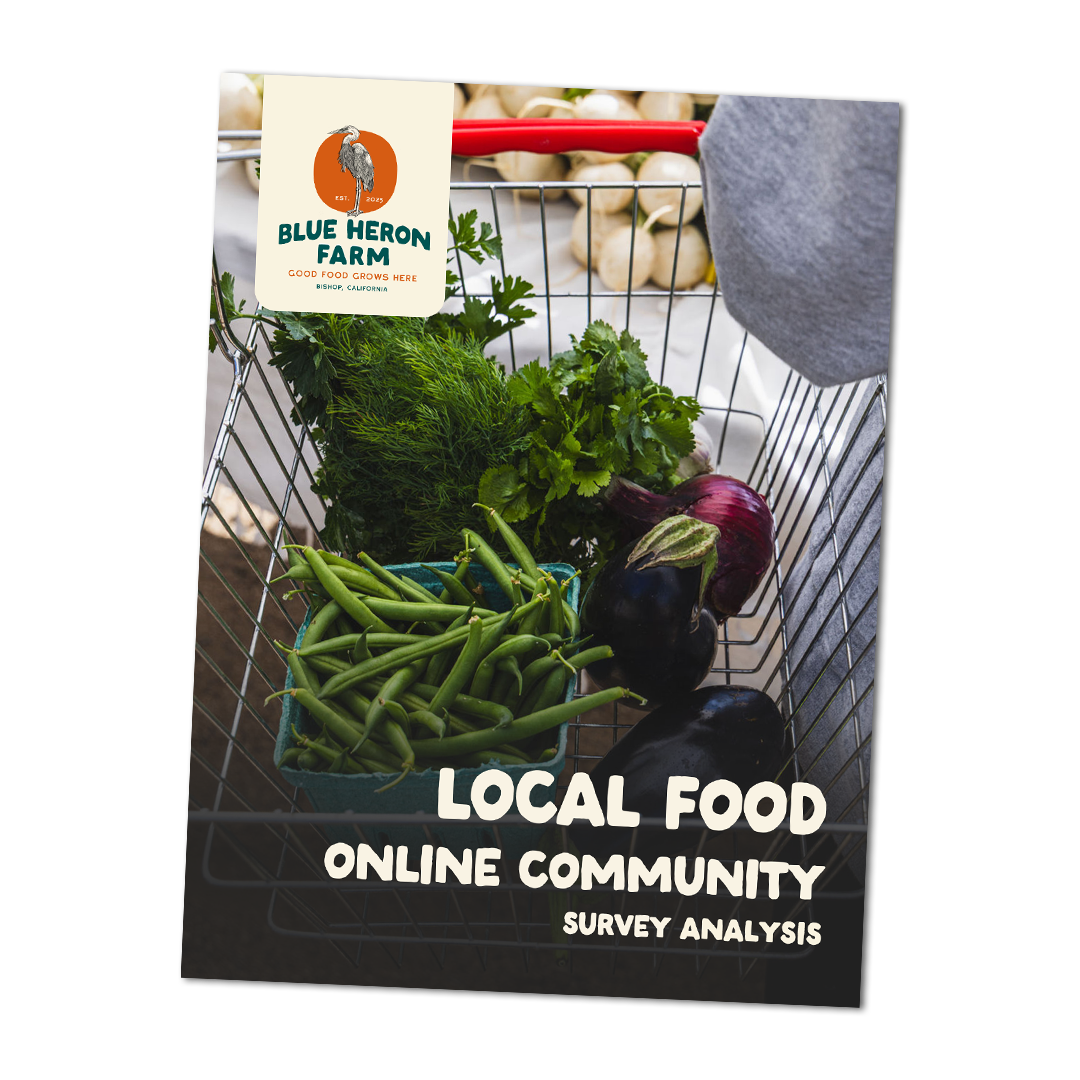
Local Food Online Community Survey Analysis
Drawing on responses from 240 community members, this study explores demand for local food across the Eastern Sierra and the barriers keeping people from buying more of it. The findings point to strong community interest, while highlighting the need for more consistent availability, greater product selection, easier ordering and pickup, and better-connected local food infrastructure.
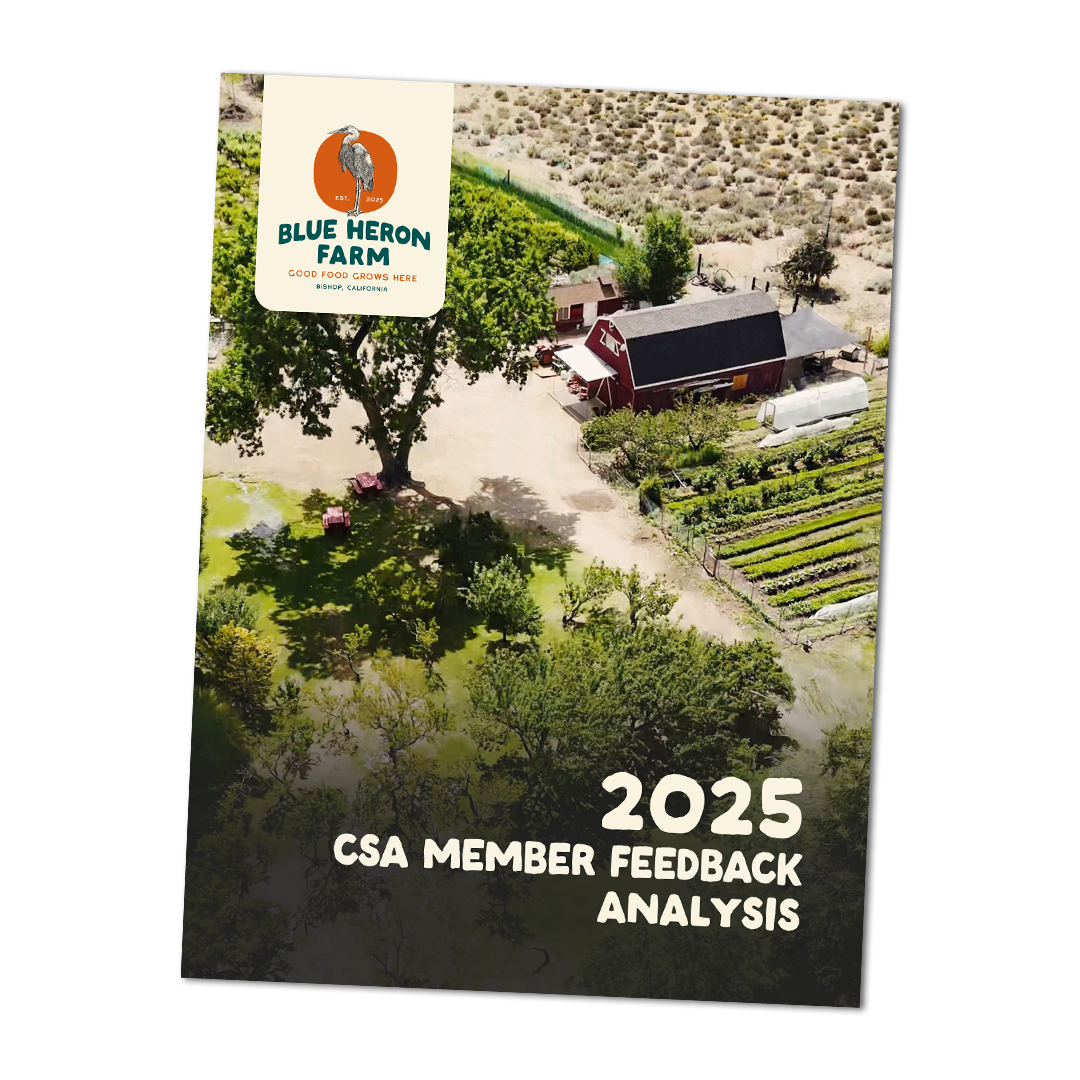
CSA Member Feedback Analysis
2025 Season
Based on feedback from Blue Heron Farm’s 2025 CSA members, this study looks at what worked, what members valued most, and where the program could improve. The responses highlight strong enthusiasm for fresh local food and farm connection, while offering practical insight into variety, quantity, communication, pickup experience, and what helps keep a CSA both useful and sustainable for the people it serves.
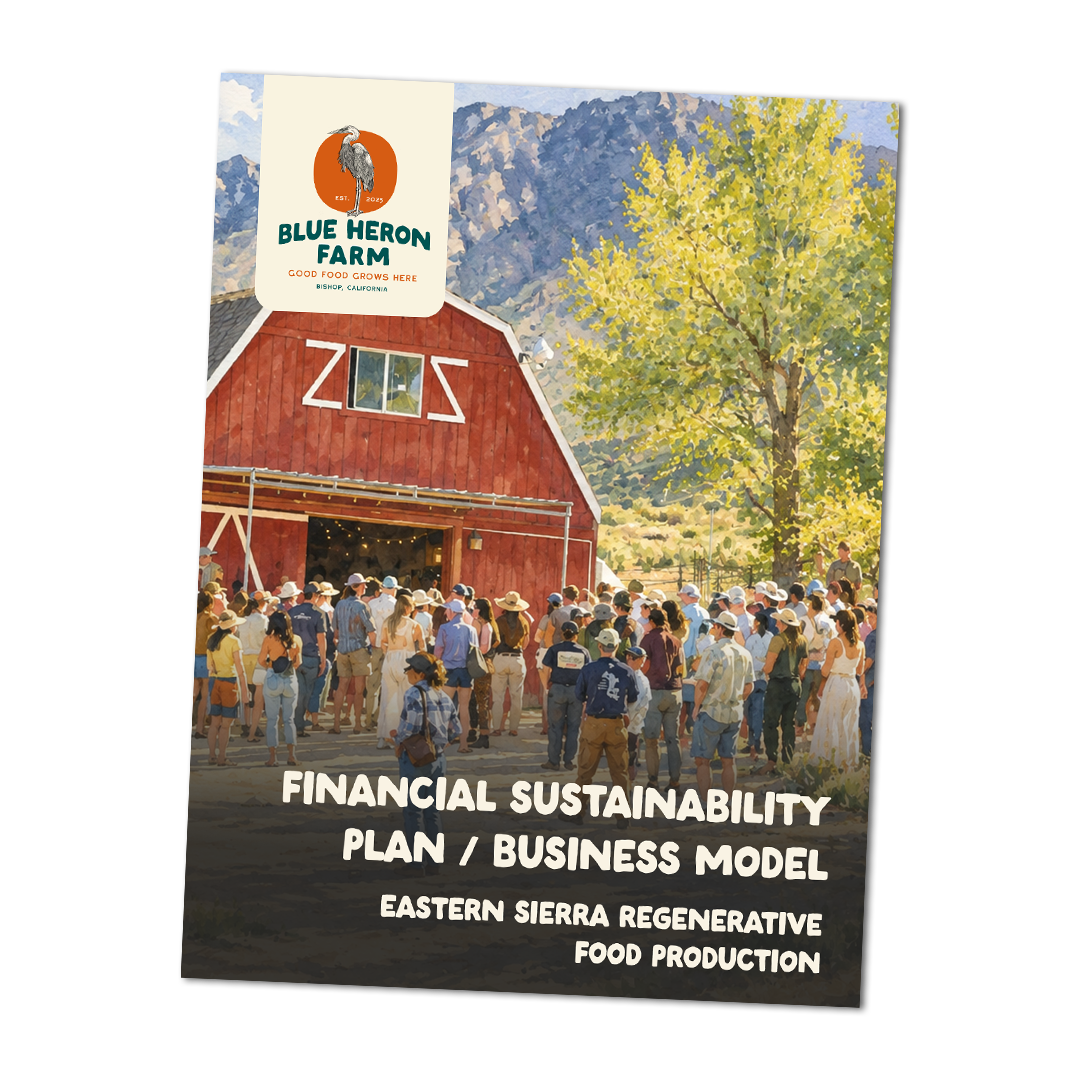
Financial Sustainability Plan / Business Model
Eastern Sierra Regenerative Food Production
This plan asks what it would take to make regenerative food production financially sustainable in the Eastern Sierra. It examines costs, revenue streams, workforce needs, reinvestment, and opportunities for growth, building a practical business model designed to support farm viability, job creation, economic resilience, and future investment.
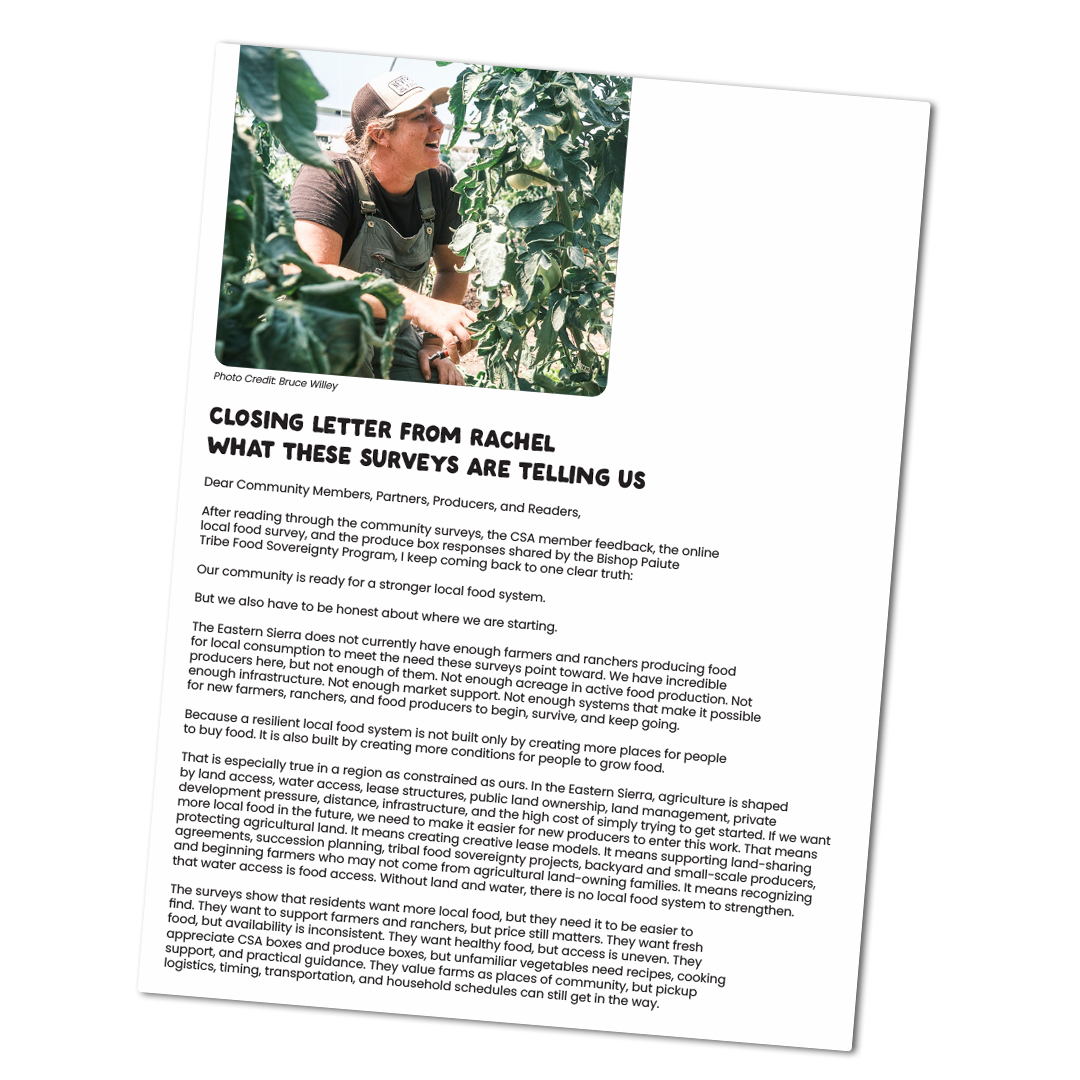
A Closing Letter
A personal reflection from Rachel Kulchin of Blue Heron Farm on what all of these studies are telling us together. The letter brings the findings back to one central idea: our community is ready for a more resilient local food system, but getting there will require investment not only in access and markets, but in the farmers, ranchers, land, infrastructure, and partnerships that make local food possible in the first place.
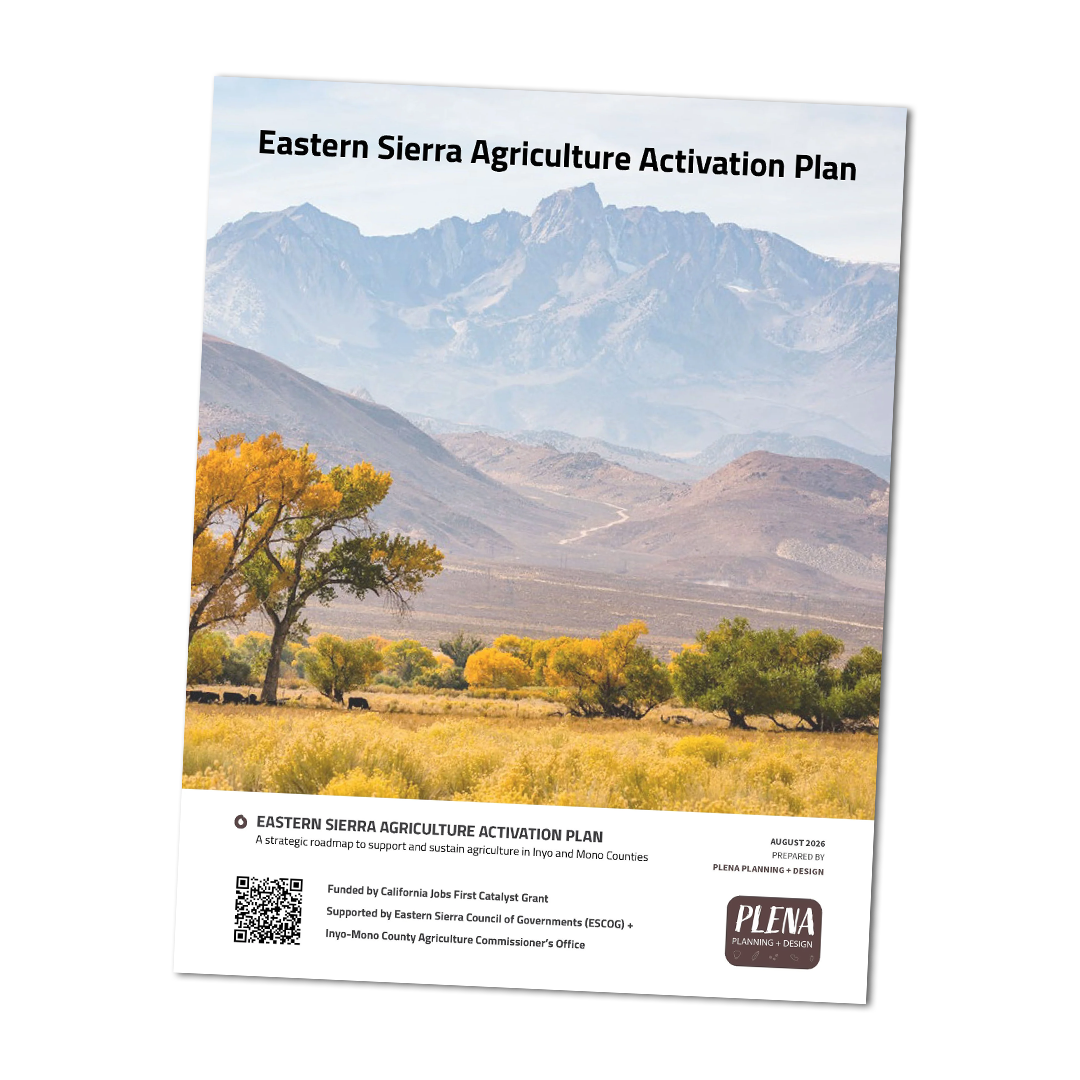
What Do We Do Now?
A special thank you to Lindsay Gucker of Plena Planning + Design, whose work on the Eastern Sierra Agriculture Activation Plan overlapped with our project in such a meaningful way. The Agriculture Activation Plan was commissioned by the Eastern Sierra Council of Governments (ESCOG) and funded through California Jobs First, creating a really unique opportunity for our two projects to inform and strengthen one another.
Throughout the process, Lindsay and I regularly shared data, survey findings, regional information, resources, and ideas with one another. You will see that collaboration reflected throughout these feasibility studies, just as findings from this work helped inform the broader regional planning conversation.
Rather than working in separate silos, we were able to learn alongside one another, compare what we were hearing, and strengthen both bodies of work through shared information.
And while these feasibility studies spend a lot of time asking where are we now, what are we hearing, and what are the barriers and opportunities in front of us, Lindsay’s work takes an incredibly important next step:
What do we actually do about it?
The Eastern Sierra Agriculture Activation Plan breaks the larger challenges facing agriculture in Inyo and Mono Counties into clear, actionable strategies and next steps. It gives local governments, agencies, organizations, producers, funders, and other regional decision makers something incredibly valuable: a practical roadmap for moving from conversation into action.
I believe this is some of the most important work happening in our region right now. We can collect data, identify challenges, and talk about what our agricultural future could look like, but meaningful change requires clear steps, shared priorities, and an understanding of who can help move each piece forward. Lindsay’s work helps provide that bridge.
If our feasibility studies help tell the story of where our local food system stands today, the Eastern Sierra Agriculture Activation Plan helps show us a path forward.
We strongly encourage you to explore the Agriculture Activation Plan alongside these studies. Together, these projects provide both the context and a roadmap for strengthening agriculture and local food in the Eastern Sierra.