Report Card Season Here at the Farm
Every day a little bit better.
You have heard me say it. It's a phrase we say to ourselves daily. Sometimes out loud. Sometimes through gritted teeth. Sometimes while staring at something on the farm thats been bugging me for the last six months.
It's a reminder that we're building something here, and that building something worthwhile takes time. It's also a reminder to give ourselves a little grace along the way. After all, Aki and I have only been on this property since February 14th, 2025. Just one year and eight months so far. I have to remind myself of that constantly. Because when I walk around the farm, sometimes I have a hard time seeing everything we've accomplished. I see the irrigation line that needs replacing, the orchard trees that need attention, the weeds along the fence, and the approximately ten thousand things I'd like to improve before next season.
It's easy to get so wrapped up in everything that still needs doing that you forget to acknowledge how much ground you've already covered.
And that's part of why, at the end of every growing season, Aki and I make a point of sitting down and taking a good, hard look at the year we've just had.
Not just celebrating the wins, but looking honestly at what didn't work and what we could have done better.
Because if we're serious about that whole every day a little bit better business, we have to be willing to ask ourselves some uncomfortable questions.
Sitting Down With the Numbers
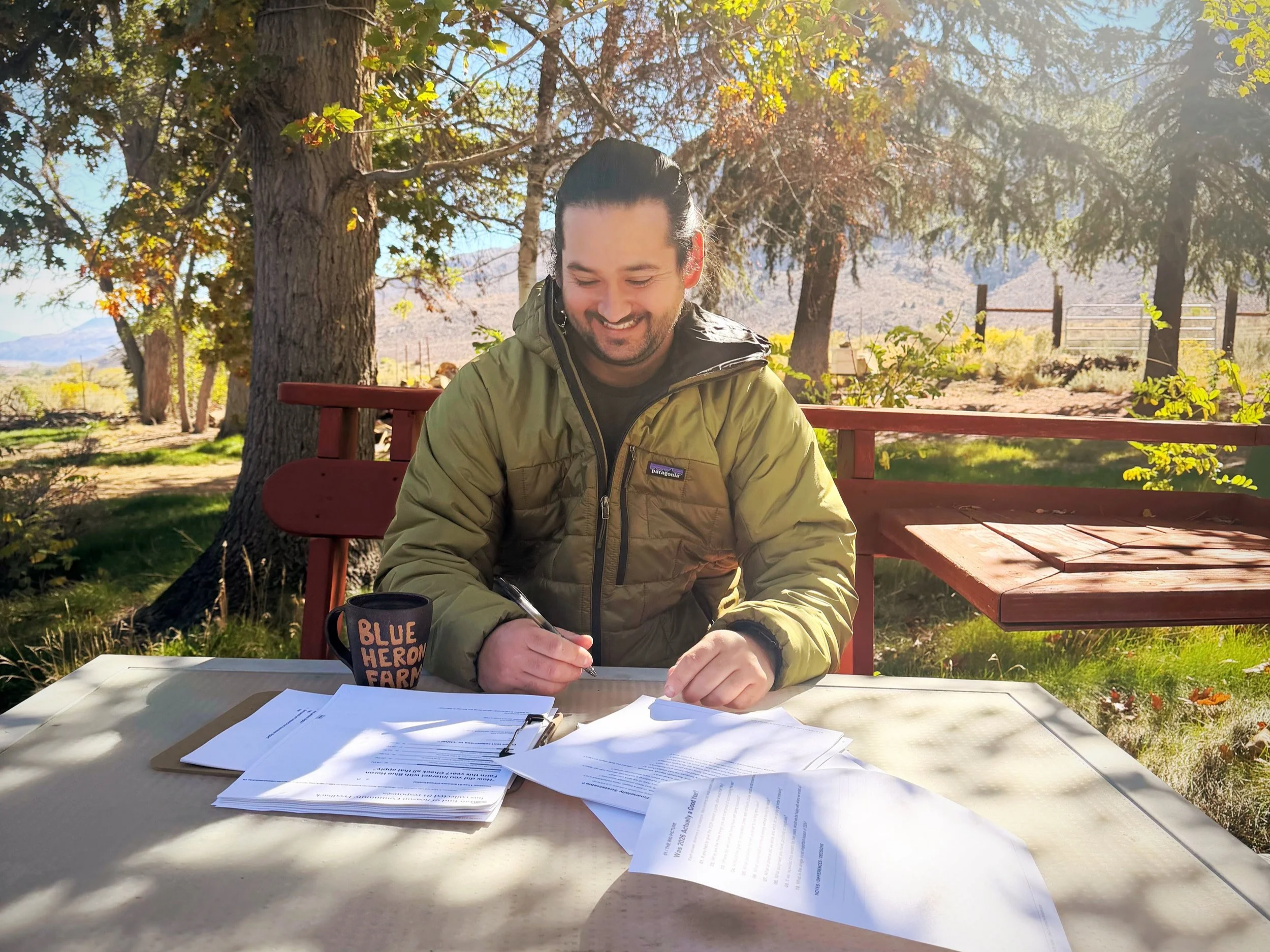
This past Sunday, Aki and I sat down to begin our annual end-of-season review. We started digging into the numbers.
How many pounds of arugula did we harvest? How many bunches of carrots? How much lettuce, how many cucumbers, how many pounds of kale?
But also, how long did it take us to harvest those crops? How much time went into washing, sorting, and packing them? How much labor did we invest from the moment we put a seed in the ground to the moment that vegetable made it into someone's kitchen?
Because it's one thing to grow 500 pounds of beautiful carrots. It's another thing entirely to figure out whether growing, harvesting, washing, packing, and selling those carrots actually made financial sense.
Crop by crop, we started working our way through the season.
We looked at what performed well, what struggled, what I could as a farmer do better to grow a better crop next year, and what we probably should have planted twice as much of.
Which crops earned their place in the field? Which varieties deserve another chance? Where did we invest an enormous amount of labor for a pretty underwhelming return?
And perhaps most importantly, what can we change next year to do a better job?
Because growing a beautiful vegetable is only part of the equation. We also have to figure out how to grow it efficiently, harvest it at the right time, get it into the hands of our customers, and make enough money doing so that we can afford to keep growing vegetables next year.
And this is about something much bigger than just Blue Heron Farm.
One of our goals here is to help prove that farming in the Owens Valley isn't just vital, it's viable.
If we want to see more people choosing agriculture as their livelihood, we have to demonstrate that growing food can actually provide a living. That farmers can pay their bills, invest in their businesses, support their families, and build a future doing this work.
Because a strong local food system can't be built on passion and hard work alone. It also needs farms that are financially sustainable.
And that's why we spend so much time digging into the numbers, asking hard questions, and looking for ways to improve. We're not just trying to figure out how to grow more food. We're trying to figure out how to make growing food a viable way of life here in the Eastern Sierra.
There are a lot of moving pieces.
In fact, we had so much to talk about that by the end of Sunday, we'd barely scratched the surface.
So on Monday, we cleared the afternoon and kept going.
The Other Half of the Report Card
Monday was dedicated to something just as important as our production numbers, your feedback. First, I want to say an enormous, heartfelt thank you to everyone who took the time to complete one of our end-of-season surveys. I know everyone has a thousand things competing for their attention, and the fact that you took a little bit of your day to sit down and tell us about your experience with the farm means more than I can adequately express.
We read every single response, out loud, to each other.
Every encouragement. Every suggestion. Every thoughtful little observation about something we might not have noticed ourselves.
And gosh, there was so much kindness and appreciation in those responses. It's hard to put into words how meaningful it is to hear that something we've poured so much of ourselves into is making a positive difference in people's lives. It actually brings tears to my eyes.
But tucked into all that encouragement were also some really thoughtful ideas about how we could make things even better.
And we take those seriously.
It's easy to receive positive feedback. Who doesn't love hearing that they're doing a good job? But I think one of the greatest gifts someone can give us is an honest perspective about something we might be overlooking.
Maybe it's a small adjustment to how we organize pickups, a stupid rock in the parking lot thats causing issues, a crop someone wishes we'd grow more of, or a part of the program that could use a little more clarity.
Sometimes the smallest observations lead to the most meaningful improvements.
Those are the things we want to hear.
Because we can't improve what we don't recognize could be better. And if we're serious about getting a little better every day, we need to be just as willing to listen to suggestions as we are to celebrate the compliments.
Trust Is Something You Have to Earn
There's another reason this process matters so much to me, and it goes beyond improving the farm.
It's about trust.
I talk a lot about building a stronger local food system here in the Eastern Sierra. About connecting producers and customers, creating better access to locally grown food, and building the kind of agricultural community that can thrive for generations.
But none of that works without trust.
Our customers need to trust that we're growing food with care, that we're being honest about our practices, and that when we say we're going to do something, we'll do our absolute best to follow through. Our CSA members need to trust that we're doing everything we can to make their investment in the farm worthwhile. Our work-trade crew needs to trust that the time, energy, and heart they pour into this place are respected, valued, and reciprocated. And as we work toward building a more connected regional food system, other farmers and producers need to trust that we're approaching that work with integrity, fairness, and a genuine desire to see everyone succeed.
That trust doesn't come from telling everyone how wonderful we are.
It comes from being transparent about what we're doing. Being willing to acknowledge when we get something wrong. Following through on our commitments. And making changes when changes need to be made.
I don't think transparency means pretending to have all the answers. Quite the opposite, actually.
I think it means being willing to say, Here's what we're trying. Here's what's working. Here's what isn't. And here's what we're going to do about it.
Especially in a small community like ours, where so much of our local food economy is built on personal relationships, that kind of accountability matters.
And if we're going to ask our community to invest in local agriculture, whether that's through a CSA membership, a trip to the farmstand, or supporting some of the larger regional projects we're working on, I think we owe you an honest look at how we're doing.
Every Day a Little Bit Better
We're still in the middle of this process. We're looking not only at the farm as a business, but also at how we're doing as business partners and as human beings.
Are we building systems that make our work more efficient? Are we communicating well? Are we using our time wisely? Are we being kind to each other, even when things get stressful? And how can we be a little more intentional about making time for lives outside of the farm?
Because if we're going to put so much energy into building a farm rooted in care, regeneration, and sustainability, shouldn't we work towards holding ourselves to those same standards?
The goal isn't just to make Blue Heron Farm bigger.
It's to make it better. Better for our customers, better for our community, better for the land, and better for the people who make it all happen.
And those things don't always happen automatically. We have to be intentional about them.
I know that ten years from now, I'll still be walking around this property making a mental list of everything that needs fixing. But I also hope I'll be able to look back and see a farm that got a little stronger, a little smarter, and a little more resilient with each passing season.
As Aki and I continue compiling our end-of-season report card, I'm looking forward to sharing some of our takeaways with you. Not just the successes, but the lessons, the things we plan to change, and the priorities we're carrying into 2027.
Because you're part of this farm's story, too. And I think you deserve to know how it's going.
Thank you for helping us learn, for holding us accountable, and for giving us the opportunity to keep improving.
Every day a little bit better.