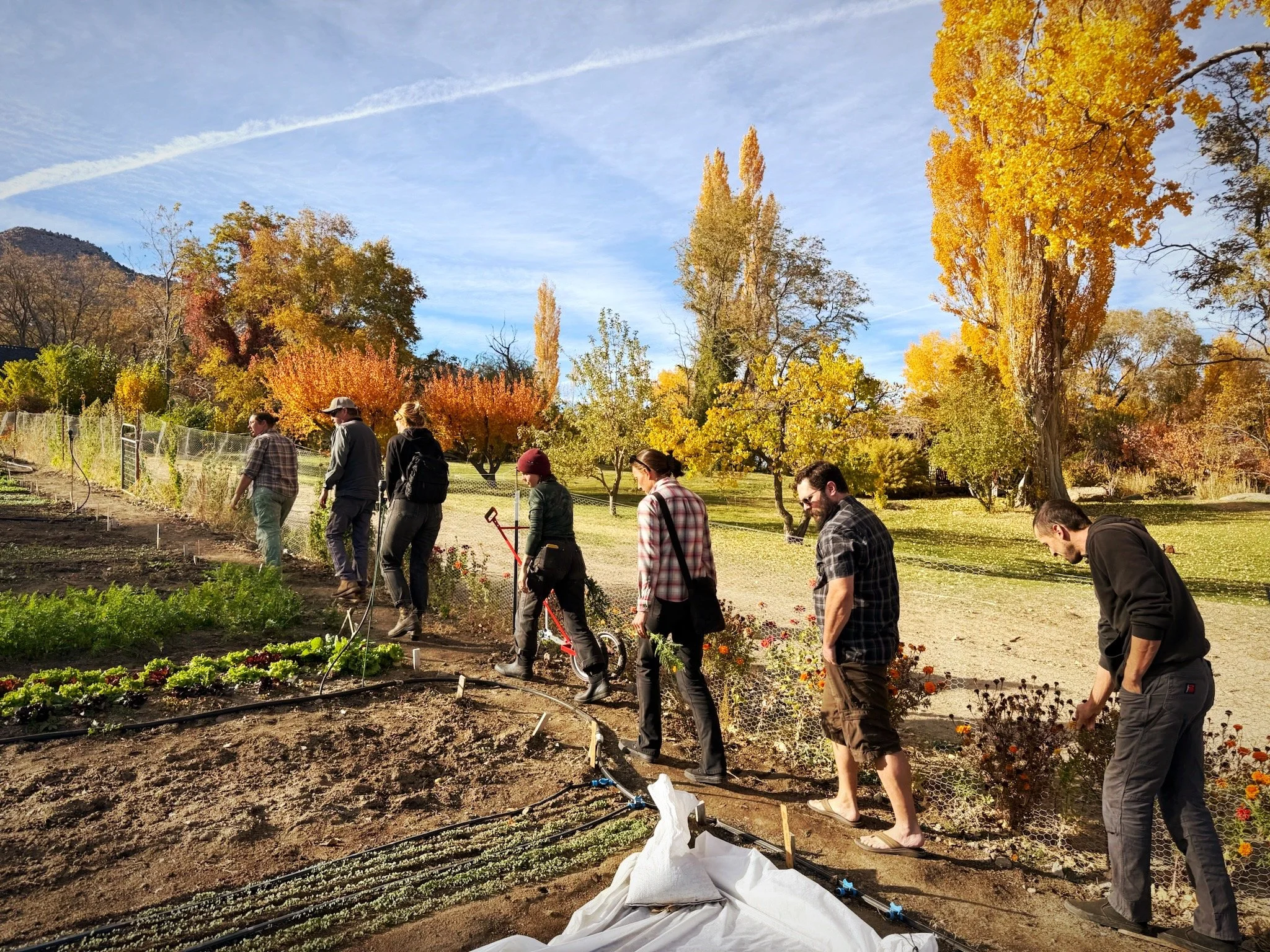
All photo credit goes to Lindsay Gucker
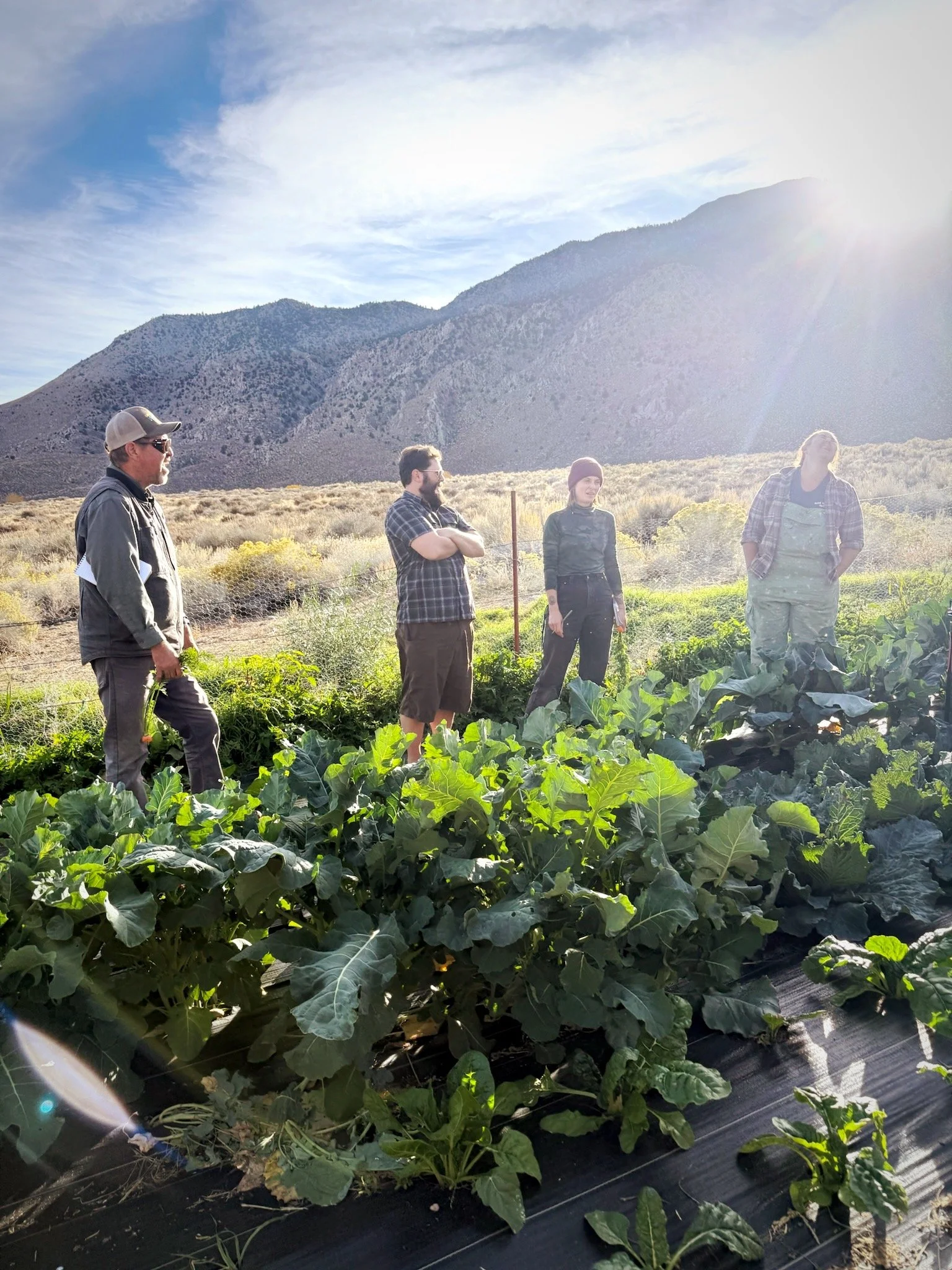
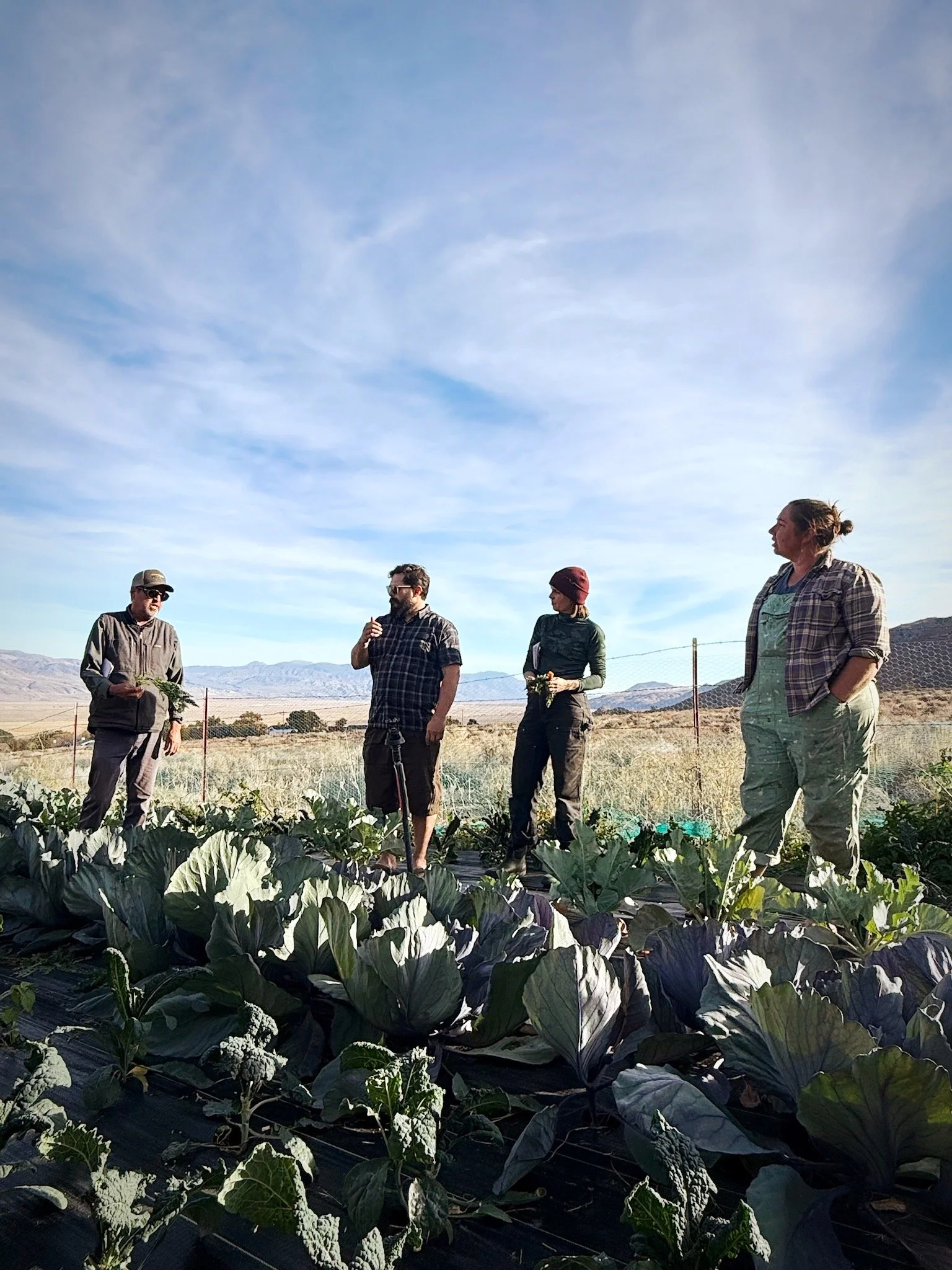
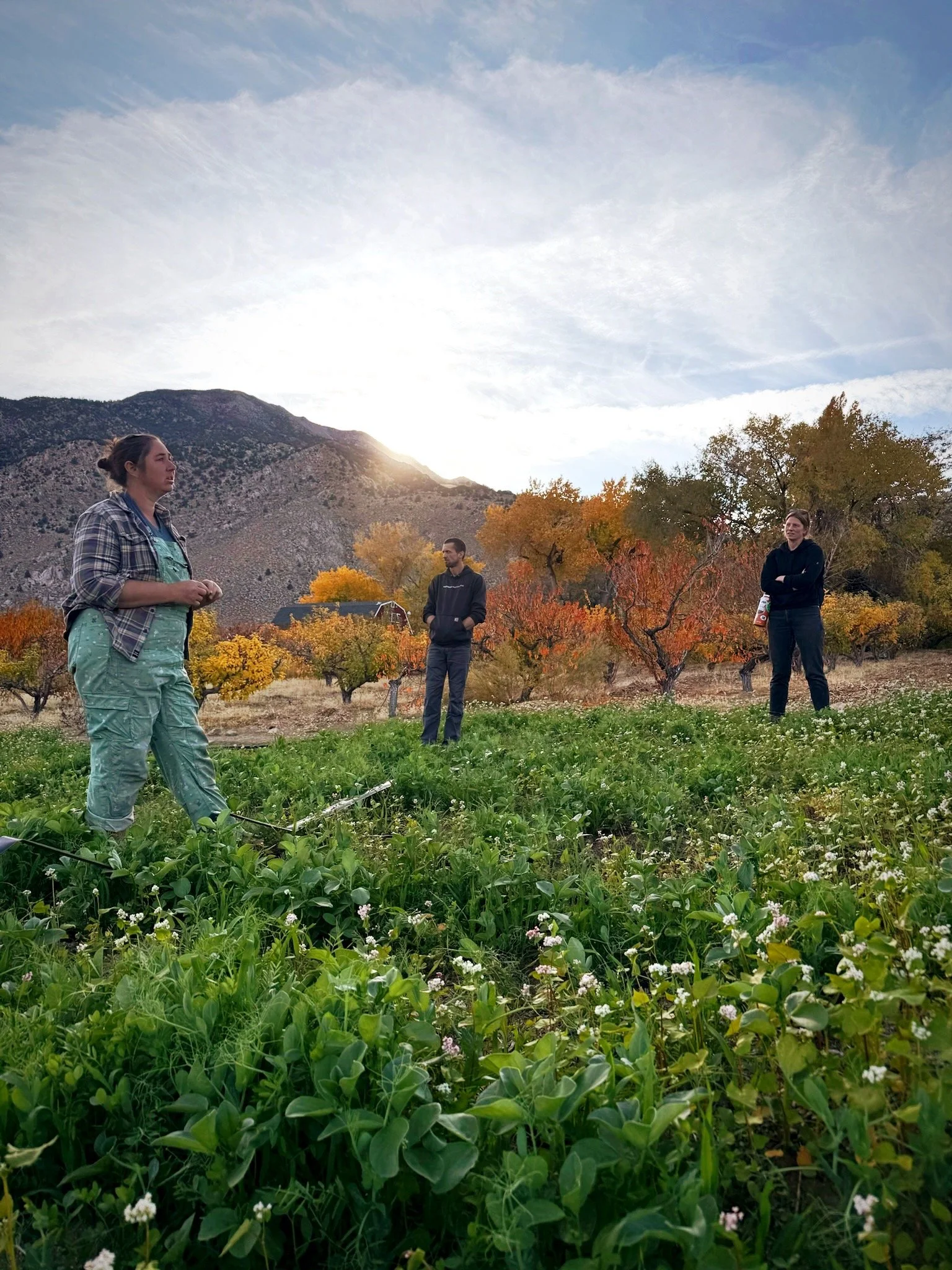
This past Monday, we had a small group of farmers gather here at Blue Heron for a good old-fashioned end-of-season download.
There was no fancy agenda. Just a bunch of folks who spent the better part of the last year trying to coax food out of this beautiful, stubborn landscape, getting together to compare notes.
We talked about everything.
The seed varieties we absolutely loved. The ones we will never, ever plant again. New tools that made our lives easier. Growing techniques that worked, experiments that flopped, irrigation systems, and those little discoveries that can save someone else an awful lot of time and frustration.
We also got into some of the bigger logistical challenges of farming in such a remote place. Things like sourcing hard-to-find materials, coordinating orders, and figuring out where we might be able to pool our resources instead of everyone trying to solve the same problems independently.
And somewhere in between all that, we wandered around the fields, tasted different varieties as we walked (always an important part of any productive farmer get-together), and did a whole lot of good ol’ shooting-the-shit about farming in the Eastern Sierra.
It was wonderful. There's something about getting a group of farmers together that gives me so much hope. Because here's the thing. Growing food here is hard enough.
We live in a beautiful, ruthless, remote corner of the world. Our weather is unpredictable, our resources are limited, and just getting the supplies we need can sometimes feel like a full-time job.
And yet, there are people here who keep showing up, season after season, determined to figure out how to make it work.
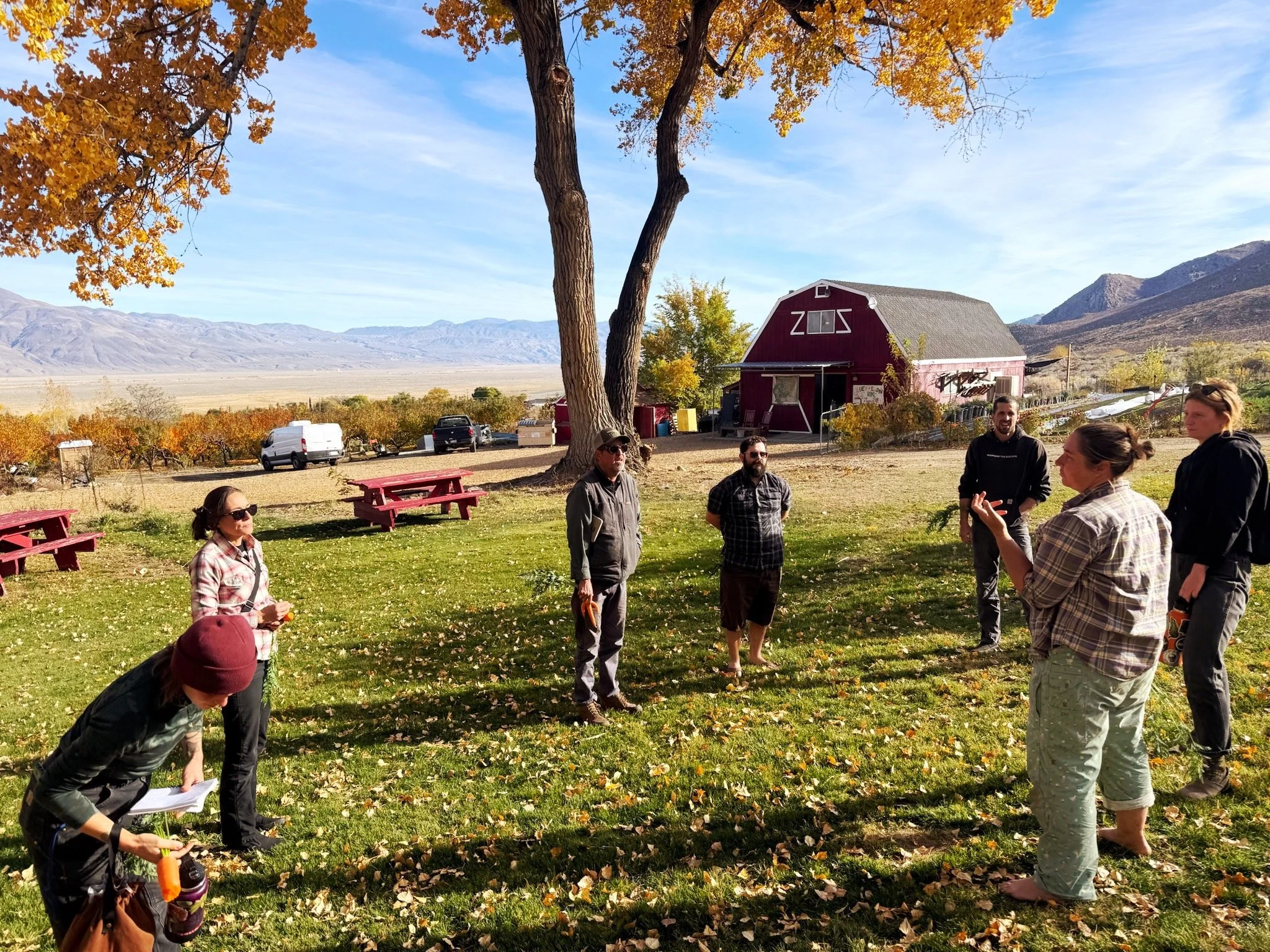
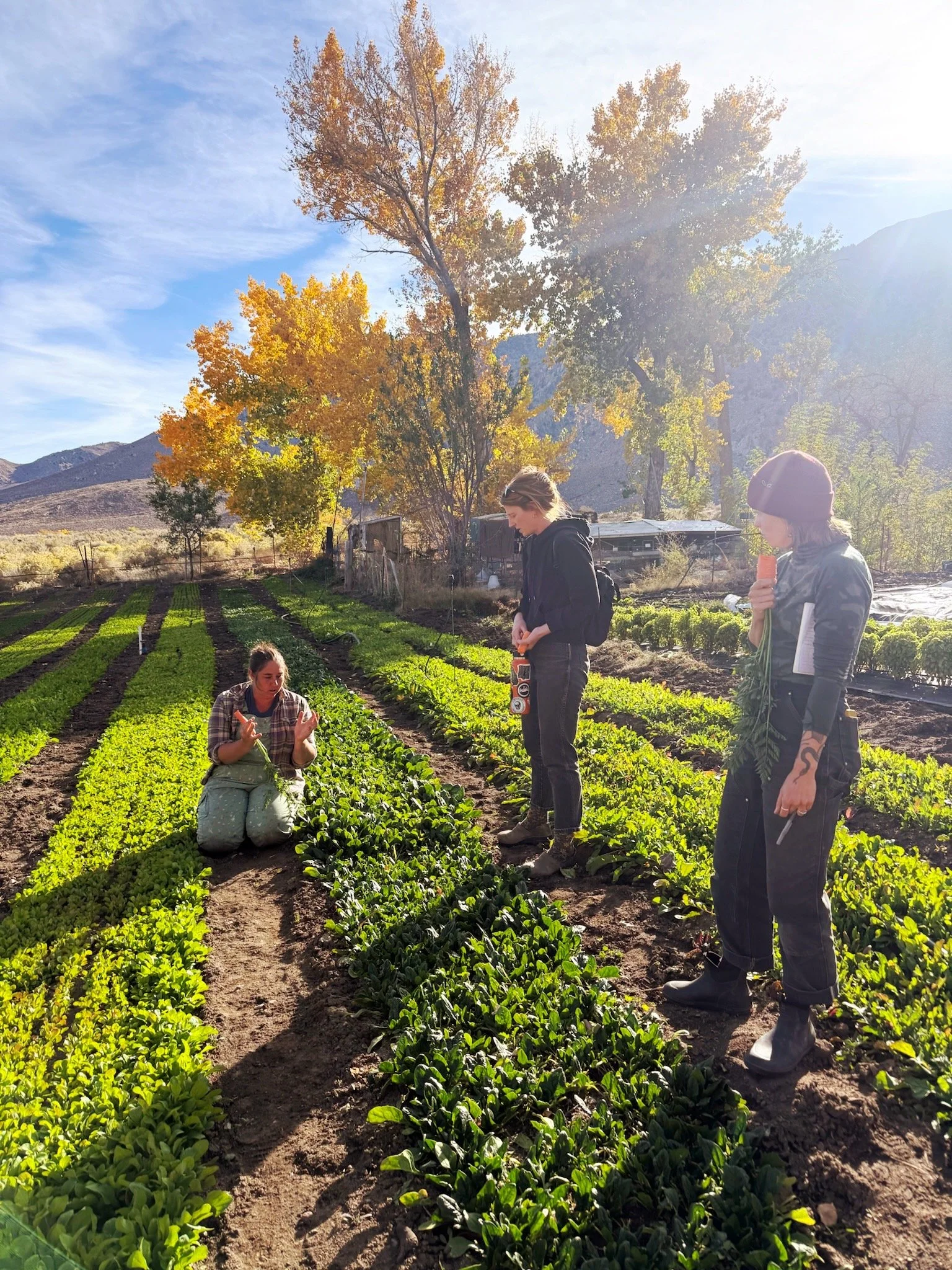
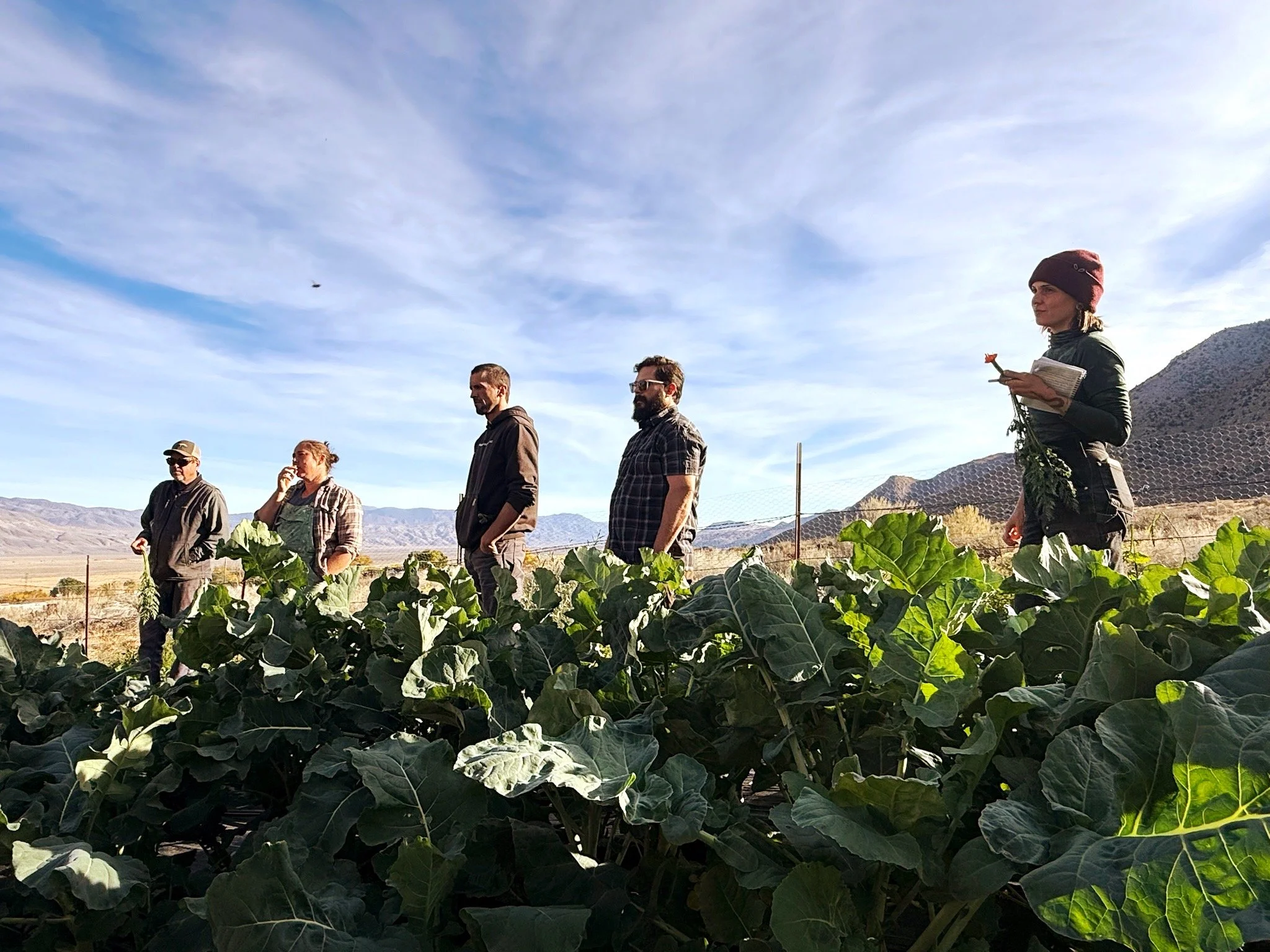
(Eastern Sierra Farmer Album cover coming soon… ha!)
I think sometimes, especially in agriculture, there's this deeply ingrained idea that knowledge is something to be guarded. That the tricks you've learned, the varieties you've discovered, the systems you've spent years developing are somehow worth less if you share them with someone else.
But I've never really understood that way of thinking.
If I find a seed variety that thrives in our ridiculous climate, why wouldn't I want the farmer down the road to know about it?
What if, instead of operating from a place of scarcity, we built an agricultural community rooted in abundance? One where sharing knowledge is the norm. Where we celebrate each other's successes, learn from each other's failures, and recognize that having more successful farms in this valley doesn't diminish what any one of us is doing. It makes all of us stronger.
And I think this is something we have to be really intentional about building. Because the truth is, this valley needs more farmers. If we want to build a resilient local food system here in the Eastern Sierra, we need more people growing vegetables, raising animals, tending orchards, and making a living from the land. To recognize that our neighbors' success is not a threat to our own, but an investment in the future of agriculture in this valley.
I want us to be asking ourselves, collectively, how do we make it easier for the next farmer to succeed here than it was for us?
Because ultimately, that's what I want to see. Not just Blue Heron Farm succeeding, but a whole community of farmers, ranchers, and producers who can actually make a living doing this work. People who can lean on one another, share resources, and collectively make growing food in this valley a little more viable.
There's that old saying, a rising tide raises all ships. And I think there's a whole lot of truth in that.
Monday afternoon was a lovely little reminder that we don't have to figure all of this out on our own.
Sometimes, building a stronger local food system looks like formal meetings, a shiny new piece of infrastructure, or an ambitious project.
And sometimes, it looks like a handful of farmers standing in a field, swapping stories about which carrots grew best, passing around some taste tests, and helping each other figure out how to do a little better next year.