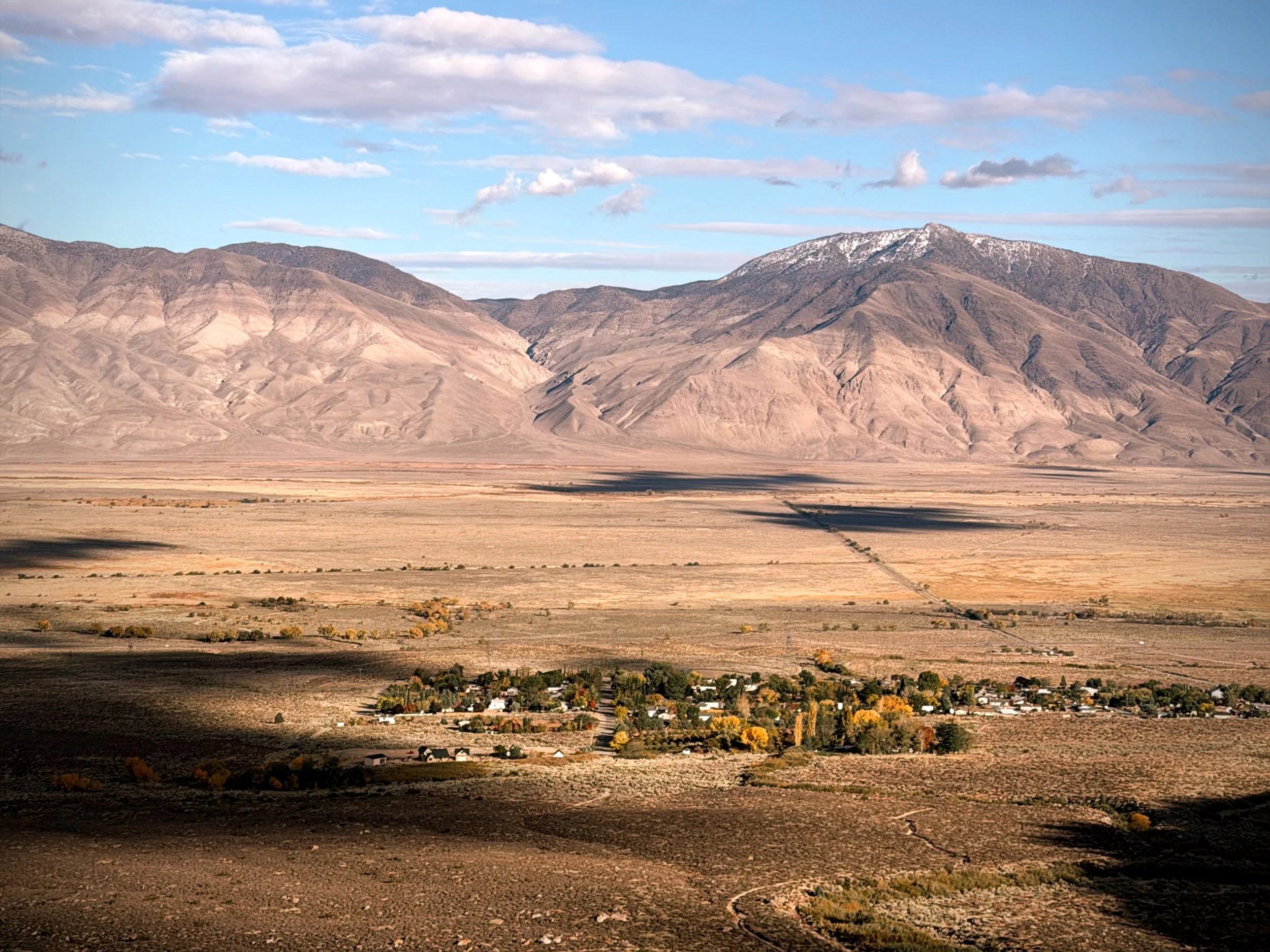
From the trail looking down on the farm and the Wilkerson community
Feedback we're taking from our 2026 end-of-season review into 2027.
As you know, every year, when the main growing season comes to an end, Aki and I sit down and give the farm a good, honest review.
We look at the numbers. The harvests. The successes. The mistakes. We talk about the business, the farm, and ourselves as business partners. Where did we do well? Where did we fall short? And perhaps most importantly, how do we make this whole operation better without magically adding another twenty hours to a workweek?
But one of the most important parts of that review is hearing from you.
This year, we sent out two surveys: one to our CSA members and another to the broader community. Between the two, we received over 100 responses.
And Aki and I sat down and read every single one of them. Out loud. To each other. Every compliment. Every frustration. Every suggestion.
And before we get into what we learned and what we plan to change, I want to say something about the insanely, tear making, overwhelming amount of love and appreciation we received. Gosh, you guys. I genuinely don't know how to put into words what that means to us.
Aki and I have poured so much of ourselves into this farm. Our time, our energy, every penny, our creativity, and just about every single minute of our waking hours. We have put our whole hearts into building something that we believe in, something that we hope matters to this community. And to sit down together and read your words, to hear that the things we care so deeply about are things you notice, appreciate, and value too?
It's hard to explain how meaningful that is.
You talked about the food, of course. But you also talked about the feeling of being here. About bringing your children to the farm, connecting with your neighbors, learning where your food comes from, and feeling like you're part of something. You see the care that goes into this place. And I don't think there's a greater gift you could give us than that.
Farming is hard. There are long days, uncertain seasons, plenty of stress, and more than a few moments when we wonder if can we find a way. But then there are moments like this. Sitting across from the person you love, reading words from a community that has embraced something you've built together, and realizing just how incredibly fortunate you are to get to live this life.
What an extraordinary privilege it is to pour your heart into something and have that love reflected right back at you.
We are so, so lucky. And we are grateful beyond words for this community, for the encouragement, for the trust, and for the opportunity to keep doing this work. Truly. Thank you.
Now, to read all those kind words is everything, but we didn't send out surveys just to pat ourselves on the back. We also wanted to know where we could do better. Because loving something doesn't mean there isn't room to improve it. And when people care enough to offer thoughtful, honest feedback, we have a responsibility to listen.
So rather than just telling you how much we appreciate your responses, we thought we'd share some specific things we heard and what we're planning to do about them.
Because the whole point of asking for feedback is to actually use it.
You LOVE finding our food at other local businesses.
We received so much positive feedback about being able to find Blue Heron produce at Manor Market. And I want to make a really big deal out of this. Because this is exactly the kind of partnership we want to grow and also to see more of within our community. Not everyone has the time to make it out to our farm stand. Not everyone can get to the Mammoth Wednesday Market. But being able to stop into your neighborhood grocery store and grab some locally grown vegetables while you're doing your regular shopping?
That's a pretty wonderful thing.
So, a massive thank you to Kyle, Ronnie, and Gavin at Manor Market for making not only space on their shelves for food grown right here in the Owens Valley but for believing that local food belongs on the shelf. Thank you for creating opportunities for farms like ours and so many other local producers. And thank you for your work in supporting a stronger, more resilient Eastern Sierra food system.
We also heard how much you love seeing our ingredients show up on menus around town. And gosh, we love that too!
There is something incredibly satisfying about spending months growing a vegetable, harvesting it at its peak, and then seeing a talented local chef turn it into something absolutely delicious.
So here's a massive shout-out to Looney Bean, Cloudripper, Mono Inn, and Coachwhip for incorporating locally grown ingredients into what they serve. Every time a local restaurant or business chooses to source from nearby farms, they're doing more than buying vegetables. They're helping create a dependable market for local agriculture.
What we're doing: We're going to continue strengthening our wholesale relationships and working to get more Blue Heron produce into the businesses where you're already shopping and eating.
That means improving our harvest planning, product consistency, and distribution systems so we can be reliable partners to local retailers, restaurants, and cafes. Because the easier we can make it for businesses to purchase locally grown food, the more local food we can all enjoy.
And we would love for you to keep supporting the businesses that are making that choice. Also, let them know you notice!
When you see Blue Heron produce on a shelf or find our produce on a menu, know that there's a whole little local food economy working behind the scenes to make that possible. And we're pretty dang proud to be part of it.
You want more local food, and an easier way to get it.
This was probably one of the most exciting takeaways from both surveys.
You love our produce. But what really stood out was how enthusiastic you were about having another door to access to more locally grown and produced food, all in one place.
We heard from so many of you about how much you love being able to pick up local meat, freshly baked bread, mushrooms, and other goods from neighboring producers when you visit our barn.
And honestly, this makes us SO happy.
Because one of our biggest goals is to build a system that supports more than just our own farm. We want to help build a thriving agricultural community here in the Eastern Sierra, where farmers, ranchers, and makers have opportunities to make a living doing what they do best.
But we also heard about the challenges.
Nineteen respondents identified our farm stand hours as a barrier to shopping with us, and another nineteen pointed to our location. Our Mammoth customers spoke up about how difficult it can be to coordinate a trip to Bishop with work, families, and everything else life throws at them.
And man, we get it. If we want people to purchase more locally produced food, we have to make it easier to do so.
What we're doing: Well, we're not quite ready to spill all the beans just yet, but let's just say that Aki and I have been putting a tremendous thought into something pretty exciting cooking behind the scenes.
Something that we hope will help build another bridge between the incredible farmers, ranchers, and producers of the Eastern Sierra and this amazing community.
We're excited about what this could mean for producers as well as the community at large. And also for our friends up in Mammoth, where the distance between where food is grown and where people live can make supporting local agriculture a little more complicated.
And here's what makes us particularly encouraged. When we asked about interest in a more convenient way to order local food, 68 of 80 respondents to this question said they were interested or very interested.
That is exciting for us, because at the end of the day, we don't just want to sell more Blue Heron produce.
We want to see more local food making its way into more local tables. We want to make it easier for families to support the producers in their own backyard. And we want to help create the kind of dependable markets that allow more people to make a living growing, raising, and producing food here in the Eastern Sierra.
More local food, more local livelihoods, and fewer hoops for all of us to jump through.
We've got some big ideas brewing, and while there are still plenty of details to work out, we're pretty darn excited about what might be coming in 2027. More on that soon!
You want to know what's available before you make the drive.
A few of you mentioned the frustration of making a trip to the farm stand or Mammoth market, only to discover that the vegetables you were hoping for had already sold out. Others said you'd love a little more advance notice about what was coming out of the fields so you could plan your grocery shopping and meals.
And we hear you!
First, in case you didn’t know, every Wednesday, we send out our weekly newsletter with a prediction of what we expect to harvest that week. We also post produce availability updates on Instagram and Facebook ahead of both the Mammoth Wednesday Market and our farm stand days.
If you aren't already subscribed to our newsletter or following us on social media, those are the best ways to know what's coming out of the fields!
But here's where we can improve.
Often, we're making those predictions just a day before the market. Which is a start, but doesn't necessarily give you much time to plan your meals, organize your shopping, or figure out when you can make it down to the farm.
What we're doing: Next season, we're going to work on making our harvest predictions a few days further in advance, so you have more time to plan your week around what's coming out of the fields. Rach is working on a schedule for what exactly that looks like and will report back.
Now, predicting exactly what will be ready to harvest several days ahead of time is a bit of a gamble. Vegetables and fruit have a funny way of completely disregarding our calendars, and weather can change everything overnight.
So these will still be predictions, not promises.
But we are going to work on giving you a little more notice.
You want more of the vegetables you already love.
When we asked what products you wished we carried, we didn't hear an overwhelming demand for us to grow an entirely different collection of crops.
Instead, we mostly heard requests for more consistent availability of things we're already growing. Salad greens. Spinach. Carrots. Tomatoes. Basil. And, of course, a few requests for more unusual vegetables, which always makes my seed-catalog-loving heart happy.
What we're doing: We're using your feedback alongside our harvest and sales records to make more informed decisions about our 2027 crop plan.
We want to improve succession planting, particularly for vegetables that consistently sell out, so we can offer a more dependable supply throughout the season.
And here's something we're REALLY excited about! After spending the past year building healthy soil in our Hades field with compost and multiple rounds of cover crops, we're finally ready to put it into production next spring! That means 3,000 additional bed feet of vegetable production. Thirty new 100-foot growing rows! That's a whole lot more room to grow the vegetables you've been asking for, especially those favorites we just can't seem to keep in stock. This is going to make a big difference in our production next year.
You want us to fix some of the little things.
Not every suggestion involved a massive new project.
One CSA member asked for more flexibility to double up on certain vegetables. Another mentioned that our customizable CSA can still be a lot of food for a single-person household. And then, of course, there is that dang rock that all the low cars scrap on in the lower parking lot.
What we're doing: This winter, we are looking at how to make the CSA more flexible, how to improve the physical experience of shopping at the Mammoth Wednesday Market, and which small operational changes could make a big difference for customers.
And we're putting that rock on the list.
Some of the most important improvements we make next year probably won't be particularly glamorous. But better systems, better communication, and fewer opportunities to introduce the underside of your car to a rock in our parking lot are all worthwhile goals.
And one thing you reminded us never to change.
When we asked what you hoped we'd never change, the responses went well beyond vegetables.
You talked about bringing your children to the farm. Seeing where your food grows. Running into neighbors. Reading our newsletters. Feeling connected to the seasons.
You talked about the quality of our produce, the diversity of what we grow, and how much you appreciate having a place that brings people together.
Several of you described Blue Heron as a gathering place, an educational resource, and a community hub.
And that means so much to us.
Because while we're spending an enormous amount of time thinking about distribution systems, inventory management, production efficiency, and all the other rather unromantic pieces of running a farm business, it's important to remember what we're actually trying to build. I want the farm to be a place which brings joy.
As we expand our sales channels, we're committed to keeping the farm itself a welcoming place to visit.
We want to continue offering educational programs, opportunities for community involvement, and the chance to connect directly with the land and the people growing your food.
Several of you mentioned missing U-Pick and cider pressing this year. Trust me, we missed them too.
We're crossing every finger and toe for a better fruit season in 2027, and if the orchard cooperates, those traditions will be back.
So, Where Does That Leave Us?
If there was one big takeaway from reading through all of your feedback, it was this:
You aren't asking us to become a different farm. You're asking us to get better at being the farm we already are.
And gosh, that's exactly what Aki and I want, too.
We want to grow better vegetables, make it easier for you to buy them, create more opportunities for neighboring producers, and keep this farm a place where people feel welcome.
So, thank you. For taking the time to tell us what you love, what could be better, and what you'd like to see next.
We've got a winter full of planning, fixing, building, and a few good experiments ahead of us. And thanks to your feedback, we've got a pretty darn good idea of where to start.
Here's to growing an even better Blue Heron Farm in 2027. Together.