Transparency
Last week, Bruce (an incredible farmer, and the head farmer at Inyo Farm @ School), sent me an opinion piece from The New York Times. It centered around a recent federal decision to temporarily expand imports of lean beef. Whether you agree with the policy or not, what really caught my attention was all of the questions I have heard over the past week.
Where is this meat coming from?
How was it raised?
Who produced it?
Can I trust it?
I actually stood in Vons this week and stared at the beef in the meat department and thought “I wonder if this is the beef that the article is talking about…”
I feel like all of these are some seriously good questions and they point to something much bigger.
Transparency.
Take beef, for example. Before a package of beef reaches your grocery cart, it may have crossed state lines, international borders, processing facilities, distribution centers, warehouses, and retailers. Along the way, it may have passed through multiple companies and several different regulatory systems.
For most of us, that journey is invisible. We don't know who raised the animal. We don't know what production practices were used. We don't know which country's regulations and inspection systems applied at each step along the way. We don't know the rancher's story.
That doesn't automatically make one source of beef better or worse than another. But it does make transparency effectively impossible. It's simply the reality of a modern food system. And that's where local agriculture shines.
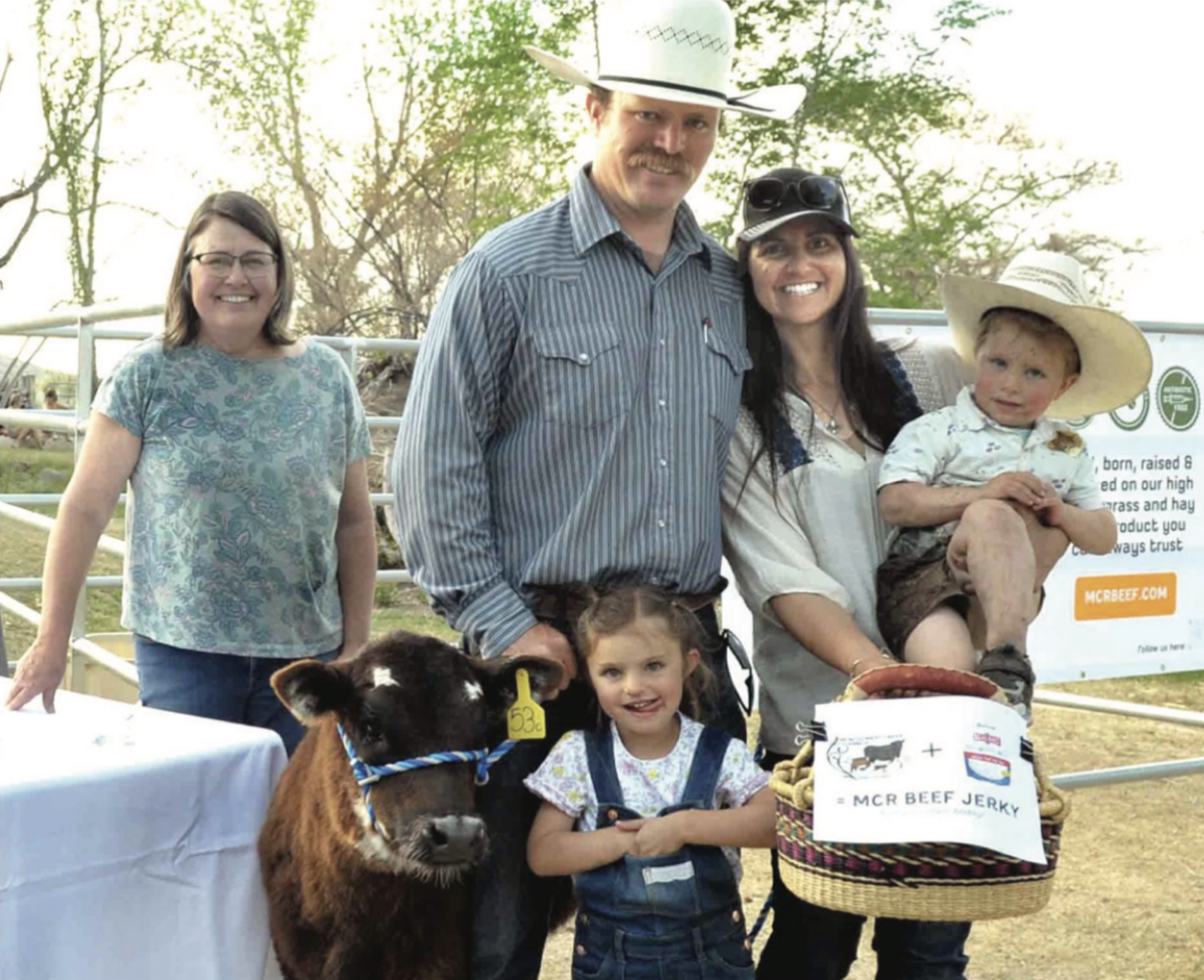
If you buy beef from a local rancher, you don't have to wonder who raised it. You can shake their hand. Look them in the eye. Ask them how they care for their animals. Ask what they feed them. Ask about their grazing practices. Ask what challenges they're facing this year.
You don't have to rely on what you can glean from a very stark label. You can have a conversation.
That relationship is I think one of the greatest losses of our current global food system. And I believe it's one of the most valuable things we can rebuild.
Transparency creates trust. Trust creates community. Community creates resilience.
That's one of the reasons Aki and I have become so passionate about building a stronger local food system here in the Eastern Sierra.
When we talk about strengthening local agriculture, we're not talking about replacing big grocery stores. We're talking about giving people choices.
A choice to know the people growing their food. A choice to ask questions. A choice to support farmers and ranchers whose practices they understand because they've seen them firsthand.
Over the past year, through the California Jobs First feasibility study that we have been working on, one thing became incredibly clear.
People here want that connection. Residents told us they want more opportunities to buy local food. Restaurants want stronger relationships with local producers. Teachers would love if students got to eat more food was sourced from nearby farms or grown on school property (Yay Inyo Farm @ School!).
Again and again, people said they wanted to know where their food comes from.
The irony is that national headlines often make us feel powerless. This one actually reminded me how much power we already have. These days it seems, every national conversation about food inspires me in that we have an incredible opportunity right here at home. We can build Relationships. Accountability. Trust. Transparency.
Every time you buy directly from a farmer or rancher, you're supporting more than a local business.
You're supporting a food system where questions are welcomed. Where producers are visible. Where trust is earned through conversation instead of assumed through packaging.
None of us controls international trade policy. But every one of us gets to decide what kind of food system we support right here at home.