The Soil Bank Account
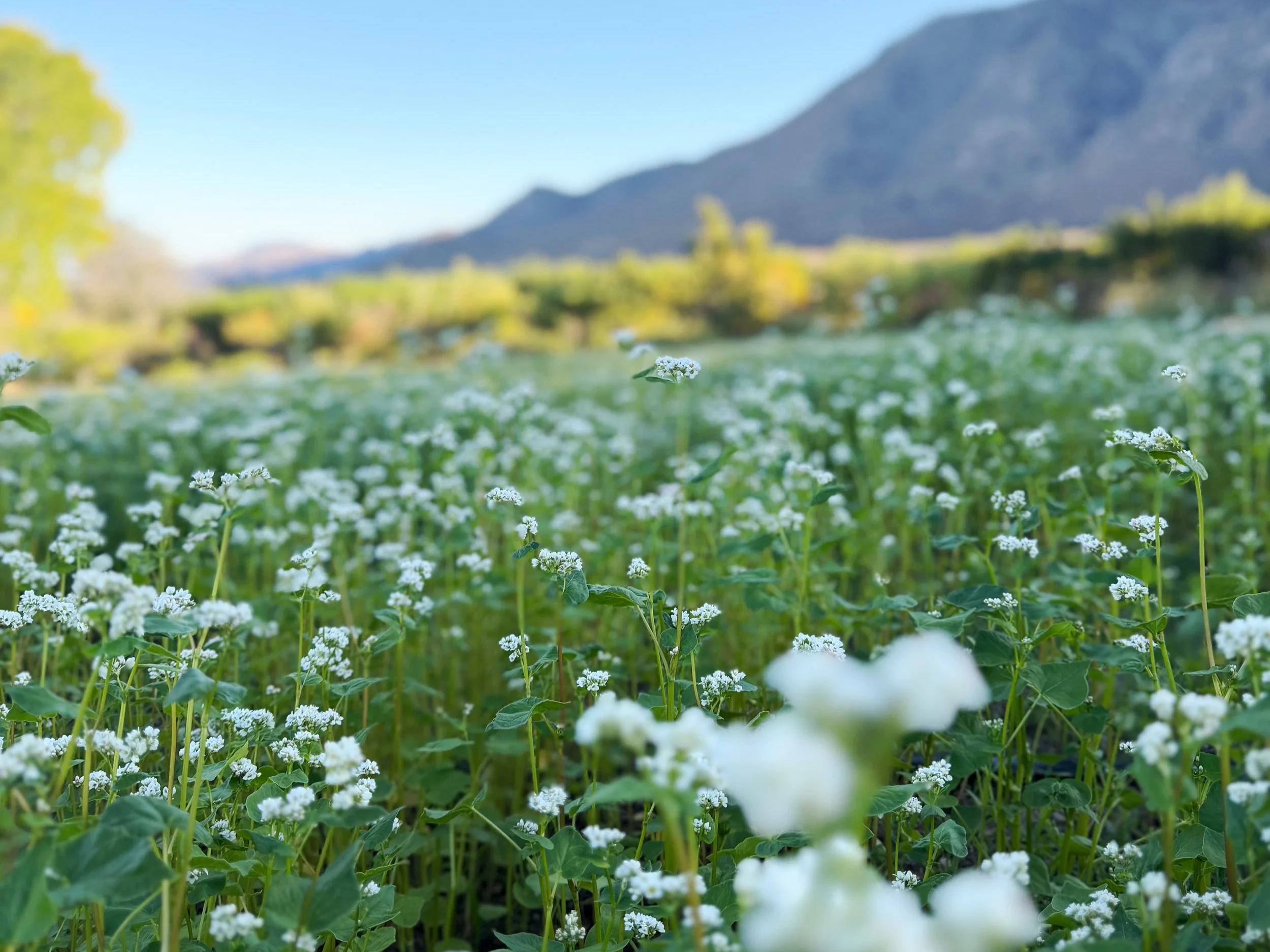
Buckwheat Cover Crop in Hades
All season long, we make withdrawals from the soil.
Every crop we harvest removes something from the system. Vegetables leave the field, fruit leaves the orchard, and nutrients leave with them. Even in a year like this one, when we harvested very little fruit, the orchard still made withdrawals. The trees grew leaves, roots, shoots, and buds, responded to heat and water stress, and continued the work of preparing for another season.
The soil was still working.
I think about soil like a bank account. We can make withdrawals, but if we want that account to remain healthy, we also have to make deposits.
Fall is when we start making those deposits.
Two of the most important ways we do that at Blue Heron Farm are compost and cover crops.
Compost allows us to return organic matter and nutrients to the ground after a long growing season. It supports soil biology, improves soil structure, and helps build the soil's ability to absorb and hold water. Rather than simply feeding the next crop, we are working to improve the system that will grow crops for years to come.
Cover crops are another major deposit.
Instead of leaving soil bare after harvest, we plant crops specifically for the benefit of the ground. We are not growing them to sell or put into CSA boxes. We are growing them to protect the soil, keep living roots in the ground, feed soil organisms, capture nutrients, build biomass, and add organic matter back into the system.
That idea is central to how we think about regenerative agriculture.
Regenerative agriculture is often described by a list of practices: compost, cover crops, reduced tillage, crop diversity, living roots, habitat, and soil protection. Those practices matter, but for us, regeneration also starts with a mindset.
We are constantly asking ourselves whether the way we are farming is building the resource or depleting it.
Agriculture will always involve withdrawals. Our job is to grow food, and food leaving the farm means nutrients are leaving with it. The goal is not to eliminate that exchange. The goal is to make sure it is not one-sided.
If we spend the entire season asking what the land can give us, then we also need a time when we ask what we can give back.
That is especially important here in the Eastern Sierra, where water is one of our greatest limitations. Building organic matter and improving soil structure can help soil absorb water more effectively and hold onto moisture longer, making soil health an important part of building a farm that can better handle our dry climate.
None of this changes in a single season.
One compost application will not rebuild a depleted soil, and one cover crop will not transform a field. The value comes from doing it repeatedly and making those deposits year after year.
That is how we think about tending this land.
We ask the soil to produce food, support trees, cycle nutrients, hold water, and carry us through difficult seasons. In return, we have a responsibility to invest back into it.