We Need More Farmers
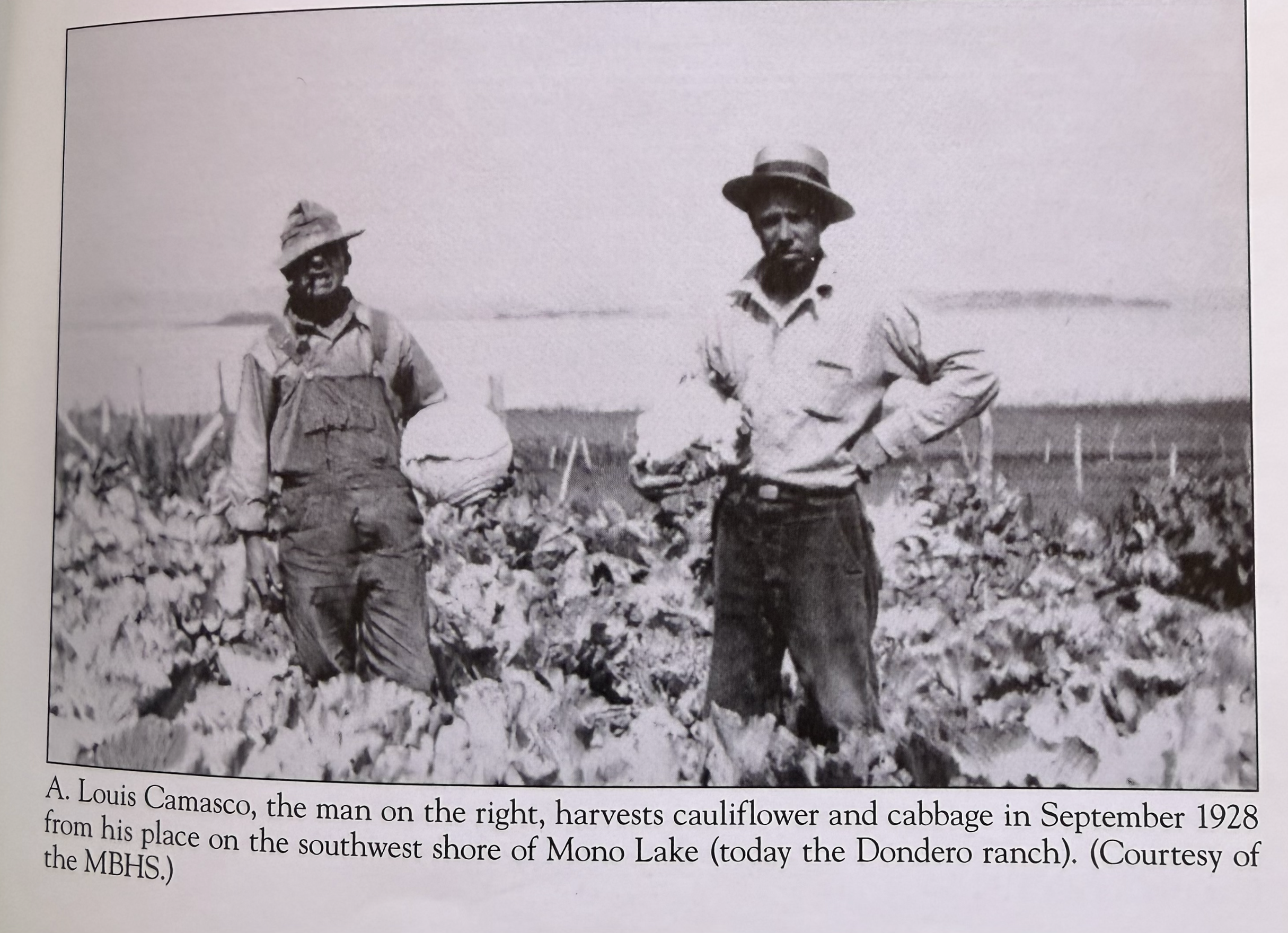
Photo from Images of America: Mono Lake Basin by David Carle and Don Banta (Arcadia Publishing, 2008)
Every single one of us depends on farmers every day. Every meal we eat begins with someone willing to put a seed in the ground months before they know whether the weather will corporate, whether pests will show up, or whether anyone will buy what they've worked so hard to grow.
Food doesn't simply magically appear on grocery store shelves. Behind every peach, steak, head of lettuce, and every carton of eggs is a person who decided that feeding other people was worth the risk of farming.
And yet, despite how completely we all depend on them, farming has become one of the hardest careers to choose and with all of the risks, one with the most reasons to walk away from.
The average American farmer is now 58.1 years old. There are now more farmers over the age of seventy-five than there are under the age of thirty-five. Last year alone, the United States lost another 15,000 farms, continuing a decline that has reduced the country from nearly 6.8 million farms in 1935 to about 1.88 million today.
This should concern all of us.
Because if we believe farming is essential, and gosh, I obviously do. We have to prove that it isn't only vital, we have to prove that it's viable.
Because we need more people willing to dedicating their lives to growing us food.
Here in the Owens Valley, that conversation feels both more difficult and I’ll argue more hopeful.
This isn't a place where the solution is simply to buy another hundred acres and start another large farm. With only a small percentage of land privately owned and with water carrying generations of history, politics, and complexity, agriculture here has never been simple.
The more time I spend learning about this, the more I realize just how much I still have to learn. I certainly don't know the full history of agriculture in this valley. Every conversation teaches me something new. Every old photograph, every story from a longtime resident, every historical document brings light to another wrinkle to this story. And yet, the deeper I dig, the more inspired I become.
Long before modern agriculture arrived here, the Paiute people had developed sophisticated food systems that worked with this landscape rather than against it. They understood water, seasons, native foods, stewardship, and resilience in ways that we're still learning from today. Their story reminds us that thriving in this valley has never been about forcing the land to become something it isn't. It's always been about understanding it well enough to work alongside it.
A couple of weeks ago I had the privilege of visiting the Mono Inn while they were preparing for a busy weekend dinner service. If you've never been, it's a remarkable place. Jason and Hillary have built a restaurant around a simple idea that has become surprisingly uncommon: source as much food locally as possible. We are fortunate enough to grow produce for their kitchen, and I can't tell you enough what a joy it is to work with people who care so deeply about where their ingredients come from.
After getting to watch them work in the kitchen, I wandered upstairs into a quiet beautiful sitting room overlooking Mono Lake. Like any self-respecting farm nerd, my eyes immediately drifted toward a bookshelf, where I pulled down an old historical book filled with photographs of farms from around the Mono Basin. There were enormous cabbages. Mountains of potatoes. Thriving homesteads. Beautiful orchards. Photographs of productive farms that once dotted the basin, even on the islands in Mono Lake.
I was left standing there thinking,
My gosh, look what existed here.
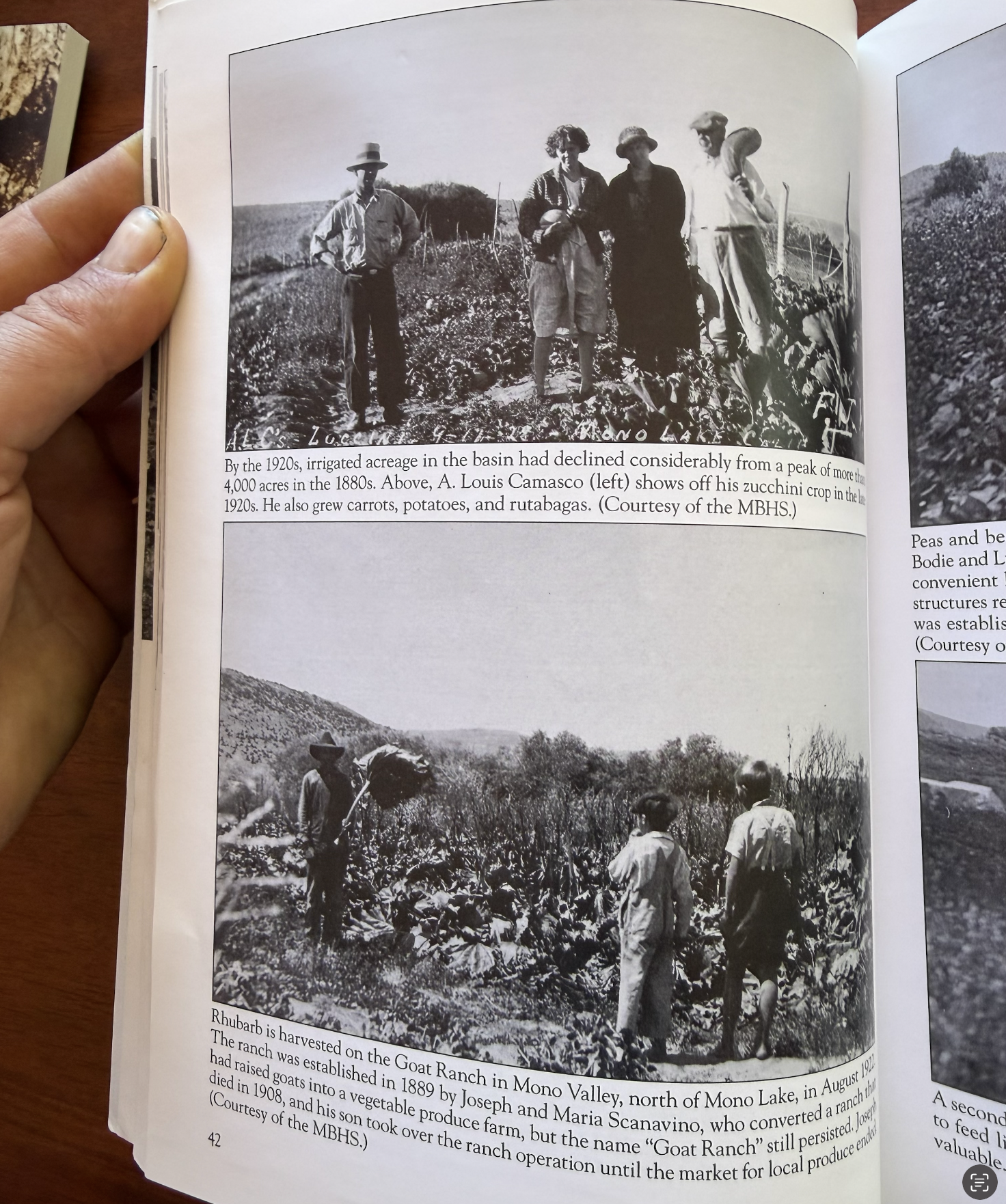
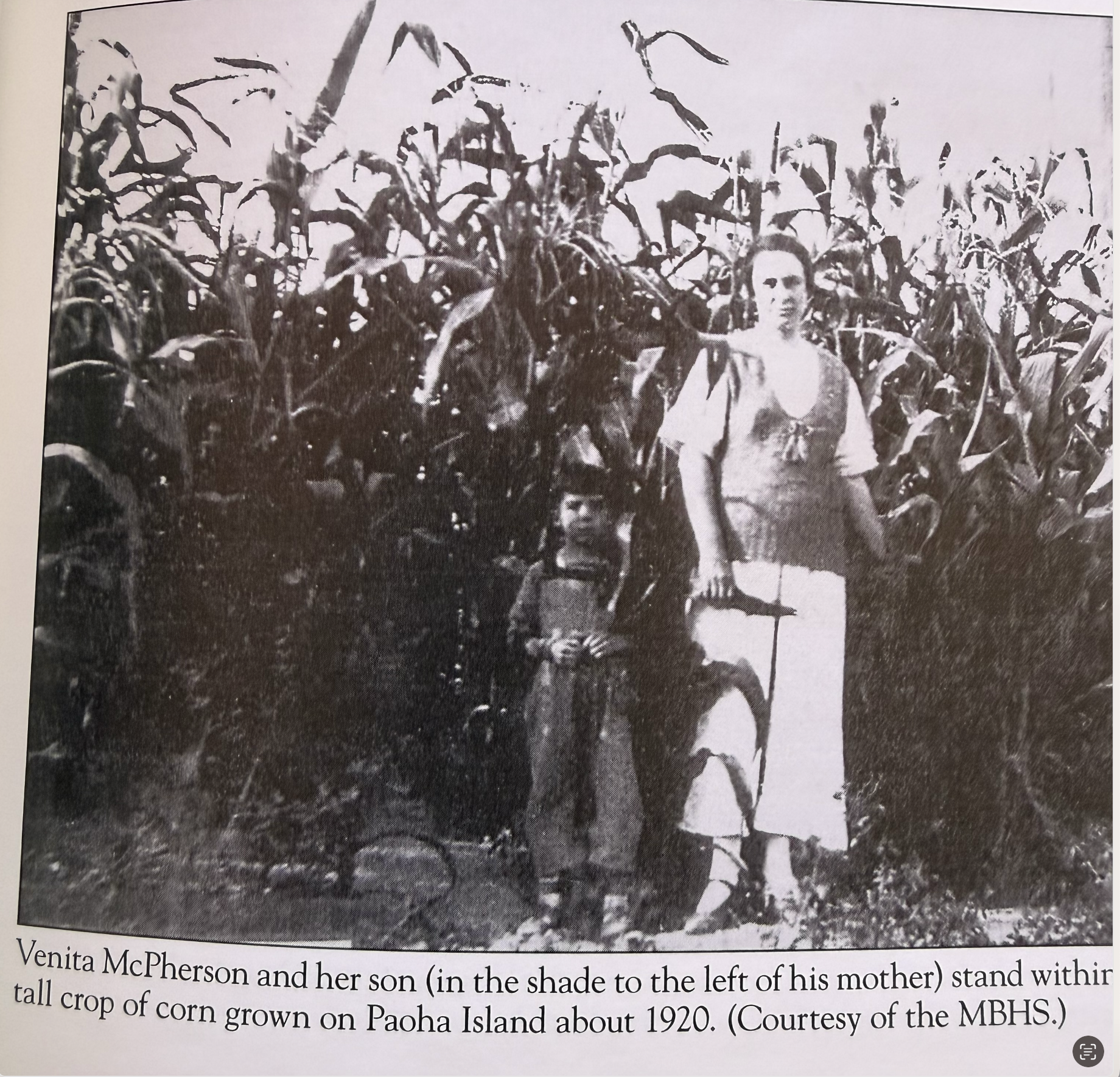
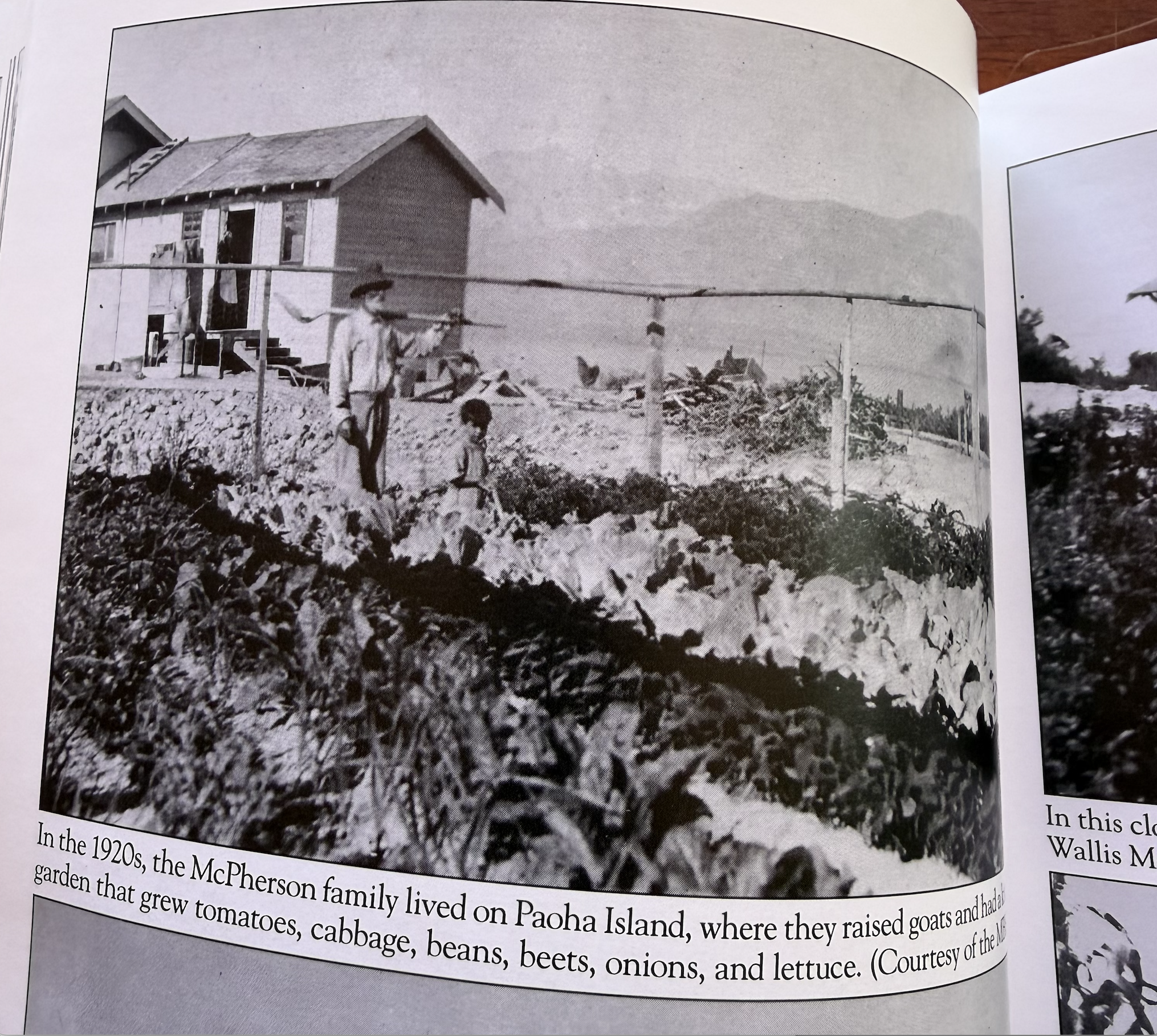
Photos from Images of America: Mono Lake Basin by David Carle and Don Banta (Arcadia Publishing, 2008)
Sometimes we talk about rebuilding local food systems as though we're imagining something brand new. We're not. We're remembering something that once existed.
Of course, history isn't a straight line.
Mining reshaped communities. Families came and went. Then the acquisition of land and water by the Los Angeles Department of Water and Power fundamentally changed agriculture throughout the Owens Valley. Farms disappeared. Communities changed. The landscape itself became something different, and the ripple effects of those decisions are still part of life here today.
But here's the part that gives me hope.
The passion for growing food never disappeared.
I see it everywhere.
I see it in our Master Gardeners who eagerly teach anyone willing to learn. I see it in the Bishop Paiute Tribe Food Sovereignty Progam weekly market. I see it in the Master Food Preservers passing down preservation knowledge. I see it in backyard gardens overflowing with tomatoes and squash, in neighbors swapping seeds over the fence, in ranchers who continue caring for this landscape, in young people turning parking spots into garden plots, and in families who still believe there is something deeply meaningful about growing food.
This valley has never stopped loving agriculture.
When I talk about building a resilient local food system, I'm not suggesting that agriculture completely vanished. Far from it. I'm saying we have an opportunity to weave together everything that already exists and most importantly, spark more of it.
Last year, as part of our regional food system work, we asked the community about local food. Their answers couldn't have been clearer.
People value local food. They trust local food. They want to support local farmers.
But the frustration I heard most often wasn't about quality. It wasn't about price. It was availability. People told us that local food can simply be difficult to find, and when they do find it, it often isn't available consistently.
This is something that I have really been chewing on.
I don't dream about replacing the grocery store. Plus some of our grocery stores are awesome! Like Manor and Blue Lupin who take the extra mile to make room on their shelves for local produce, meat, and goods.
But I still have to wonder, what if the majority of the food that does grow beautifully in Owens Valley actually came from Owens Valley?
What if our vegetables, fruit, herbs, eggs, meat, and honey were produced primarily by people living right here, with the big grocery store filling in the gaps instead of carrying the entire weekly shopping list?
How much more resilient would our communities become? How much stronger would our local economy be? How much more connected would we feel to the people feeding us?
The challenge, of course, is that here in the valley we probably aren't going to build that future by creating more larger farms.
Given the realities of land ownership and water, I don't think that's our path.
I think our future lies in increasing the impact of every acre.
Every backyard. Every school garden. Every unused corner that has the potential to produce food.
When I started Blue Heron Project during COVID, I didn't own any land.
Aki and I were renting a little house in Bishop, and when grocery store shelves started emptying, I did the only thing that made sense to me.
I tore up the backyard. At the end of that first season, my neighbor leaned over the fence and said, "Rachel, your garden is beautiful. I've got a yard I'm not using. Would you like to grow food there too?"
Of course I said yes. And then one backyard became two. Then three. Then four. Within a few years I was farming eight different backyards scattered across Bishop. I called it my backyard quilt. None of those gardens were particularly large. But stitched together, they became something remarkably productive.
Looking back now, I think they taught me one of the most important lessons I've learned as a farmer. We don't always have to scale by getting bigger. Sometimes we scale by weaving together lots of small pieces.
I think that's exactly the kind of creativity this valley needs.
Young farmers using a backyard instead of waiting until they can afford or even find land.
Neighbors sharing tools, irrigation, seeds, and knowledge.
A resilient food system isn't something one farm builds. It's something an entire community builds together.
That's one of the reasons I'm so excited about the Inyo Farm @ School program. Bruce and CJ are reconnecting kids with farming by growing food right on school campuses. Those students aren't just learning where carrots come from. They're discovering that growing food is something they can do and that feeding a community is something they can be part of.
I'm equally excited about the Agriculture Activation Plan that the Eastern Sierra Council of Governments has launched with Lindsay Gucker and Plena Planning. It's asking exactly the questions we should be asking: Where are we now? What's holding agriculture back? And, most importantly, delivering practical, actionable steps to help it thrive again.
These pieces of the puzzle matter so much.
Because I truly believe this valley can become something extraordinary. I can imagine a valley where dozens of small farms thrive alongside ranches, orchards, and backyard growers. Where children grow up knowing farmers by name. Where restaurants proudly build menus around food harvested just a few miles away. Where neighborhoods share gardens, local food is easy to find, and growing food becomes part of the culture once again.
We need more farmers.
But just as important, we need more people who believe that a resilient local food system is worth building.
Some people will build it by farming. Some by planting a backyard garden. Some by mentoring a young grower. And most by using their dollars to support local farms and ranches.
None of us can do this alone.
But together, I believe we can grow something extraordinary.
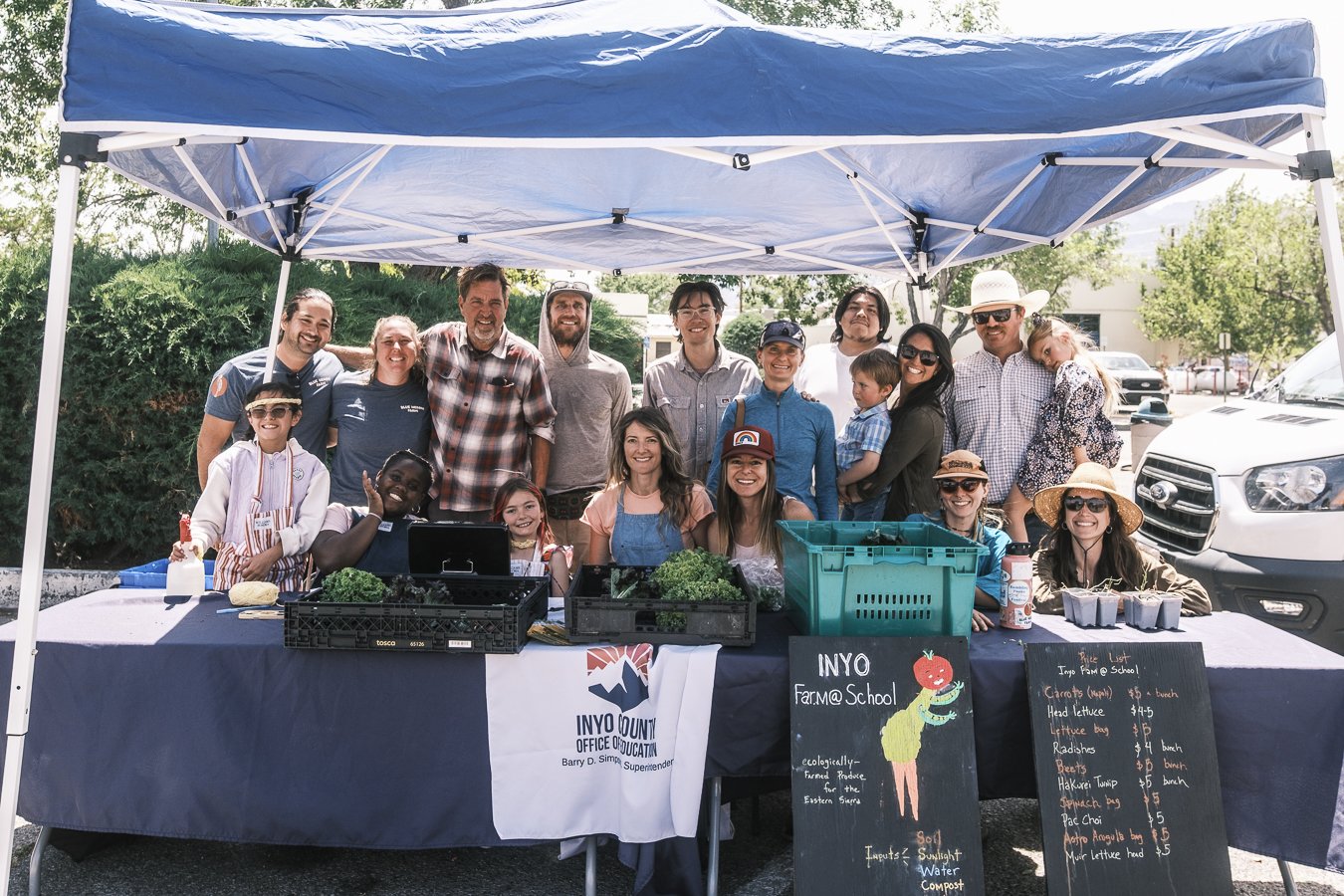
Photo from GardenFest May 3rd, 2026. These are some of the people working toward growing food (+ incredible flowers) here in the Eastern Sierra, and it is wildly inspiring to be in community with them. We need more people growing food. We need to keep proving that growing food here is not only vital to building a more resilient community, but that it can also be a viable living for the farmers and ranchers doing this work.